






EPR for Battery or Extended Producer Responsibility for batteries has become one of the most crucial compliance requirements in India for companies involved in the manufacturing, importing, assembling, or selling of batteries. Under the rules notified by the Ministry of Environment, Forest and Climate Change (MoEFCC), manufacturers, importers, and brand owners must take responsibility for the collection, recycling, and environmentally sound disposal of battery waste. This policy shift is aimed at reducing pollution, encouraging recycling efficiency, and promoting a circular economy.
EPR for Batteries is not just a legal requirement—it is also a vital step toward sustainability, especially in the rapidly growing electric vehicle (EV), electronics, and renewable energy markets.
What is EPR for Battery?
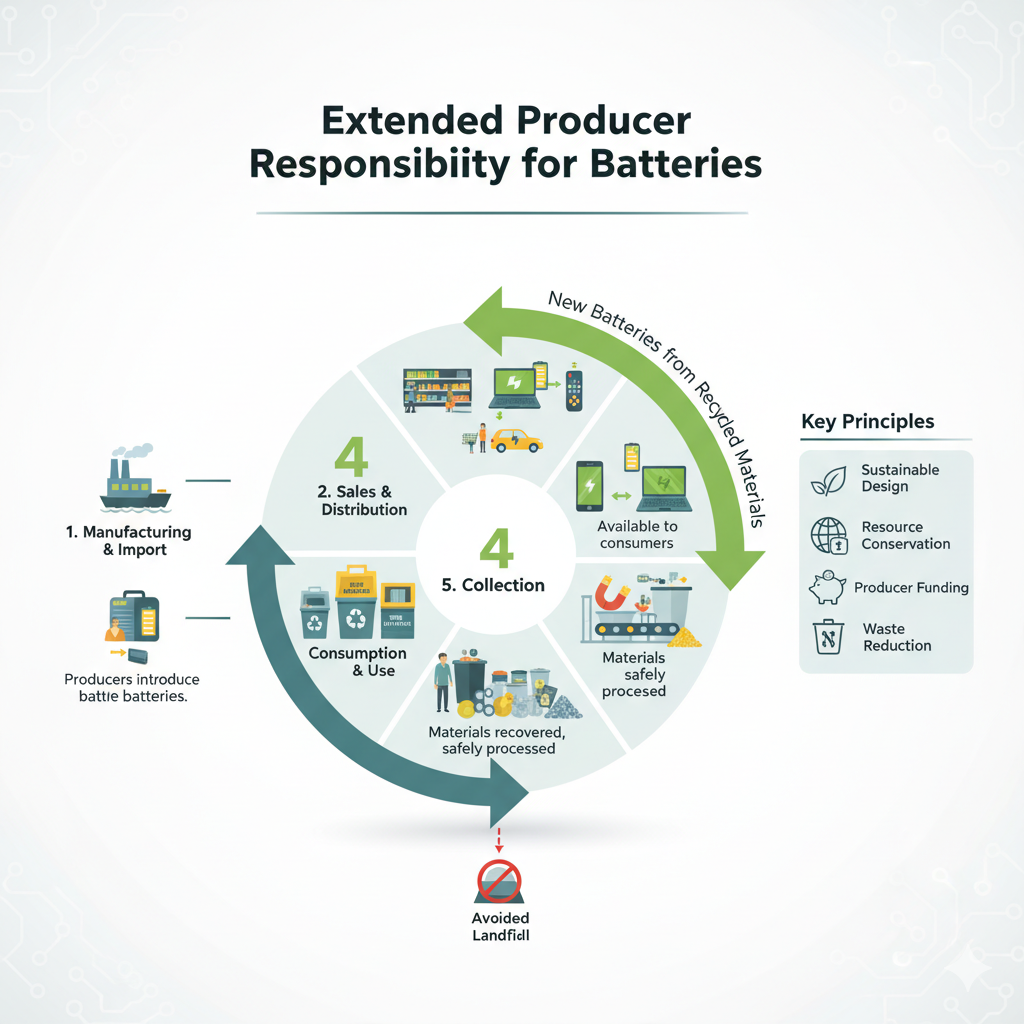
EPR for Battery refers to a regulatory framework where producers are responsible for the life cycle of batteries they introduce in the market. This includes:
Collection after end-of-life
Battery take-back program setup
Transfer to authorized recyclers
Ensuring sustainable battery disposal
Filing compliance reports with CPCB
The government has made Battery EPR certification mandatory to reduce hazardous waste and encourage eco-friendly material recovery.
Why Battery EPR Certification is Essential
Battery waste contains lead, lithium, nickel, cadmium, and other hazardous elements. Without proper disposal, they can contaminate soil, water, and air. Battery EPR certification ensures:
Legal compliance with the Battery Waste Management Rules
Safe and scientific recycling
Environmental protection
Efficient material recovery
Reduced carbon footprint
Companies that fail to obtain EPR approval for battery manufacturers may face heavy penalties, cancellation of business licenses, or restrictions on product imports.
Who Needs EPR Approval for Batteries?
The following entities must apply for Battery EPR certification:
- Battery Manufacturers
- Importers of batteries or battery-operated equipment
- E-commerce sellers supplying batteries
- Assemblers of EV batteries or storage batteries
- OEMs & brand owners selling private-label batteries
If you deal with primary batteries (dry cells) or secondary batteries (rechargeable / lithium-ion batteries), you must register under CPCB for Battery EPR authorization.
Key Components of EPR Compliance for Batteries
Battery EPR compliance involves:
EPR Plan Development – including collection and recycling targets
Battery Take-back Program – setting up channels for used batteries
Authorized Recycler Tie-Ups – engaging with government-approved recyclers
Annual & Quarterly Filing – reporting to CPCB
Material Recovery Tracking – ensuring recycling data is accurate
Role of EPR Consulting Services
Many producers find it difficult to interpret the EPR norms due to technical documentation, collection targets, and recycler coordination. This is where EPR consulting services become very useful. Consultants help with:
Documentation preparation
CPCB application assistance
Extended Producer Responsibility for batteries implementation
Managing battery waste management partners
Achieving collection targets
Setting up sustainable battery disposal systems
Battery Recycling Solutions Under EPR
The EPR model encourages manufacturers to adopt battery recycling solutions that are environmentally safe and cost-efficient. Advanced lithium-ion battery recycling enables:
Recovery of cobalt, nickel, graphite, and lithium
Reduction of mining dependence
Reuse of recovered metals in manufacturing
Support for the EV ecosystem
Benefits of EPR For Businesses
- Improves corporate sustainability score
- Enhances brand reputation
- Enables eco-friendly product lifecycle
- Increases recycling efficiency
- Makes producers compliance-ready
Penalties for Non-Compliance
Non-compliance with EPR for battery rules can result in:
- Environmental compensation charges
- Suspension of manufacturing/import activity
- Legal action by CPCB
- Loss of market authorization
Conclusion
EPR for Battery is more than a statutory obligation—it's a responsible business practice that ensures long-term sustainability. With growing EV adoption and electronics consumption in India, companies must integrate responsible recycling solutions into their business models. By obtaining Battery EPR certification and adopting strong take-back mechanisms, brands can stay compliant, reduce their environmental footprint, and build consumer trust.