




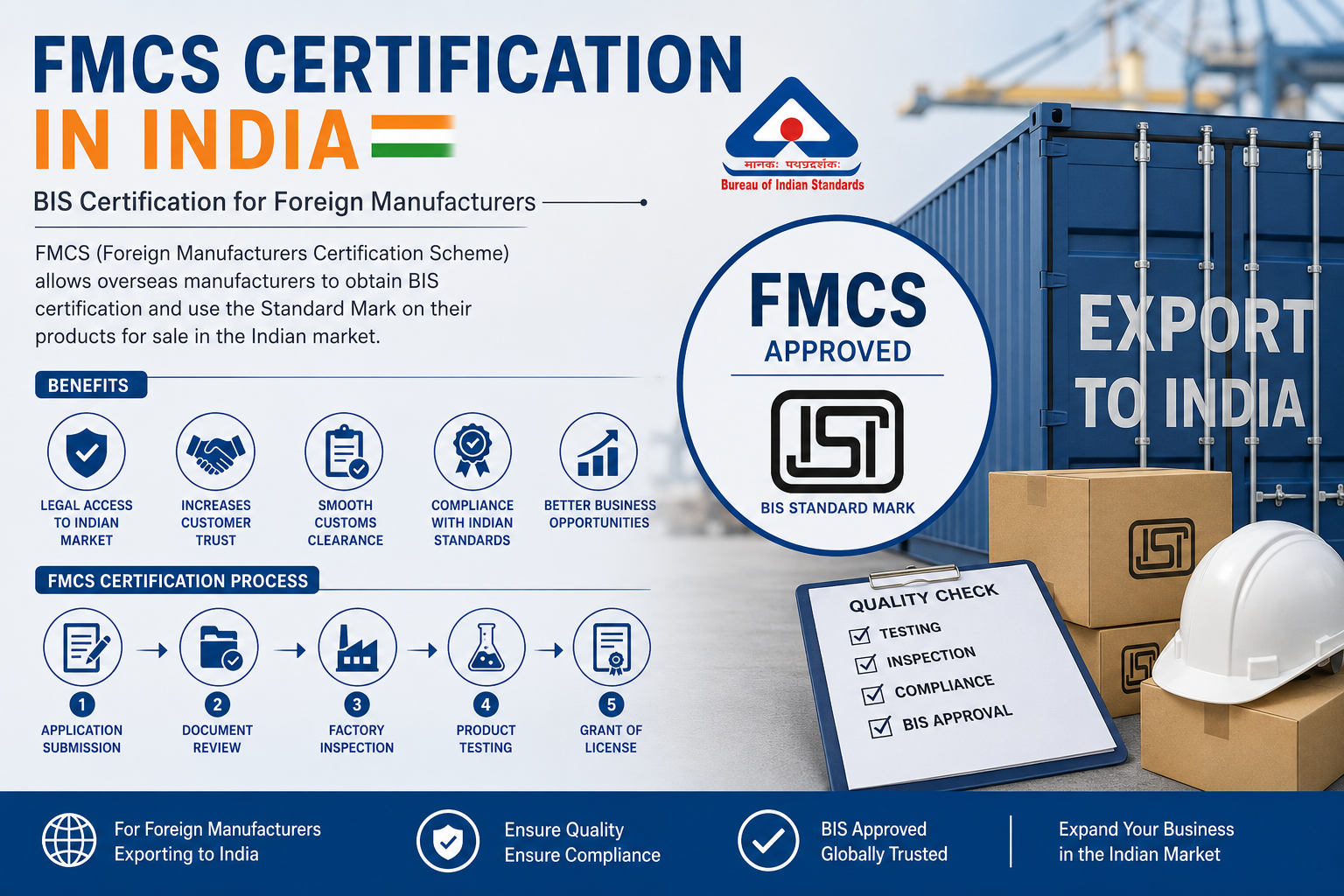
The Foreign Manufacturers Certification Scheme (FMCS) is a certification program operated by the Bureau of Indian Standards for foreign manufacturers who want to export products to India. Under this scheme, overseas manufacturers can obtain BIS certification and use the Standard Mark on their products. FMCS certification is mandatory for many products before they can be sold in the Indian market.
India has strict quality and safety regulations, and FMCS certification helps ensure that imported products comply with Indian Standards. Whether you manufacture electronics, steel products, chemicals, household appliances, or automotive components, obtaining FMCS approval is essential for smooth import and market access in India.
What is FMCS Certification?
FMCS stands for Foreign Manufacturers Certification Scheme. It was introduced by the Bureau of Indian Standards under the BIS Act to regulate the quality of products imported into India. Through this scheme, foreign manufacturers receive permission to use the BIS Standard Mark after successful inspection, testing, and compliance verification.
The certification confirms that the product meets the applicable Indian Standard (IS) requirements. Once approved, manufacturers can legally export and sell their products in India without regulatory issues.
Importance of FMCS Certification in India
FMCS certification plays a major role in ensuring product quality, consumer safety, and regulatory compliance. Products without mandatory BIS approval may face customs clearance issues, penalties, or import restrictions.
Key benefits of FMCS certification include:
Legal authorization to sell products in India
Increased consumer trust and market credibility
Smooth customs clearance process
Compliance with Indian safety and quality regulations
Better business opportunities in the Indian market
Reduced risk of product rejection or penalties
For foreign companies planning long-term business operations in India, FMCS certification is an essential requirement.
Products Covered Under FMCS
Many products require FMCS approval before import into India. Some commonly covered categories include:
Electrical appliances
Cement products
Steel and metal products
Automotive components
Chemicals and fertilizers
Household products
Food-grade materials
Pressure cookers
Batteries and electronic devices
The applicable Indian Standard depends on the product category. Manufacturers must identify the correct standard before applying for certification.
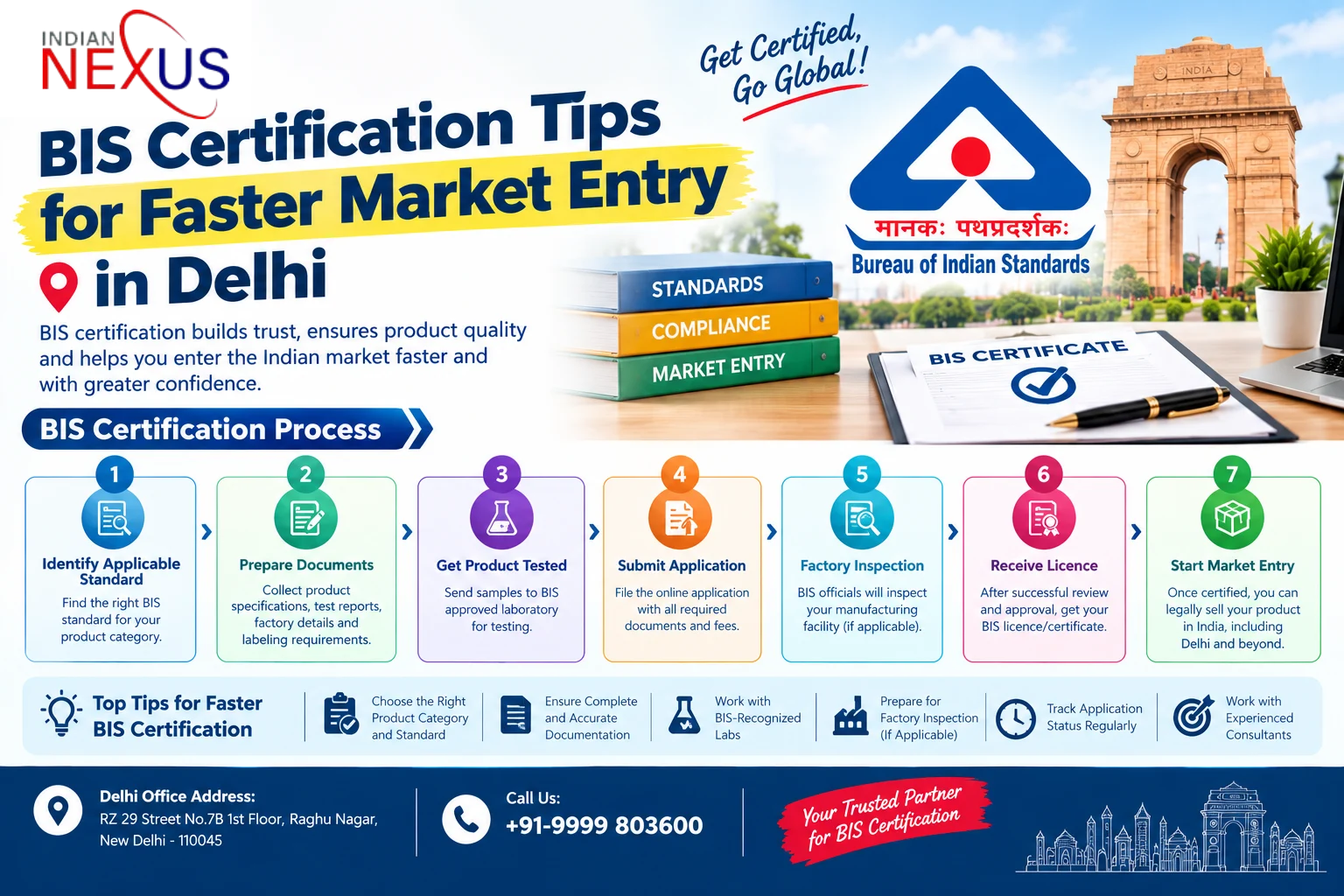
FMCS Certification Process in India
The FMCS certification process involves several stages. Foreign manufacturers must follow BIS guidelines carefully to avoid delays or rejection.
1. Application Submission
The manufacturer submits the FMCS application along with product details, manufacturing information, quality documents, and test reports.
2. Documentation Review
BIS officials verify the submitted documents to ensure compliance with the relevant Indian Standard.
3. Factory Inspection
A BIS inspection team visits the foreign manufacturing unit to evaluate:
Production process
Quality control systems
Testing facilities
Manufacturing capability
Product consistency
4. Product Testing
Samples are tested in BIS-recognized laboratories to confirm compliance with Indian Standards.
5. Grant of License
After successful inspection and testing, BIS grants the FMCS license, allowing the manufacturer to use the Standard Mark on approved products.
Documents Required for FMCS Certification
Foreign manufacturers generally need the following documents:
Company registration certificate
Manufacturing unit details
Product specifications
Test reports
Quality control documents
Process flow chart
List of manufacturing machinery
Authorized Indian Representative (AIR) details
Trademark documents, if applicable
Accurate documentation is important for faster approval and avoiding compliance issues.
Role of Authorized Indian Representative (AIR)
Foreign manufacturers applying for FMCS certification must appoint an Authorized Indian Representative if they do not have a liaison office or branch office in India. The AIR acts as the official contact between BIS and the foreign manufacturer.
The AIR is responsible for:
Coordinating with BIS authorities
Managing documentation
Handling compliance communication
Assisting during inspections and audits
Choosing an experienced AIR can simplify the certification process significantly.
FMCS Certification Validity
The BIS FMCS license is generally granted for one year initially and can be renewed based on continued compliance. Manufacturers must maintain consistent product quality and cooperate with surveillance inspections conducted by BIS authorities.
Non-compliance may result in suspension or cancellation of the certification.
Challenges in FMCS Certification
Many foreign manufacturers face challenges during the FMCS approval process, such as:
Understanding Indian Standards
Complex documentation requirements
Delays in testing and inspections
Communication gaps
Regulatory updates and amendments
Working with experienced BIS consultants can help businesses avoid delays and complete certification efficiently.
Conclusion
FMCS certification in India is a crucial requirement for foreign manufacturers planning to export products to the Indian market. It ensures compliance with Indian quality and safety standards while helping businesses build trust and credibility among consumers.
With proper documentation, testing, factory inspection, and BIS approval, manufacturers can successfully obtain FMCS certification and expand their business opportunities in India. Companies should carefully follow BIS regulations and seek professional guidance when needed to ensure a smooth and hassle-free certification process.