



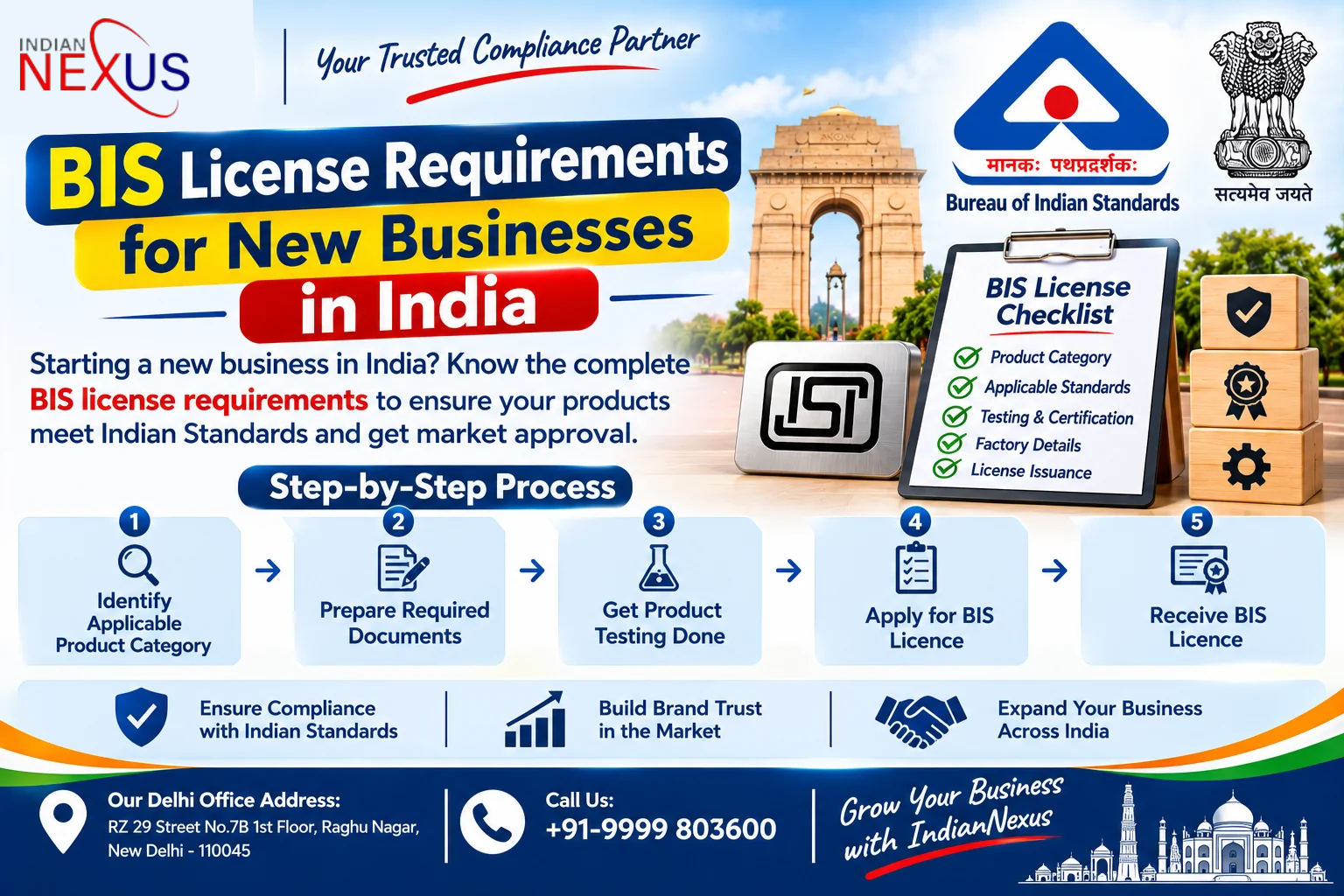
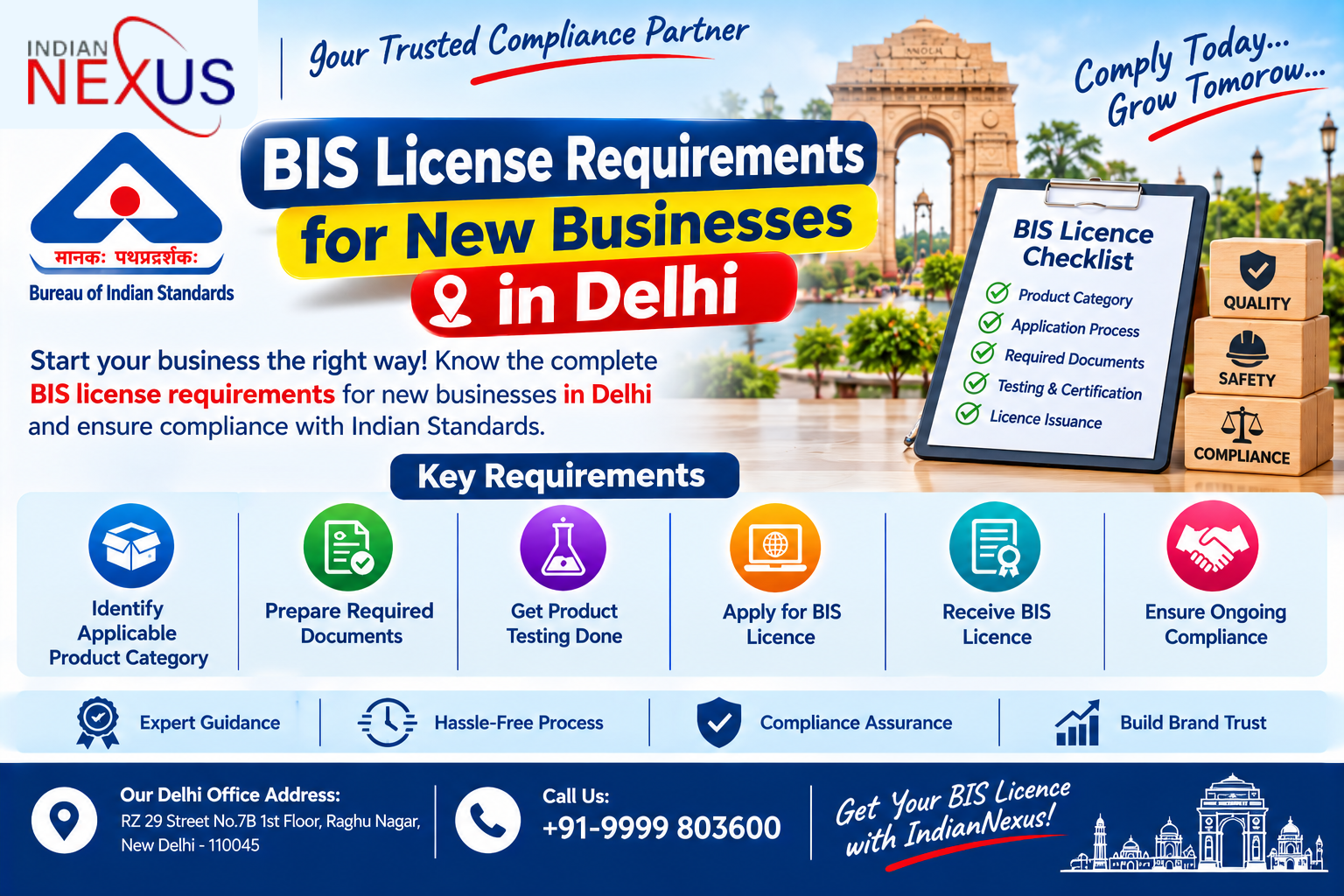
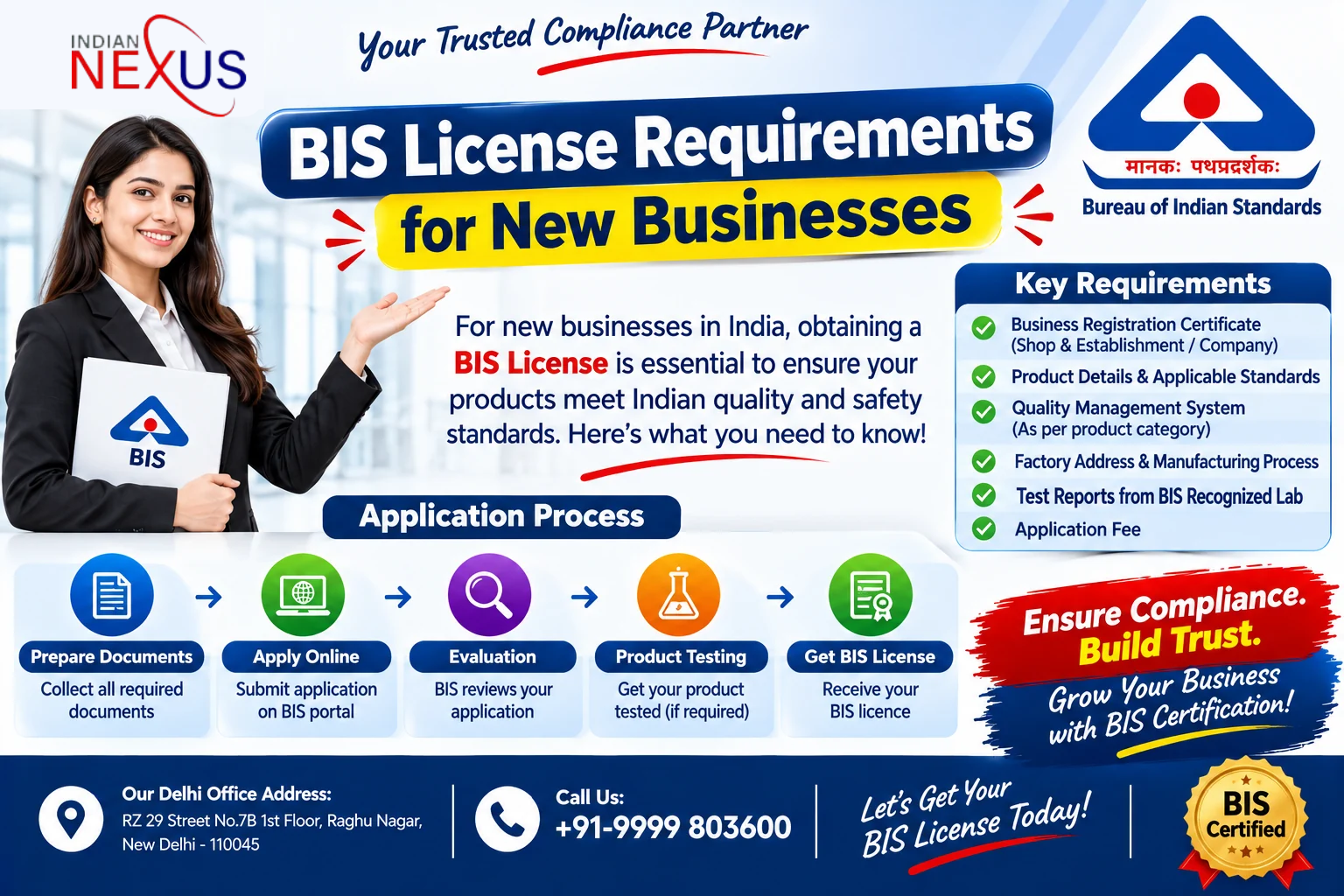


Starting a new business in India requires entrepreneurs to understand the applicable product quality, safety, and regulatory standards. For manufacturers, importers, and startups dealing with regulated products, obtaining BIS certification is an important step toward legal compliance and market acceptance. Understanding BIS License Requirements for New Businesses in India helps businesses identify whether their products require certification before manufacturing, importing, distributing, or selling them in the Indian market.
The Bureau of Indian Standards (BIS) is India's national standards body responsible for developing standards and administering product certification schemes. Depending on the product category, businesses may need to obtain a BIS license or registration before commercial operations. IndianNexus helps businesses navigate certification requirements with professional guidance and documentation support.
What Is BIS Certification and Why Is It Important?
BIS certification demonstrates that a product complies with applicable Indian Standards established for quality, safety, performance, and reliability. It helps businesses establish credibility, protect consumers, and meet government regulations.
Understanding BIS License Requirements for New Businesses in India is particularly important for startups entering industries where certification is mandatory. Products covered under Quality Control Orders (QCOs) or compulsory certification schemes cannot legally be manufactured, imported, or sold without the applicable approval.
BIS certification can help businesses:
Establish product quality and consumer confidence.
Meet mandatory government compliance requirements.
Avoid regulatory penalties and product restrictions.
Expand business opportunities across India.
Build credibility with distributors and customers.
BIS License Eligibility Criteria in India
Businesses must identify the certification scheme applicable to their products before applying. Eligibility depends on the product category, manufacturing location, applicable Indian Standard, and the type of certification required.
The BIS License Requirements for New Businesses in India may apply to manufacturers, domestic companies, foreign manufacturers, importers, and eligible startups. Under certain schemes, the manufacturer is required to obtain the license, while importers and sellers must ensure that the products they deal with are appropriately certified.
Businesses should check whether their products fall under:
BIS ISI Mark Certification Scheme
Compulsory Registration Scheme (CRS)
Foreign Manufacturers Certification Scheme (FMCS)
Other applicable BIS product certification schemes
BIS License Documents Required in India
Preparing accurate documents is an essential part of the application process. The requirements may differ depending on the certification scheme and manufacturing facility.
Common documents include:
Business registration certificate
GST registration certificate, where applicable
Manufacturing address proof
Factory layout and machinery details
Product specifications and technical information
Quality control and testing arrangements
Authorized signatory documents
Trademark details, where applicable
Test reports from recognized laboratories, wherever required
Complete documentation can help reduce application delays and improve the efficiency of the certification process.
BIS Certification Process in India
The BIS License Requirements for New Businesses in India involve several steps, from product identification to final license approval.
1. Identify the Applicable Indian Standard
Businesses must determine the relevant IS number and confirm whether certification is mandatory for their product.
2. Select the Appropriate Certification Scheme
The applicable scheme may depend on product type, manufacturing location, and regulatory requirements.
3. Prepare the Application
Applicants must submit the prescribed application form, supporting documents, product information, and required fees.
4. Product Testing
Products may require testing through BIS-recognized laboratories to verify compliance with the applicable standard.
5. Factory Inspection
Under schemes involving factory assessment, BIS officials may inspect manufacturing facilities, quality control systems, and production processes.
6. License Grant
After successfully completing applicable testing, inspection, and evaluation requirements, BIS may grant the license or registration.
BIS License Cost in India
The cost of certification depends on the product category, applicable scheme, testing requirements, government fees, inspection expenses, and consultancy charges. Businesses should evaluate the complete certification cost before starting the application process.
The BIS License Requirements for New Businesses in India should be reviewed carefully to avoid unnecessary expenses caused by incorrect applications, incomplete documents, or unsuitable testing arrangements.
How IndianNexus Supports New Businesses
IndianNexus provides professional BIS certification consultancy in India to manufacturers, importers, startups, and businesses planning to introduce regulated products.
Our support includes:
Product standard identification
Certification scheme selection
Documentation preparation
Application filing assistance
Testing coordination
Factory inspection preparation
Compliance guidance
License renewal assistance