



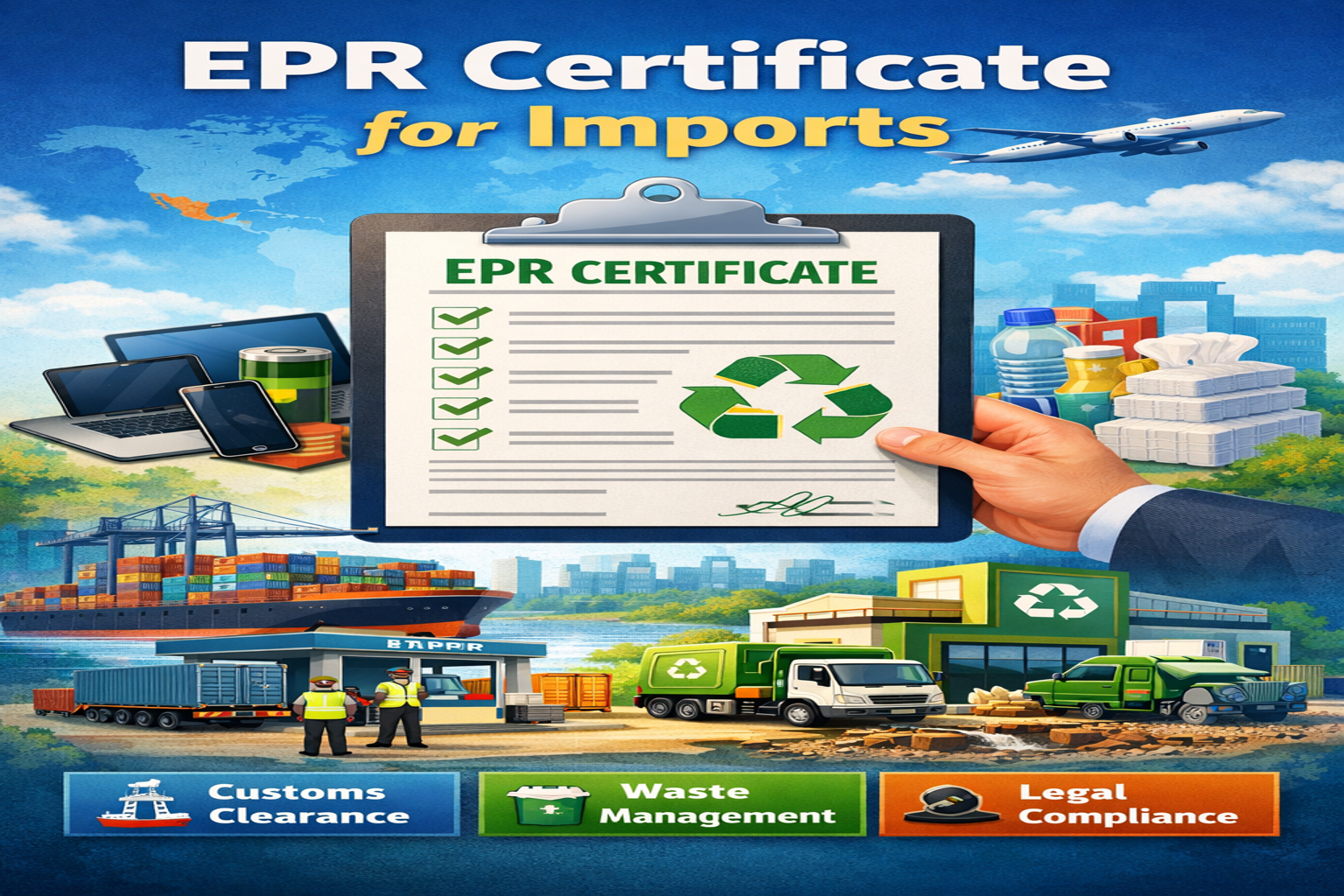
India has strengthened its environmental laws to manage electronic and plastic waste efficiently. One of the most important regulations affecting importers today is the EPR Certificate for imports. Whether you import electronics, batteries, plastic packaging, or electrical equipment, you must comply with Extended Producer Responsibility regulations before selling products in the Indian market.
The government, through the Central Pollution Control Board (CPCB), requires importers to collect, recycle, and manage waste generated from their products. Without EPR compliance, customs clearance, marketplace listing, and even product sales can be stopped.
Many importers face shipment delays simply because they apply for approval after goods arrive. Getting the certification in advance prevents penalties and ensures smooth business operations.
What is EPR Certification?
EPR certification is a mandatory environmental authorization that assigns responsibility to producers and importers for managing post-consumer waste. The Extended Producer Responsibility Certificate ensures that businesses importing goods into India take responsibility for:
Recycling
Waste collection
Disposal
Channelization
In short, if you profit from selling products in India, you must also manage the waste they generate.
Why Importers Need an EPR Certificate for Imports
Every importer must obtain an EPR Certificate for imports before bringing regulated goods into India. Customs authorities now verify compliance at the time of clearance.
Without registration:
The shipment may be held at the port
Heavy penalties may apply
Online marketplaces reject listings
Business licenses may be suspended
Products that require EPR Certification in India include:
Electronic goods (EEE)
Plastic packaging materials
Lithium batteries
Electrical appliances
IT equipment
Consumer electronics
This requirement applies even if you are only a trader and not a manufacturer.
Step-by-Step Process of EPR Certification in India
The EPR Certification process is digital and handled via the CPCB portal.
Step 1: Business Registration
Importer registers company details, GST, IEC, and product category.
Step 2: Documentation Upload
Upload technical details, product specifications, and brand authorization.
Step 3: Recycling Agreement
Tie-up with authorized recyclers for waste collection.
Step 4: EPR Plan Submission
Submit a waste management plan and recycling targets.
Step 5: Approval by CPCB
Authority reviews and grants the Extended Producer Responsibility Certificate.
Step 6: Annual Return Filing
The importer must submit yearly compliance reports.
Documents Required
To obtain the EPR Certificate for imports, importers need:
GST Certificate
Import Export Code (IEC)
PAN Card
Product details
Bill of materials
Recycling agreement
Authorized signatory details
Incorrect documentation is the biggest reason for rejection.
Role of an EPR Consultant
Because compliance requires legal, environmental, and technical understanding, businesses hire an epr consultant to expedite approval.
An experienced EPR Certificate Consultant helps in:
Category identification
Target calculation
Portal filing
Revisions
CPCB clarification handling
If you search for an EPR consultant near me, ensure they understand import regulations specifically — not just manufacturing compliance.
Companies like Indiannexus assist importers from documentation to final approval and even post-compliance reporting, reducing rejection chances significantly.
Benefits of EPR Certification
Getting an EPR Certificate for imports provides multiple advantages:
Legal Market Entry
You can legally sell imported goods in India.
Customs Clearance
No shipment detention at ports.
Marketplace Approval
Amazon and Flipkart require an EPR ID.
Brand Reputation
Customers trust eco-compliant brands.
Government Compliance
Avoid penalties and environmental notices.
Common Mistakes Importers Make
Many importers face rejection because they:
Apply after shipment arrives
Choose the wrong product category
Submit an incorrect bill of materials
Don’t sign the recycler agreement
Ignore annual returns
Working with a proper EPR Certification consultant prevents these errors.
Penalties for Non-Compliance
Selling regulated goods without an EPR Certificate for imports can lead to:
?1 lakh to ?10 lakh penalty
Shipment seizure
Import ban
Marketplace suspension
Authorities are now actively monitoring import data through customs integration.
Conclusion
Environmental compliance is no longer optional in India. Every importer must secure an EPR Certificate for imports before launching products in the market. The process may look technical, but with proper documentation and expert guidance, approval becomes smooth and fast.
Obtaining the Extended Producer Responsibility Certificate not only protects the environment but also protects your business from legal and financial risks. A professional EPR consultant ensures accuracy, faster approval, and long-term compliance.
FAQs
1. Is EPR Certification mandatory for importers?
Yes, importers must obtain EPR Certification in India before selling regulated products.
2. How long does EPR approval take?
Usually 15–30 working days if documents are correct.
3. Can I import without EPR and apply later?
No, customs may hold or reject the shipment.
4. Is EPR required for online sellers?
Yes, marketplaces require an EPR registration ID.
5. Do traders also need EPR certification?
Yes, even brand owners and importers must comply.
6. What is the validity of the EPR certificate?
Generally, 1 year with annual return compliance.
7. Who issues the Extended Producer Responsibility Certificate?
The Central Pollution Control Board (CPCB) issues approval.