



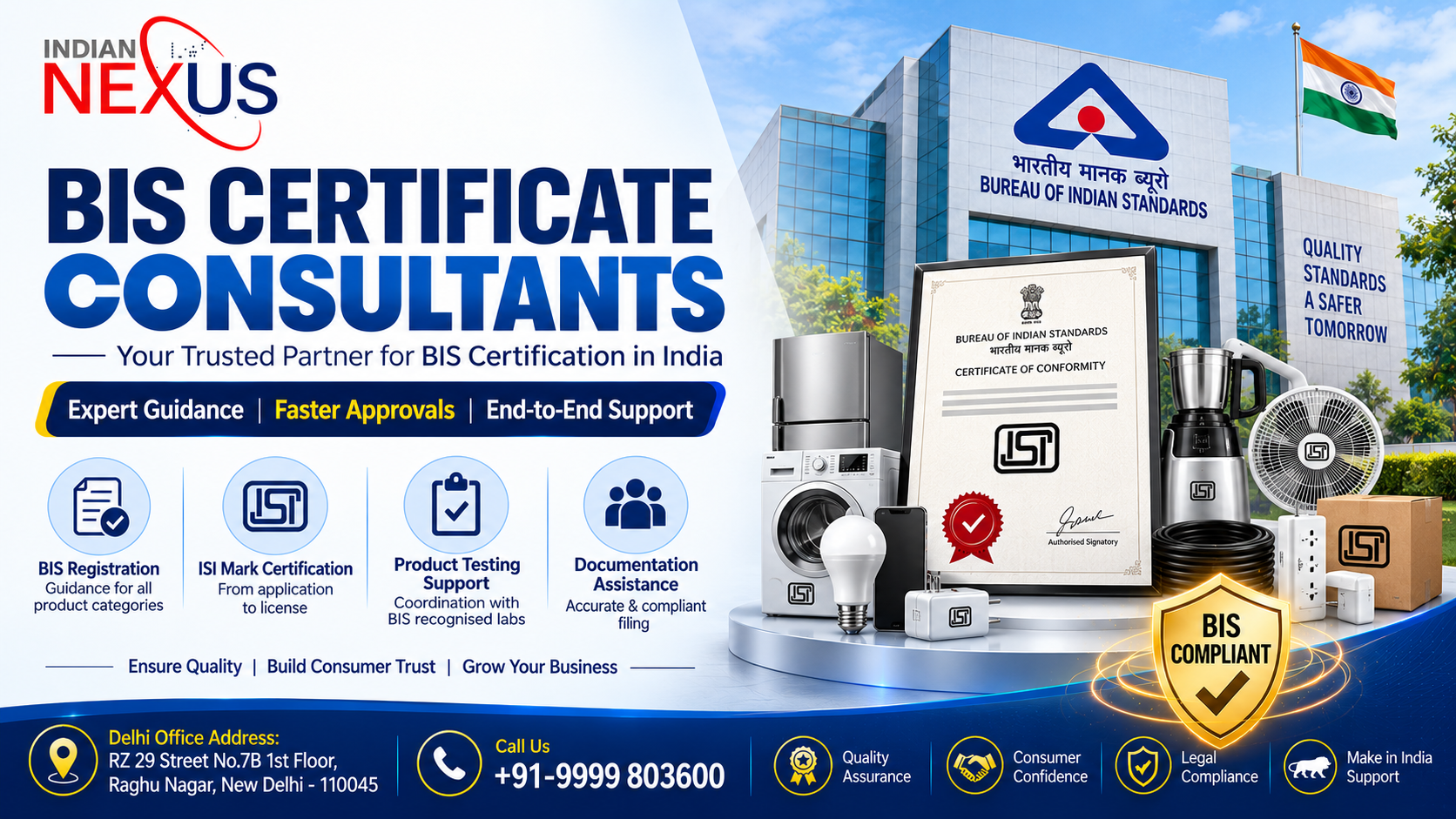
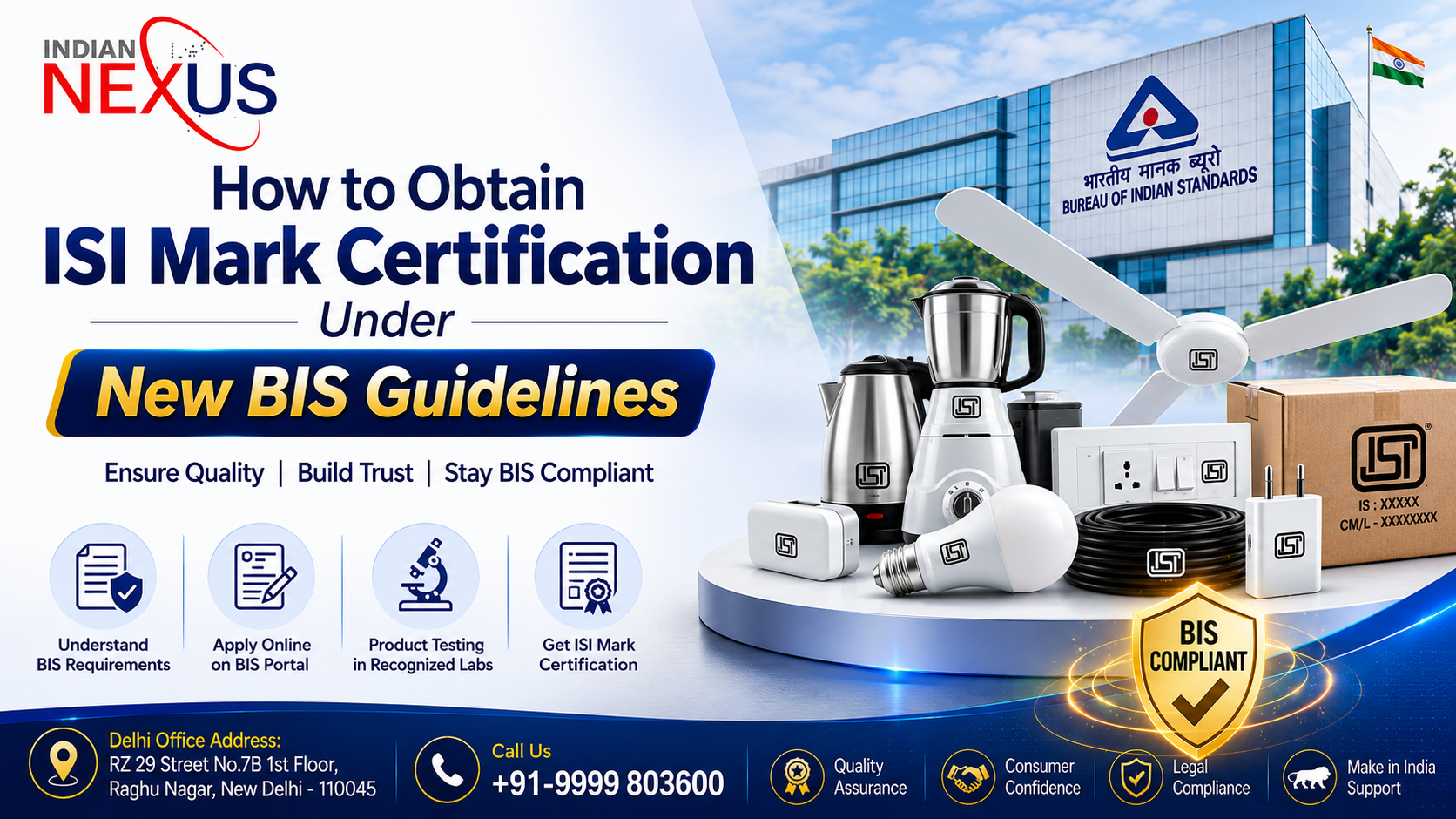
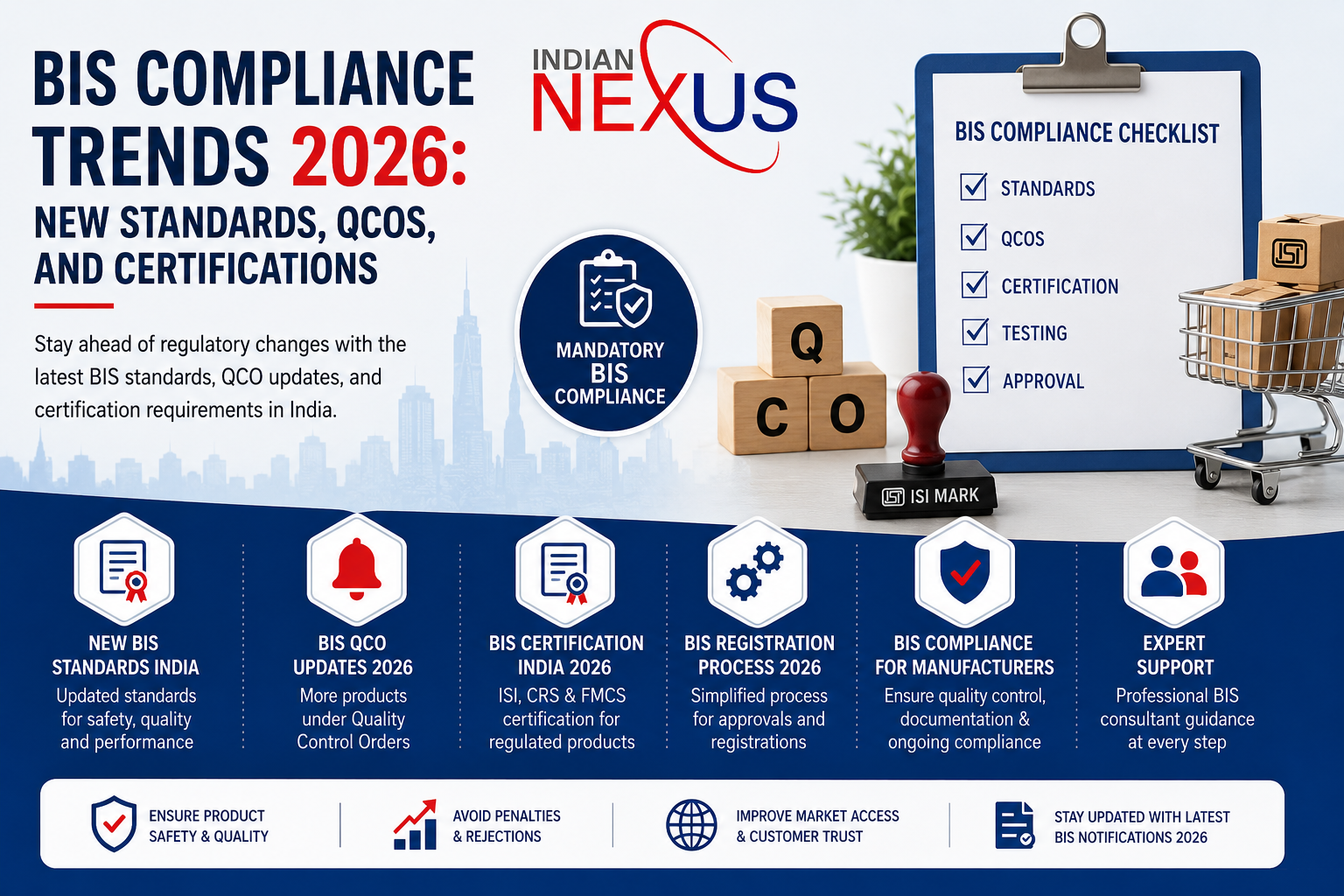

Bureau of Indian Standards (BIS) certification is an important regulatory requirement for manufacturers and businesses dealing with products covered under applicable Indian Standards and Quality Control Orders (QCOs). Obtaining a BIS licence or registration can involve technical documentation, product testing, application filing, factory inspection, and coordination with BIS authorities. BIS certificate consultants help businesses manage these requirements systematically and reduce the chances of delays or errors during the certification process.
What Is BIS Certification?
BIS certification demonstrates that a product complies with the applicable Indian Standard and prescribed quality requirements. Depending on the product category and applicable scheme, manufacturers may need an ISI Mark licence, BIS Registration under the Compulsory Registration Scheme (CRS), or certification under other applicable BIS schemes.
Since every product has different standards, testing requirements, documentation, and licensing procedures, businesses often seek professional assistance from BIS certificate consultants to understand the correct compliance route.
Why Choose BIS Certificate Consultants?
BIS certification requires careful preparation. A minor mistake in product details, test reports, factory information, or supporting documents can result in queries or delays. Experienced BIS certificate consultants can assist businesses throughout the certification journey.
Key benefits include:
Identification of the applicable Indian Standard
Guidance on the appropriate BIS certification scheme
Assistance with documentation
Coordination with BIS-recognized laboratories
Application preparation and submission support
Factory inspection guidance, where applicable
Assistance in responding to BIS queries
Support during licence or registration processing
Post-certification compliance guidance
Professional consultancy can therefore make the overall process more organized and easier to manage.
BIS Certification Process in India
The BIS certification process depends on the product and certification scheme. Generally, the process begins by identifying the applicable standard for the product. The manufacturer must then understand the testing requirements and arrange testing through an appropriate laboratory wherever required.
After successful testing, the applicant prepares the necessary documents and submits the BIS application through the applicable online system. For certain certification schemes, BIS may conduct a factory inspection to verify manufacturing facilities, quality-control arrangements, testing infrastructure, and production processes.
The application is reviewed by BIS, and additional information may be requested. Once all requirements are satisfactorily completed, BIS may grant the applicable licence or registration.
BIS certificate consultants can coordinate these stages and help manufacturers understand what needs to be completed at each step.
Documents Required for BIS Certification
The documentation depends on the product, manufacturer, and applicable scheme. Common documents may include:
Company registration documents
Manufacturer and factory details
Product technical specifications
Applicable test reports
Manufacturing process information
Quality-control details
List of machinery and equipment
In-house testing facility details
Raw-material information
Authorized signatory documents
Trademark or brand-related documents, where applicable
Undertakings and declarations required by BIS
A consultant can review the documents before submission to identify missing or inconsistent information.
Role of BIS Certificate Consultants
The role of BIS certificate consultants extends beyond simply submitting an application. Consultants can evaluate the product and determine the likely certification requirements before the application is initiated.
They may also help manufacturers prepare for laboratory testing and factory inspections. If BIS raises observations or requests clarification, consultants can assist in preparing suitable responses and supporting documents.
For companies handling multiple products, professional consultancy can also help establish a structured compliance plan so that different certification requirements are addressed efficiently.
BIS Certification for Indian and Foreign Manufacturers
Both Indian and foreign manufacturers may need BIS certification when their products fall under mandatory certification requirements. Foreign manufacturers may have additional requirements depending on the applicable BIS scheme, including provisions concerning authorized representatives and overseas manufacturing facilities.
Working with experienced BIS certificate consultants can help foreign manufacturers understand Indian regulatory requirements and coordinate certification activities from outside India.
Importance of Maintaining BIS Compliance
Obtaining a BIS certificate is not always the end of the compliance process. Depending on the certification scheme, manufacturers may need to maintain product quality, testing arrangements, records, marking requirements, and other ongoing obligations.
Businesses should also monitor changes to Indian Standards, QCOs, certification schemes, and BIS requirements. Regular compliance reviews can help manufacturers avoid issues associated with outdated standards or non-compliant product practices.
Conclusion
BIS certification plays a significant role in ensuring that regulated products meet prescribed Indian quality and safety requirements. However, the certification process can be technical and documentation-intensive. BIS certificate consultants provide professional support by helping businesses identify applicable standards, prepare documentation, coordinate testing, manage applications, address queries, and understand ongoing compliance obligations.
For manufacturers planning to obtain BIS certification, choosing an experienced consultant can make the process more structured, efficient, and manageable while helping the business remain aligned with applicable BIS requirements.