



Manufacturers, importers, brand owners of batteries need to meet these EPR obligations under The Battery Waste Management Rules 2022. The Battery EPR Registration in India 2026: Cost, Documents, and Process has turned into the topic for many entities interested in their legally viable processes of waste management.
CPCB, via digital framework, has stipulated mandatory battery recycling in terms of producer accountability. So if you are a manufacturer of Lithium-ion, Lead acid, EV or Portable batteries and want to sell your products in India, you must get CPCB Battery EPR Registration.
Indiannexus provides businesses professional support with Battery EPR Compliance in India. They handle all compliance and approval needs for you to achieve success efficiently and on time.
What is Battery EPR Registration?
Now, what is this Battery EPR Registration? It is nothing but the registration that CPCB will allot to entities who wish to register under the Battery Waste Management Rules 2022. Under the legislation, brand-owners, manufacturers and importers are responsible for their batteries' life after use.
Its battery collection and recycling, along with reduced hazardous waste and the Circular Economy strengthen the Ecological Sustainability framework.
Organizations covered under the regulations include:
Battery manufacturers
Importers of batteries
Brand owners selling batteries
Electric vehicle battery producers
Lithium-ion battery suppliers
Lead acid battery manufacturers
Failure to obtain EPR Authorization for Batteries can result in penalties and regulatory action.
Who Needs CPCB Battery Registration?
The following entities require Battery EPR Authorization:
Manufacturers producing batteries in India
Importers bringing batteries into India
Brand owners selling batteries under their labels
EV battery manufacturers
Portable battery suppliers
Industrial battery producers
These entities must fulfill Battery Producer Responsibility obligations and achieve prescribed Battery Recycling Targets India.
Documents Required for Battery EPR Registration
Applicants must submit various documents during the registration process.
Common Battery EPR Documents include:
PAN Card of company
GST Registration Certificate
CIN Certificate
For importers, IEC means "Import Export Code.
Authorized Signatory Details
Company Address Proof
Product Details
Battery Sales Data
Recycling Agreements
Environmental Compliance Documents
Accurate documentation helps prevent delays during CPCB EPR Portal Registration.
Battery EPR Registration Process India
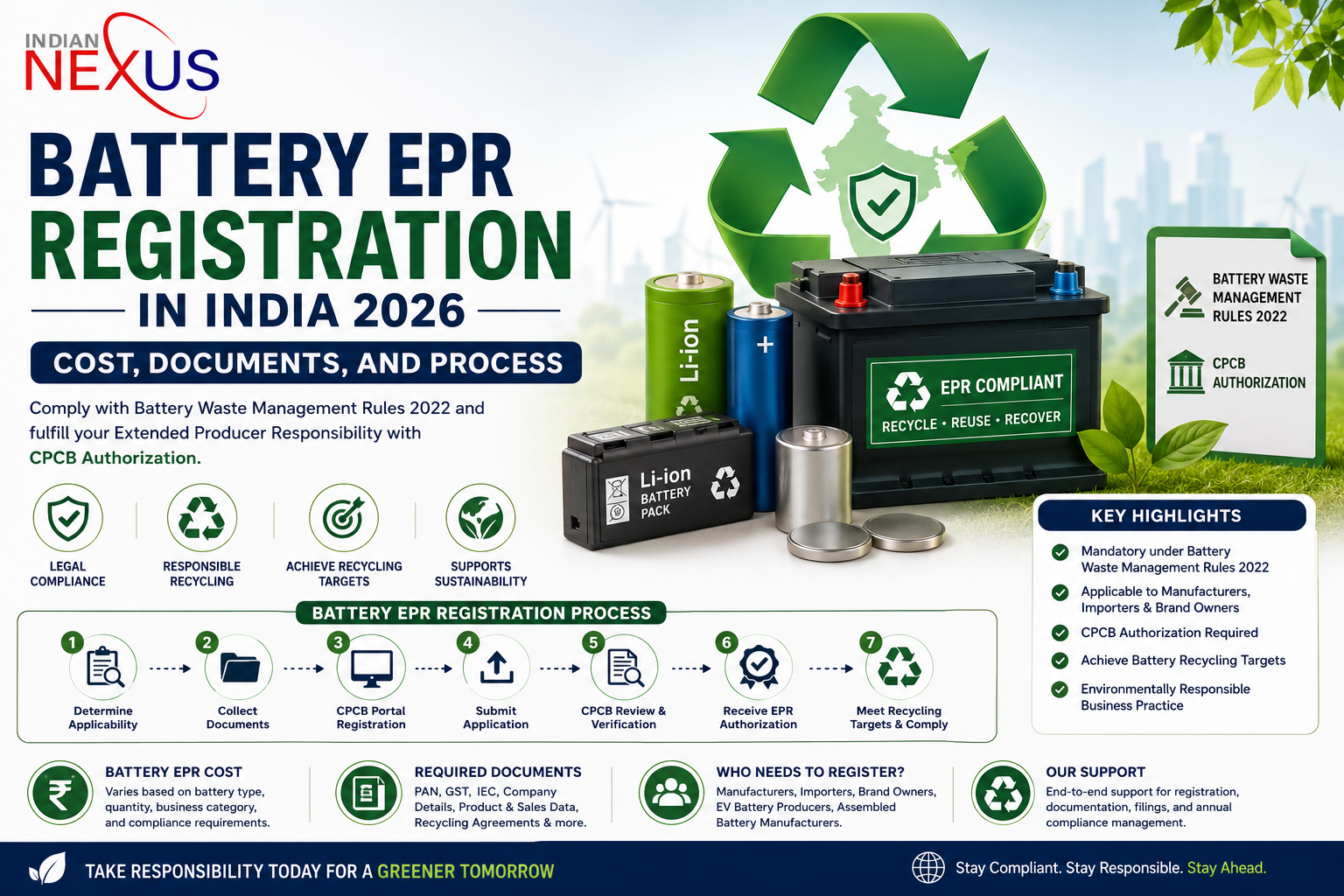
In a nutshell, registering usually comes with the following steps:
Step 1: Business Assessment
By recognizing itself in the appropriate class under Battery Waste Management Rules 2022, the enterprise figures out its duties.
Step 2: Document Collection
All required Battery EPR Documents are compiled and verified.
Step 3: CPCB Portal Registration
The applicant creates an account and submits details through the CPCB EPR Portal Registration system.
Step 4: Application Submission
The applicant has to be registered with the CPCB EPR Portal Registration by creating an account and entering details in.
Step 5: Verification
The CPCB will analyze your report, with possibilities of clarification.
Step 6: EPR Authorization Approval
Following a successful submission, you will receive an EPR Battery license/authorization.
Step 7: Annual Compliance
The company must maintain records and meet Battery Collection and Recycling targets prescribed by CPCB.
Battery EPR Registration in India 2026: Cost, Documents, and Process
Businesses often ask about registration costs. The overall Battery EPR Cost depends on several factors:
Type of batteries covered
Business turnover
Annual sales quantity
Compliance scope
Consultancy support requirements
Recycling obligations
The actual price will differ from company to company. Smart financial planning mitigates compliance risks and penalties for non-compliance.
Benefits of Battery EPR Compliance
Obtaining Battery EPR Registration offers several advantages:
Legal compliance with CPCB regulations
Enhanced brand reputation
Managing our waste better for the long-term
Improved environmental responsibility
Easier market access
Reduced risk of penalties
Better customer confidence
Companies handling Lithium-Ion Battery EPR and EV Battery Compliance requirements especially benefit from structured recycling systems.
Why Choose Indiannexus?
Indiannexus provides end-to-end assistance for:
CPCB Battery Registration
Battery EPR Authorization
Documentation Support
Portal Filing
Compliance Management
Recycling Partner Coordination
Annual Return Assistance
Our experienced team will guide you through the approval process to ensure you are compliant with all Battery Waste Recycling Compliance requirements.
Conclusion
For manufacturers, importers and brand owners working in the battery industry, Battery EPR Registration in India 2026: Cost, Documents, and Process is crucial to ensure responsible battery management. In accordance with the Battery Waste Management Rules 2022, registering with the CPCB and achieving Battery Recycling Targets allows companies to operate with confidence.
FAQs
1. What Is Battery EPR Registration?
A mandatory accreditation from CPCB given to those involved with managing batteries as per Battery Waste Management Rules 2022.
2. Who requires Battery EPR Registration?
Battery Importers, manufacturers and brand owners.
3. What Is The Valid Duration Of Battery EPR Authorization?
Battery EPR authorization can be valid only for limited time as per CPCB regulations & as per battery sales data etc.
4. Is Lithium Ion Battery EPR compulsory?
Yes, lithium-ion battery EPR is mandatory under regulations.
5. Is Battery EPR Mandatory for Importers?
Yes, to avoid penalties importers must ensure compliance with Battery EPR registration for importers.
6. Required documents for Battery EPR registration?
GST, PAN, IEC code of the company, Company details, battery sales details and battery recycling agreements.
7. The Significance ofBattery EPR Registration?
Legal Compliance, Waste Management and Meeting RecycleTargets India with ease and transparency.