



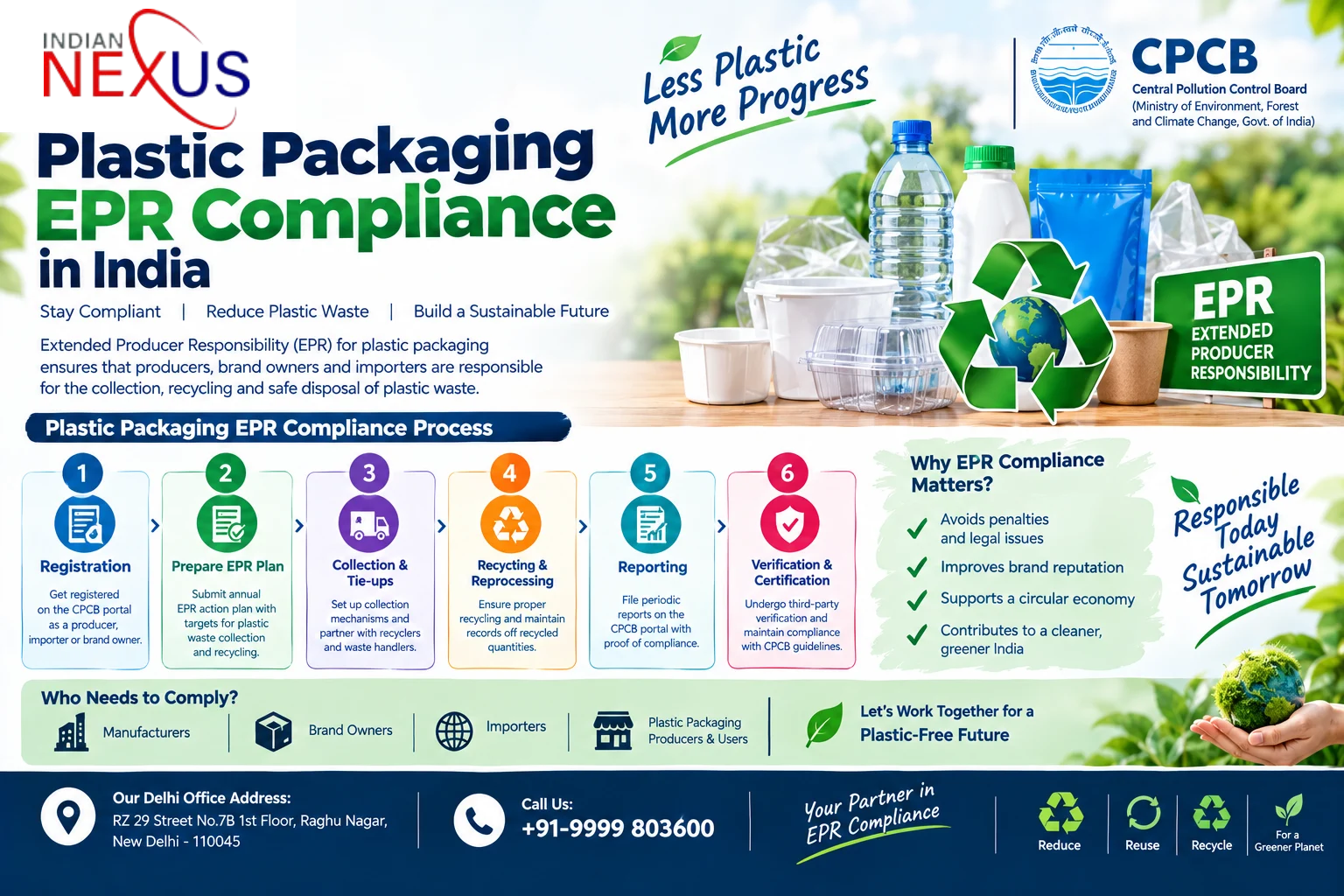

With rising environmental concerns and strict government regulations, EPR Certification has become a mandatory requirement for manufacturers, importers, and brand owners operating in India. The concept of Extended Producer Responsibility (EPR) ensures that businesses take responsibility for the entire lifecycle of their products, especially post-consumer waste. Whether it is plastic waste, e-waste, batteries, or tyres, compliance with EPR norms is no longer optional.
In this detailed guide, we explain the meaning, process, benefits, and compliance requirements of EPR Certification in India and how expert consultants like Indiannexus help businesses achieve hassle-free approvals.
What is EPR Certification?
EPR Certification is an authorization issued by the Central Pollution Control Board (CPCB) or State Pollution Control Boards (SPCBs) under India’s environmental regulations. It mandates producers to manage, collect, recycle, or dispose of waste generated from their products after end use.
The core principle of extended producer responsibility is to shift waste management responsibility from governments to producers, encouraging sustainable product design and recycling practices.
Who Needs an EPR Certificate in India?
Any entity involved in placing regulated products in the Indian market must obtain an EPR certificate, including:
Manufacturers
Importers
Brand Owners (PIBOs)
Online sellers and e-commerce platforms
Entities dealing with plastic packaging, electrical and electronic equipment, batteries, or tyres must comply with EPR approval requirements to avoid penalties.
Types of EPR Certification in India
Depending on the product category, EPR approval is required under different waste management rules:
Plastic Waste Management (PWM)
E-Waste Management
Battery Waste Management
Tyre Waste Management
Each category has unique targets, documentation, and compliance obligations under EPR Certification in India.
EPR Certification Process in India
The process of obtaining EPR Certification involves multiple regulatory steps:
Assessment of Eligibility
Identification of product category and waste type.Documentation Preparation
Includes GST details, IEC, company incorporation documents, product details, and waste generation data.Online Registration on CPCB Portal
Submission of application for EPR approval with required disclosures.EPR Plan Submission
A detailed plan explaining collection, recycling, and disposal mechanisms.Verification & Approval
CPCB evaluates the application and issues the Extended Producer Responsibility Certificate upon successful review.
Importance of Environmental Compliance
Environmental compliance is not just a legal obligation—it is a brand responsibility. Failure to comply with extended producer responsibility norms can lead to:
Heavy financial penalties
Suspension of business operations
Legal notices from CPCB/SPCB
Damage to brand reputation
Having a valid EPR certificate ensures lawful operations and demonstrates corporate commitment to sustainability.
Role of an EPR Certificate Consultant
Navigating the complex EPR framework can be challenging without expert guidance. A professional EPR Certificate Consultant assists in:
Identifying applicable EPR rules
Preparing accurate documentation
Drafting compliant EPR action plans
Coordinating with recyclers
Ensuring timely approvals and renewals
Consultants also help companies meet annual EPR targets and submit compliance reports.
Why Choose Indiannexus for EPR Certification?
Indiannexus is a trusted environmental compliance partner offering end-to-end EPR solutions across India. Their expert team provides:
Complete EPR registration and approval support
Customized EPR compliance strategies
Liaison with CPCB and SPCBs
Post-certification compliance and reporting
With Indiannexus, businesses can focus on growth while ensuring smooth compliance with EPR Certification in India regulations.
Benefits of EPR Certification
Obtaining an Extended Producer Responsibility Certificate offers multiple advantages:
Legal compliance with Indian environmental laws
Enhanced brand credibility
Contribution to a sustainable ecosystem
Reduced environmental footprint
Better market acceptance and investor trust
Conclusion
As India strengthens its environmental regulations, EPR Certification has become essential for sustainable and compliant business operations. From obtaining approvals to managing ongoing compliance, working with experienced consultants like Indiannexus ensures a seamless journey. Businesses that adopt extended producer responsibility today not only comply with the law but also contribute to a greener future.
FAQs on EPR Certification
Q1. Is EPR Certification mandatory in India?
Yes, EPR Certification is mandatory for producers, importers, and brand owners dealing with regulated products.
Q2. How long does it take to get an EPR certificate?
Typically, it takes 3–6 weeks, depending on documentation and CPCB verification.
Q3. What happens if EPR compliance is not met?
Non-compliance may result in penalties, legal action, or business suspension.
Q4. Can EPR approval be renewed?
Yes, EPR approval must be renewed periodically as per CPCB guidelines.