



In today’s Indian regulatory environment, manufacturers, importers, and brand-owners are increasingly required to secure an EPR certificate to demonstrate their commitment to sustainable waste management and to meet legal rulings under the concept of extended producer responsibility. That is why engaging specialised epr certificate consultants has become a smart business move. These consultants help you obtain the Extended Producer Responsibility Certificate, handle the paperwork, and ensure your company remains in full environmental compliance. In this blog, we will explore why selecting the right epr certificate consultants matters, how the process for EPR approval works, and what benefits you can expect when you meet your environmental compliance goals.
Understanding the EPR Landscape
The term extended producer responsibility places the burden on producers (manufacturers, importers, brand-owners) to manage the lifecycle of their products, including end-of-life collection, recycling, and disposal. Under India’s regulatory framework, these responsibilities are embodied in what is called an EPR certificate (or more formally, the Extended Producer Responsibility Certificate). The government body, typically the Central Pollution Control Board (CPCB), issues the certificate once the applicant meets the criteria.
However, the route to obtaining EPR approval can be complex—there are multiple product categories (electronics, batteries, plastic packaging, tyres), numerous forms, data submission, waste-management plans, targets for collection and recycling, ongoing reporting obligations, and more. For any business, ensuring this process is smooth and fully compliant is essential for environmental compliance. That’s exactly where epr certificate consultants step in.
What EPR Certificate Consultants Do
When you engage epr certificate consultants, you’re tapping into a specialised service that guides you through the entire lifecycle of compliance—from registration, to obtaining the EPR certificate, to implementation of your extended producer responsibility obligations. Some key functions:
Assessment of whether your product falls under the EPR regime and what category it belongs to (electronic equipment, plastic packaging, battery, tyre, etc).
Advising on the submission of the required documentation (company registration, PAN, GST, IEC, product details, estimated volumes of waste, recycling arrangements, etc.), which is essential for EPR approval.
Liaising with the regulators or portals (such as the CPCB’s EPR portal) on your behalf, tracking application status, responding to queries, and ensuring no delays.
Helping implement your waste-collection/recycling plan (since attaining the Extended Producer Responsibility Certificate is only the first step; meeting ongoing obligations is key for environmental compliance).
Preparing your annual returns, ensuring you meet targets, and advising on renewal of the certificate when it comes up. For example, recyclers generate EPR certificates, which producers may purchase to meet their targets.
How the EPR Approval Process Works
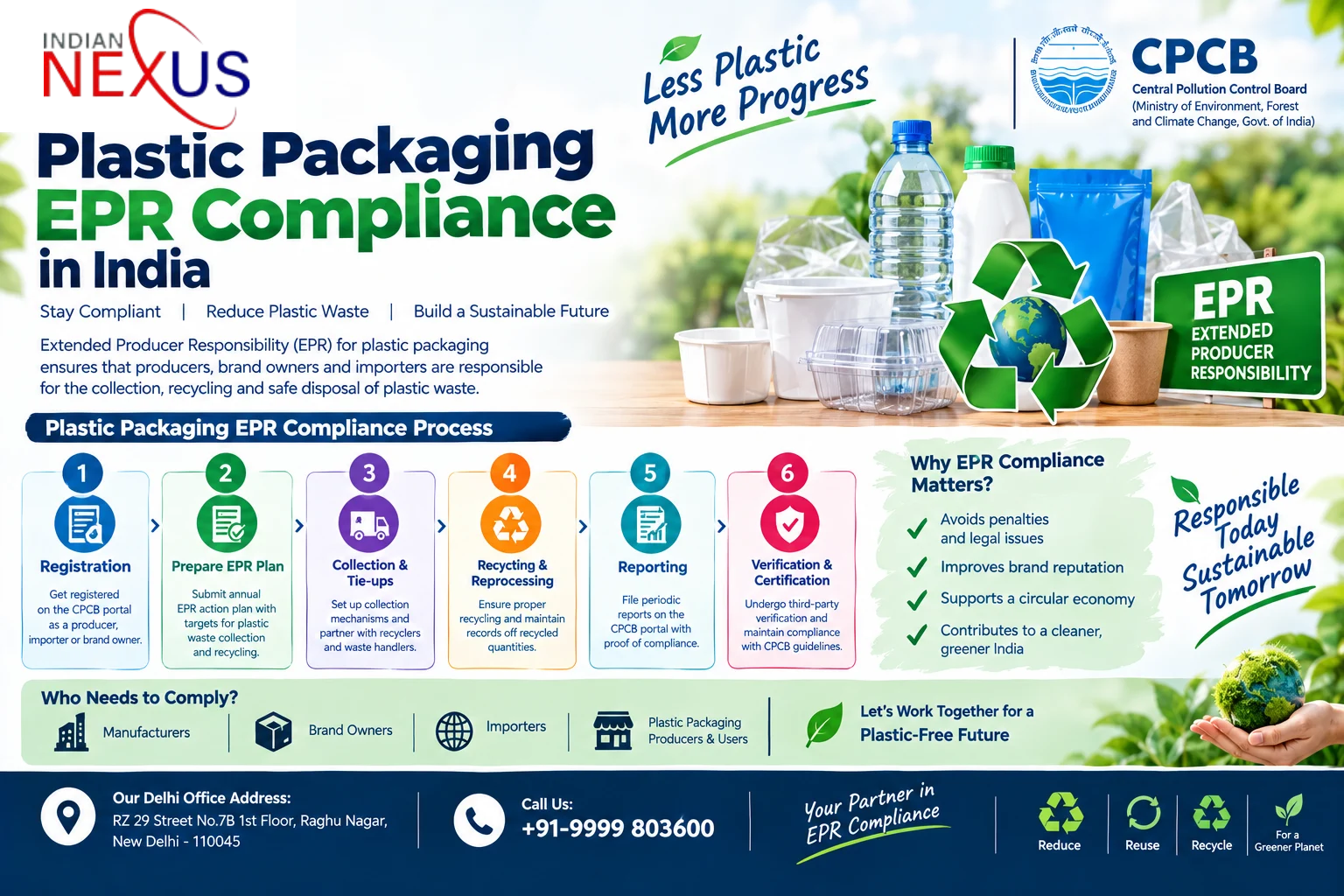
Here is a simplified walkthrough of how you obtain EPR approval and how consultants help:
Registration/Portal creation – Companies must log into the official portal established by the CPCB.
Application submission – Fill Form?1 (or relevant form), upload required documents (PAN, GST, CIN, IEC for importers, product list, waste estimates).
Waste-management plan submission – You must show how you intend to meet your extended producer responsibility: collection mechanisms, tie-ups with recyclers, and systems for take-back or reverse logistics.
Scrutiny and queries – The regulator reviews your submission; corrections may be requested. Consultants ensure swift responses.
Issuance of EPR Certificate – Once all criteria are met, the Extended Producer Responsibility Certificate is granted. The producer is then legally compliant.
Implementation & Reporting – After approval, you must implement the plan, meet collection/recycling targets, file annual returns, and maintain records — all vital for environmental compliance.
Renewal – Certificates may be valid for a limited time (e.g., five years). Renewal must be initiated in time. Consultants track this.
Why Hiring EPR Certificate Consultants is Advantageous
Expertise & efficiency: Because the regulations around extended producer responsibility are technical, working with a specialist ensures fewer errors, less delay, and smoother EPR approval.
Risk mitigation: Non-compliance with EPR obligations can lead to fines, shipment detention (in case of imports), or denial of market access. A consultant helps you avoid these risks.
Ongoing compliance support: It’s not just about getting the certificate — you’ll still need to implement the plan, maintain records, and meet targets. Consultants offer continuous environmental compliance support.
Focus on your core business: By outsourcing the regulatory navigation to an expert, you free your team to focus on product development, marketing, and customer service, rather than documentation.
Concluding Thoughts
If your business is involved in manufacturing, importing, or branding products that fall under the scope of extended producer responsibility, securing an EPR certificate is no longer optional — it’s a must for legal and environmental credibility. By engaging professional epr certificate consultants, you not only speed up the path to EPR approval, but also lock in ongoing support for environmental compliance, freeing you to focus on growing your business. When done right, you’re not just compliant — you’re positioned as a sustainability-forward brand.
Trust the right consultant to secure your certificate, implement your plan, and keep your operations aligned with India’s fast-evolving environmental standards.