




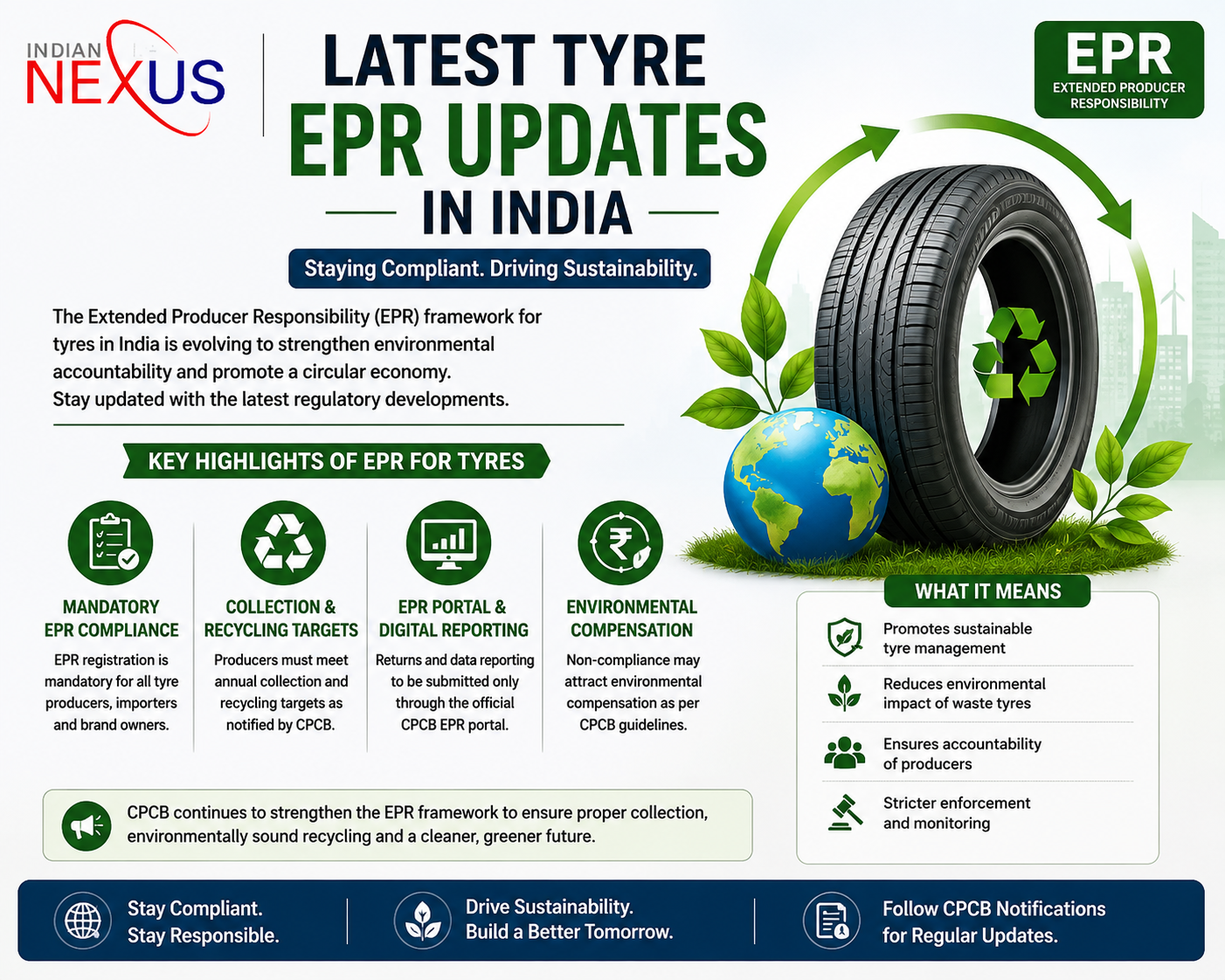
Here's what's Latest Tyre EPR Updates in India. Tire manufacturers, importers, recyclers, and retreaders will see some interesting new changes as the Government of India through Central Pollution Control Board (CPCB) has made stricter compliances for dealing with waste tyres effectively and sustainably in India. These measures aim to build a sustainable environment and a Circular Economy within India.
If your company is in the tire manufacturing and distribution business, then it's critical to stay updated about Latest Tyre EPR Updates in India. Regulations to do with EPR are now changing at a faster pace, compelling businesses to achieve a set number of recycling goals while managing detailed documents.
Understanding Tyre EPR in India
Extended Producer Responsibility (EPR) for Tyres: In this concept, manufacturers of tyres will be held responsible for proper collection and recycling/disposal of the waste tyres of their manufactured products. The producers will have to register in the CPCB portal and will have to ensure that the tyres are collected/recycled per year.
The Newest Tyre EPR Guidelines in India call for transparency, digital reporting, and track and trace of the tyre recycling value chain. Businesses are to partner with authorised recyclers and track waste tyre operations.
Key Highlights of the Latest Tyre EPR Regulations
Several important developments have been introduced under the Tyre EPR Updates India framework:
Mandatory online registration through the CPCB portal.
Increased monitoring of tyre recycling activities.
Defined annual recycling obligations for producers and importers.
Digital generation and transfer of EPR certificates.
Strict enforcement against non-compliance.
Recognition of authorized recyclers for issuing EPR credits.
Enhanced reporting requirements for tyre waste management.
These Latest Tyre EPR Regulations are designed to strengthen accountability and ensure proper management of end-of-life tyres.
CPCB Tyre EPR Registration Requirements
Businesses covered under the regulation must obtain CPCB Tyre EPR Registration before commencing regulated activities. The registration process generally requires:
Company incorporation documents
GST registration details
PAN card information
Product and sales details
Authorized signatory documents
Business address proof
The Latest Tyre EPR Updates in India make CPCB registration a crucial compliance requirement for tyre manufacturers and importers.
Tyre Recycling Compliance and EPR Certificates
One of the most important aspects of EPR for Waste Tyres is obtaining valid EPR certificates. Authorized recyclers generate certificates after processing waste tyres according to approved standards. Producers and importers purchase these certificates to fulfill their recycling obligations.
The Latest Tyre EPR Updates in India have introduced greater scrutiny in certificate generation and transfer mechanisms. You also have to guarantee that you have recycled everything through an approved recycler.
Tyre EPR Targets India
The government has established annual Tyre EPR Targets India to increase tyre recycling rates and reduce environmental pollution. These targets are based on the quantity of tyres introduced into the market and may vary depending on business category and operational scale.
Compliance with Tyre Recycling Obligations India is essential to avoid penalties and regulatory action. Organizations should regularly review target calculations and maintain accurate records.
Why Businesses Need Professional Guidance
As part of the regulatory system for Tyre Waste Management Rules, India is no less intricate. To simplify registration, reporting, and certificate management, most companies decide on hiring professional consultants.
In short, Indiannexus guides businesses to know about the Latest Tyre EPR Updates in India, and gets you registered, handled compliance papers and meets compliance requirements. We offer professional support to minimize compliance risks and ensure proper communication with regulatory bodies.
Benefits of Timely Compliance
Following the Tyre EPR Guidelines 2026 offers several advantages:
Improved environmental responsibility
Better corporate reputation
Reduced compliance risks
Smooth business operations
Regulatory approval and recognition
Contribution to sustainable waste management
Enhanced recycling ecosystem participation
As per the latest Tyre EPR Updates in India, it is an opportunity for industries to comply with the Indian sustainability goals along with national regulations and laws.
Conclusion
With the Latest Tyre EPR Updates in India making rounds across the nation, businesses associated with tyre manufacturing, import, and recycling need to adapt to the latest norms, complete their recycling goals and keep their records in place. To comply with the Tyre Waste Recycling Rules, get the Tyre EPR Certificate and to partner with authorized recyclers of the waste tyres, continue to read below.
FAQs.
1. What are the recent updates on Tyre EPR in India?
The latest updates include stricter CPCB monitoring, digital certificate systems, mandatory registration, and defined recycling obligations.
2. Who needs CPCB Tyre EPR Registration?
Tyre manufacturers, importers, and certain producers introducing tyres into the Indian market must register.
3. What is a Tyre EPR Certificate?
It is a compliance certificate generated by authorized recyclers after processing waste tyres.
4. What are Tyre EPR Targets India?
These are annual recycling obligations assigned to producers based on tyre sales and market introduction quantities.
5. Why should we care about Tyre EPRs?
Instead, it is about minimizing the carbon footprints of disposing old tyres, fostering a circular economy.
6. What might be some consequences of not becoming compliant? This could include fines, potential lawsuits, or restrictions on your operations.
7. So what does a Tyre EPR Compliance Consultant do?
Well, they will help your business with the compliance procedures for registration, paperwork, hitting target ET's, reporting and maintaining said compliance.