



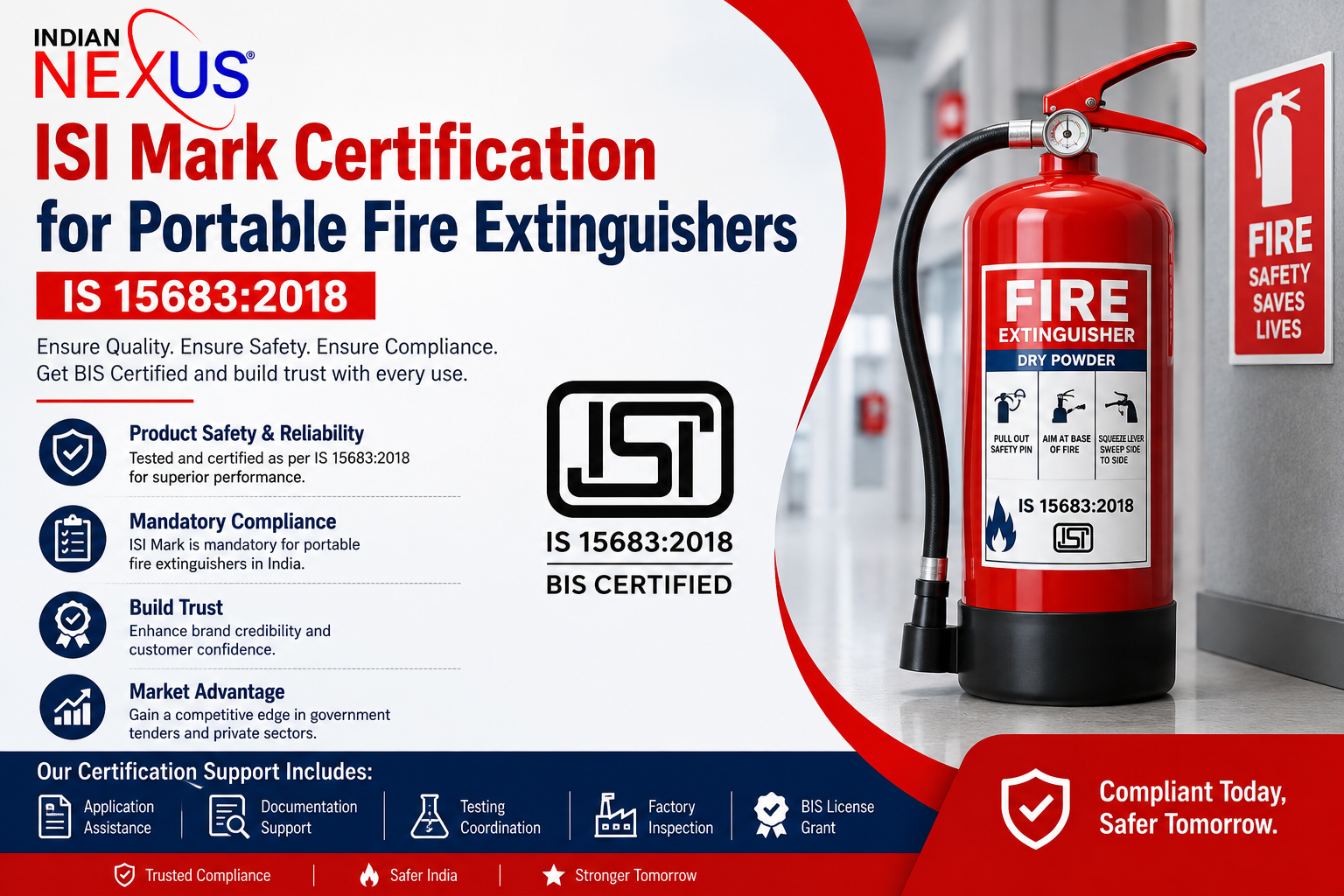
Portable fire extinguishers are necessary safety equipment found in residences, offices, industrial and commercial establishments, schools, universities, and other public places. They should be reliable and functional in times of need. Therefore, manufacturers have to adhere to quality norms stipulated in the Indian standards for Portable Fire Extinguishers, to be used as safety equipment. ISI Mark Certification For Portable Fire Extinguishers IS 15683:2018.
For producers, the certification aids them in their quest to verify conformance with India's rules as well as earning the confidence of consumers and regulatory bodies. Products marked with an ISI certification are, in truth, safe for consumers.
Understanding IS 15683:2018 Standard
The ISO 15683:2018 standard lists all the requirements for the design of, how portable fire extinguishers should be constructed and tested and set to operate safely, marking for and performance indicators required.
Fire extinguisher manufacturers will require BIS certification for portable fire extinguishers. All Indian standards for quality assurance should be adhered to for these fire extinguishers. Failure to do so may invite regulatory penalties and product marketing bans.
Importance of ISI Certification for Portable Fire Extinguishers
Advantages of getting ISI Certification for Portable Fire Extinguishers include:
Showing how it meets Indian safety standards.
Enhances customer confidence and market credibility.
Improves product acceptance in government and private tenders.
Ensures consistent product quality and safety.
Supports long-term brand reputation.
Make crossing the market borders more pleasant in India.
Fewer chances of product recalls, and compliance problems.
ISI Mark is for fire extinguisher products. The presence of an ISI mark implies that the extinguisher has passed all the required tests and inspections.
Certification Process
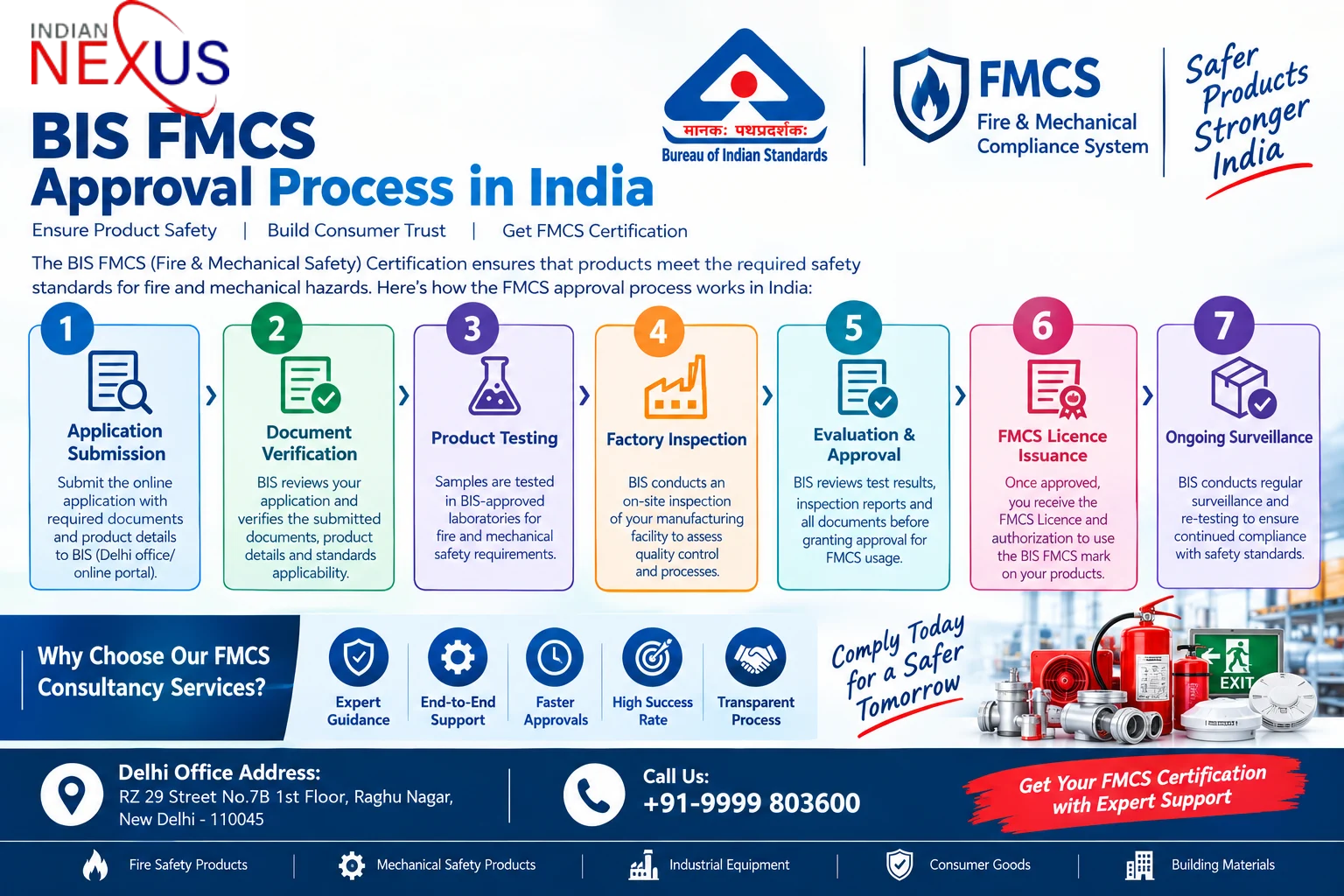
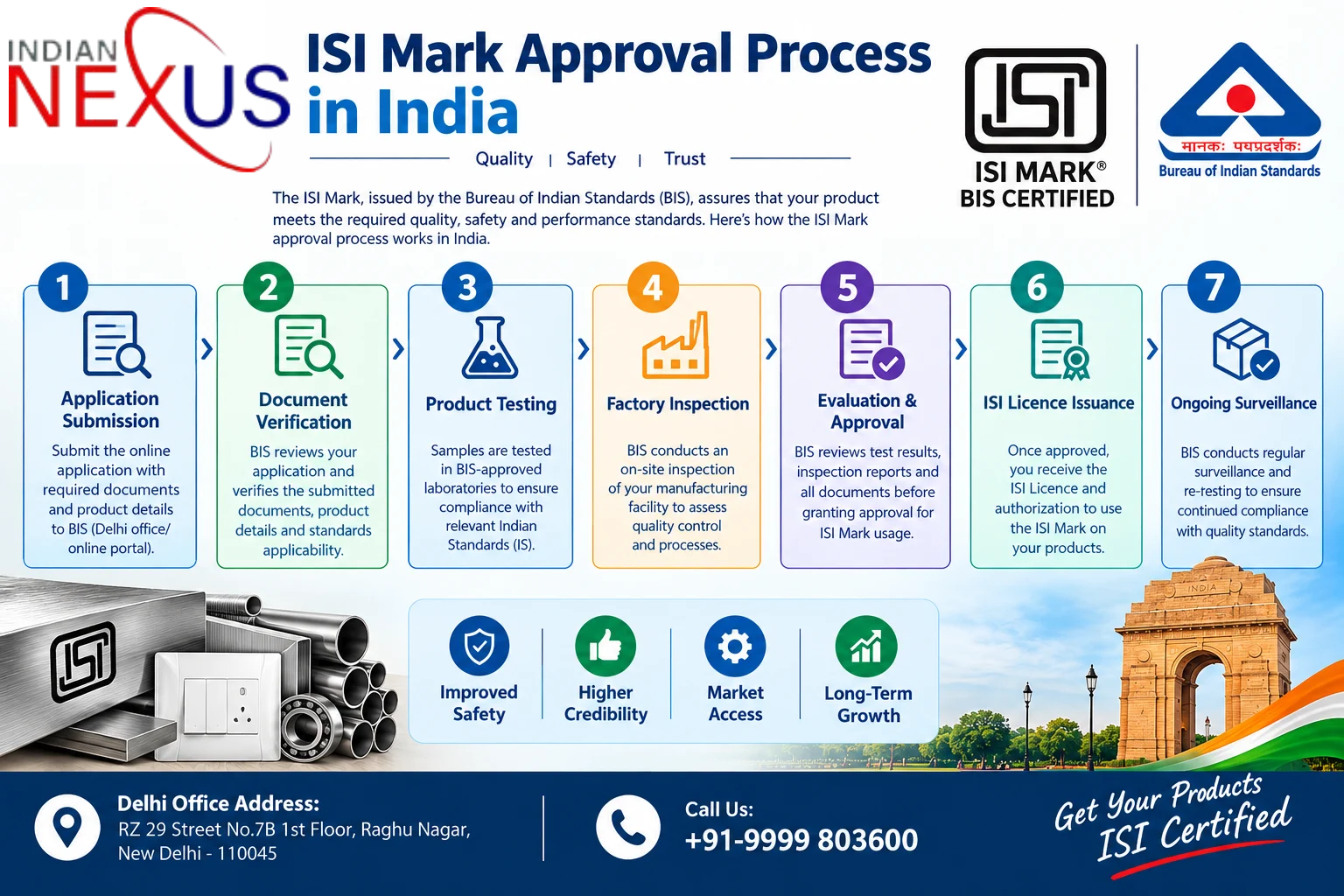
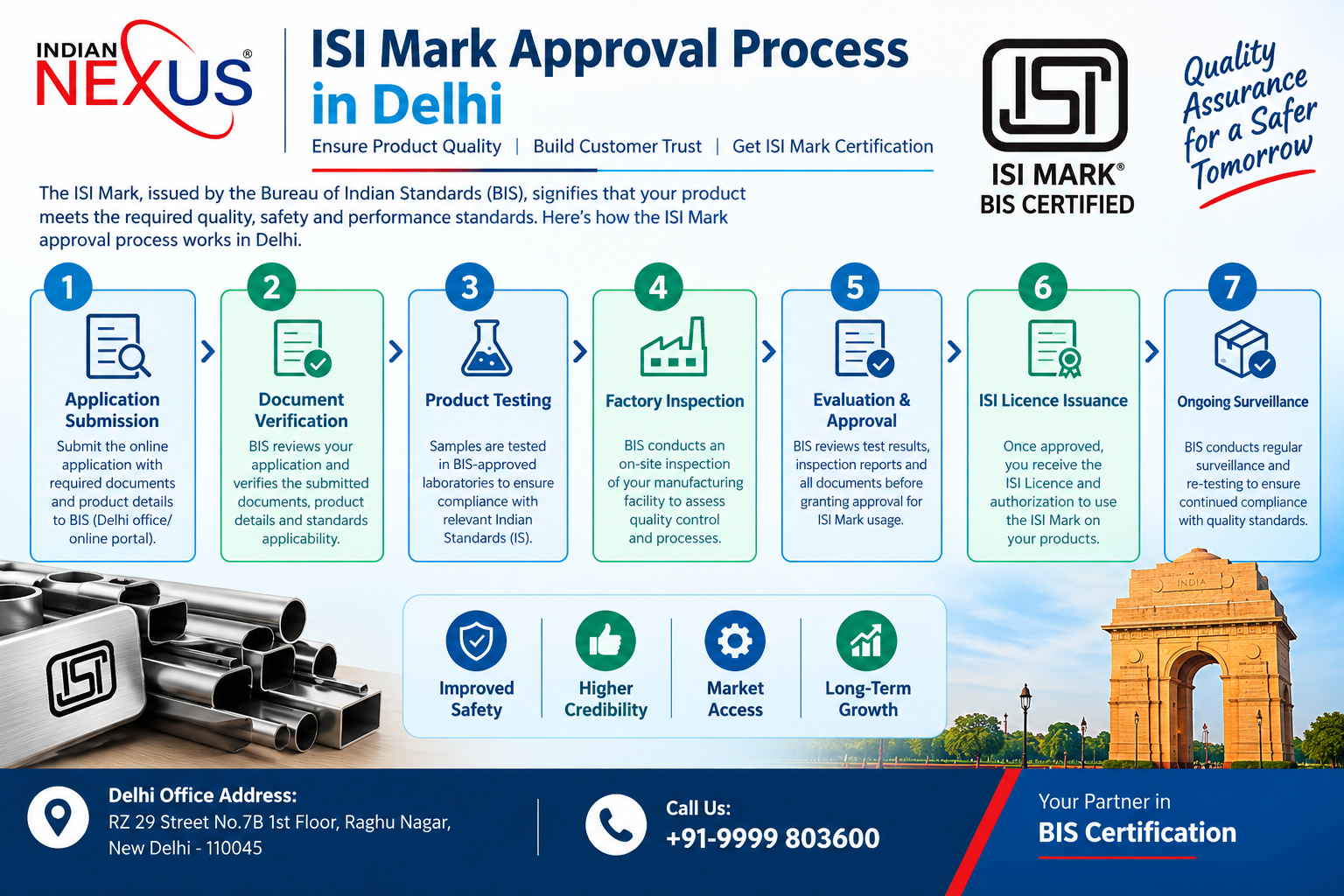
Manufacturers seeking BIS Approval for Portable Fire Extinguishers generally follow these steps:
1. Application Submission
The manufacturer submits an application along with company details, manufacturing information, and technical specifications.
2. Documentation Review
BIS evaluates the submitted documents and production capabilities.
3. Product Testing
Samples are tested in BIS-recognized laboratories to verify compliance with IS 15683:2018 Certification requirements.
4. Factory Inspection
BIS officials inspect the manufacturing facility to assess quality control systems and production processes.
5. Grant of License
After successful evaluation, BIS issues the ISI Mark License for Fire Extinguishers.
6. Ongoing Surveillance
Periodic inspections and testing ensure continued compliance with Bureau of Indian Standards Certification requirements.
Documents Required
Manufacturers typically need:
Business registration certificates
Factory license
Manufacturing process details
Product specifications
Quality control records
Test reports
Calibration certificates
Machinery details
Authorized signatory documents
Proper documentation helps accelerate BIS ISI Mark Registration and approval procedures.
Why Professional Assistance Matters
They'll run you through certifications that include a variety of technical assessments and product testing, on-site factory inspections and compliance checks. Any one of those can lead to errors and delays without help from a seasoned consultant.
At Indiannexus, we empower your company at every step of the certification process with our reliable application preparation, testing arrangements, conformity compliance and interaction with BIS. We empower Indian manufacturers to efficiently gain the Fire Extinguisher Quality Certification.
Mid-Process Compliance Requirements
For manufacturers to get ISI Mark Certification for Portable Fire Extinguishers IS 15683:2018, there has to be a rigorous Quality management system followed. BIS inspectors check this for manufacturing processes, quality control, laboratory testing processes, incoming raw materials testing processes, etc., along with product tracking processes.
Fulfillment of Indian compliance norms for portable fire extinguishers guarantees that the product is made adhering to the given performance and safety parameters. Periodic internal audits and quality inspections validate its ongoing compliance.
Benefits for Manufacturers
Certification provides:
Enhanced market reputation
Regulatory compliance assurance
Competitive advantage
Improved customer trust
Better tender eligibility
Higher product reliability
Reduced compliance risks
More importantly, Fire Extinguisher Testing and Certification build greater trust between distributors, institutional customers and users on the ground.
Conclusion
To manufacture and supply quality Portable Fire Extinguishers in India, there is a necessity to obtain ISI Mark Certification for Portable Fire Extinguishers IS 15683:2018. This compliance with BIS Mandatory ISI Certification India indicates manufacturers' emphasis on producing safe and secure fire extinguishing solutions. You are able to expand the product catalog and grow your business steadily through purchasing Fire Safety Equipment Certification and meeting BIS standards.
FAQs
1. Are there portable fire extinguishers in IndiaISI certified?
As a matter of fact, No! Here, all portable fire extinguishers need to be BIS certified in India.
2. Which standard portable fire extinguishers are tested under?
As I said before, they are all tested under IS 15683:2018 standard.
3. Which authority issues the ISI certification license?
You can obtain your certification license from Bureau of Indian Standards (BIS).
4. How long does it take to get this product certified?
The total time taken for getting your product to be BIS certified would be anywhere around 48 hours. However, it would still depend on the kind of testing done, reports and documentation, and of course inspection.
5. Are product samples tested before approval?
Absolutely. Testing in the lab which has been approved by BIS.
6. Can foreign manufacturers obtain this certification?
Requirements for Certification. Also vary for foreign manufacturers and might also be a sort of approval.
7. Why should manufacturers seek professional consulting support?
Aptitude to Co-ordinate documentation, testing, inspections, and regulatory compliance.