






India is one of the world’s fastest-growing consumer markets, attracting manufacturers from across the globe. However, foreign companies planning to export products to India must comply with strict regulatory standards before entering the Indian market. One of the most important compliance requirements is Foreign Manufacturer Certification under the BIS framework.
For international businesses, obtaining the right certification ensures legal market access, consumer trust, and smooth customs clearance. Whether you manufacture electronics, machinery, steel products, chemicals, or consumer goods, understanding the certification process is essential.
Companies like Indiannexus help overseas brands simplify the approval journey through professional regulatory guidance and end-to-end compliance support.
What is Foreign Manufacturer Certification?
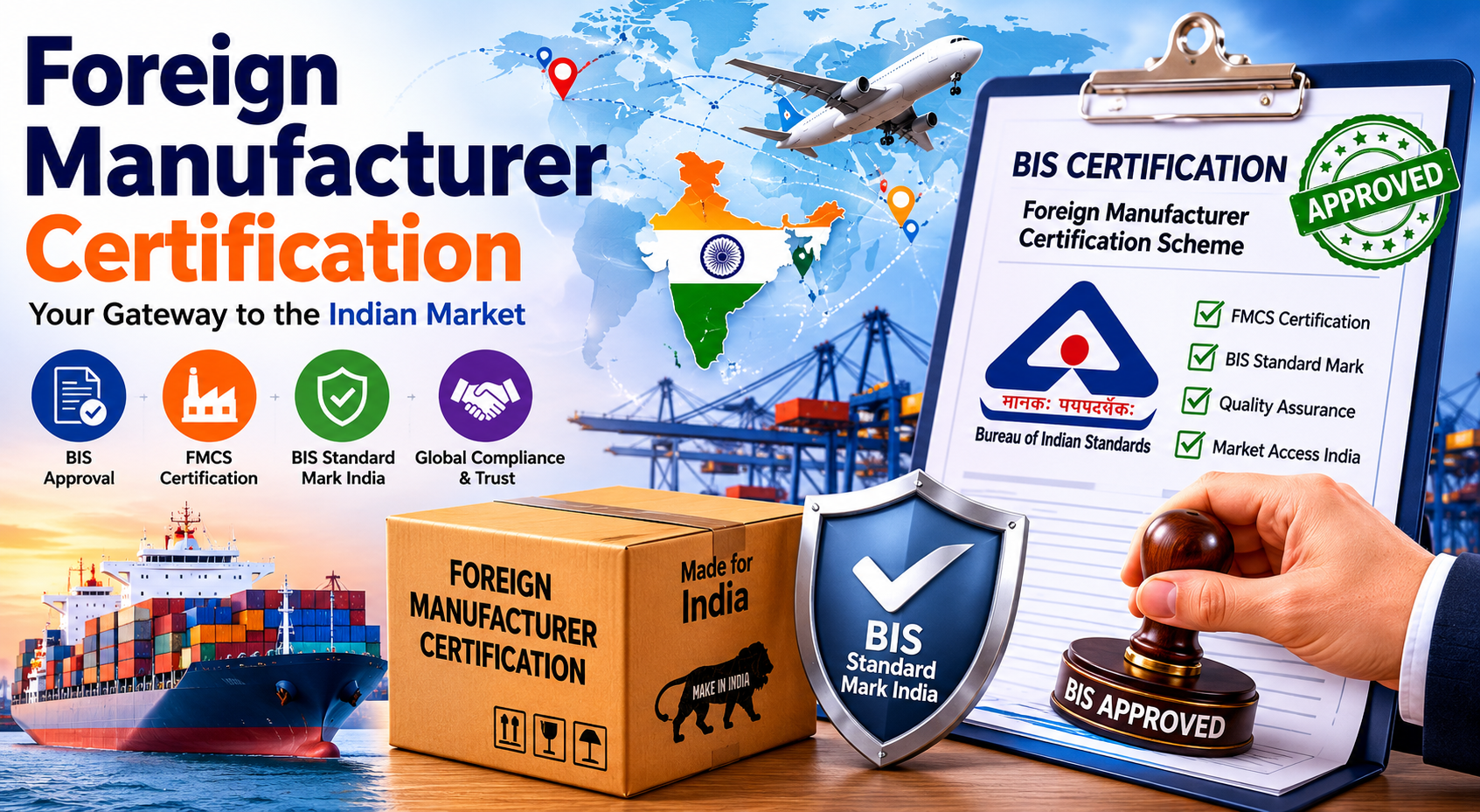
Foreign Manufacturer Certification is a regulatory approval process that allows overseas manufacturers to use the BIS Standard Mark India on products intended for the Indian market. This certification confirms that products meet Indian safety and quality standards prescribed by the Bureau of Indian Standards (BIS).
The certification is mainly governed under the Foreign Manufacturers Certification Scheme (FMCS), which enables foreign factories to obtain BIS licenses directly from India’s national standards authority.
Without proper certification, many regulated products cannot be imported or sold in India.
Understanding FMCS Certification in India
The FMCS Certification in India framework was introduced to ensure that imported products meet the same quality benchmarks as domestically manufactured goods.
Under this scheme, foreign manufacturers can apply for:
Product testing
Factory inspection
BIS licensing
Permission to use the BIS Standard Mark India
The objective of FMCS Certification is to maintain consumer safety, product reliability, and fair market practices.
Products covered under mandatory certification include:
Electrical appliances
Cement products
Automotive components
Steel materials
Batteries
Household electronics
Chemicals and industrial products
Importance of BIS FMCS Certification
Obtaining BIS FMCS Certification offers several advantages for foreign businesses entering India:
1. Legal Market Entry
Many products require mandatory BIS approval before import or sale in India.
2. Consumer Trust
The BIS mark assures Indian customers about product quality and safety.
3. Smooth Customs Clearance
Certified products face fewer import-related delays.
4. Competitive Advantage
Products carrying the BIS Standard Mark India often gain stronger market credibility.
5. Long-Term Business Expansion
Compliance helps foreign companies establish a stable presence in India.
Because of these benefits, Foreign Manufacturer Certification has become a strategic requirement rather than merely a legal formality.
Foreign Manufacturers Certification Scheme Explained
The Foreign Manufacturers Certification Scheme allows overseas factories to apply directly for BIS licensing without establishing a manufacturing unit in India.
The scheme includes:
Application submission
Product sample testing
Documentation review
Factory audit
Grant of BIS license
Once approved, manufacturers receive authorization to use the BIS mark on certified products.
The process ensures imported goods meet Indian technical and safety standards consistently.
FMCS Approval Process Step-by-Step
The FMCS Approval Process involves several stages. Understanding each stage helps foreign companies avoid delays and rejection.
Step 1: Product Identification
Determine whether the product falls under mandatory BIS certification.
Step 2: Documentation Preparation
Prepare required documents such as:
Factory registration certificates
Manufacturing process details
Quality control procedures
Product specifications
Test reports
Step 3: Product Testing
Samples are tested in BIS-recognized laboratories.
Step 4: BIS Application Filing
The application is submitted under the FMCS Registration India procedure.
Step 5: Factory Inspection
BIS officials inspect the overseas manufacturing facility.
Step 6: Grant of License
After successful evaluation, the foreign manufacturer receives the BIS license.
This entire Foreign Manufacturer Certification process may take several months depending on documentation accuracy and audit readiness.
Role of BIS FMCS Consultant
A professional BIS FMCS Consultant helps manufacturers manage the complex compliance process efficiently.
Consultants assist with:
Product category identification
Documentation preparation
Technical compliance
Laboratory coordination
BIS communication
Audit preparation
License renewal support
Indiannexus supports global manufacturers by simplifying regulatory requirements and ensuring faster certification approvals.
BIS Certification India for Global Manufacturers
Obtaining BIS Certification India is crucial for businesses seeking long-term access to the Indian market.
India’s regulatory environment is continuously evolving, and non-compliance can lead to:
Shipment detention
Financial penalties
Import rejection
Product recalls
Therefore, foreign businesses should prioritize certification before export planning.
Challenges in Foreign Manufacturer Certification
While the certification process offers significant benefits, foreign manufacturers often face several challenges:
Technical Documentation Errors
Incorrect or incomplete paperwork is one of the leading causes of delays.
Product Testing Issues
Failure to meet Indian standards may require product redesign.
Communication Gaps
Coordinating with BIS authorities from another country can be difficult.
Factory Audit Preparation
Manufacturing units must comply with BIS quality management requirements.
Timeline Delays
Improper planning can extend approval timelines considerably.
Working with experienced compliance professionals helps minimize these challenges.
Why Foreign Manufacturers Need BIS Standard Mark India
The BIS Standard Mark India acts as a symbol of quality assurance and regulatory compliance.
Products carrying this mark gain:
Greater customer confidence
Better retail acceptance
Reduced compliance risks
Easier import processing
For many regulated products, selling without the BIS mark is prohibited under Indian law.
This makes Foreign Manufacturer Certification a mandatory business requirement for international exporters.
Conclusion
India offers massive growth opportunities for global manufacturers, but regulatory compliance remains critical for successful market entry. Obtaining Foreign Manufacturer Certification through the FMCS route ensures that products meet Indian safety and quality standards.
From documentation and testing to factory audits and licensing, the process requires careful planning and technical expertise. Businesses that secure FMCS Certification in India not only achieve legal compliance but also strengthen customer trust and market credibility.
With professional assistance from experts like Indiannexus, foreign manufacturers can navigate the certification process smoothly and expand confidently into the Indian market.
FAQs on Foreign Manufacturer Certification
1. What is Foreign Manufacturer Certification?
It is a BIS approval process that allows overseas manufacturers to sell certified products in India legally.
2. What is FMCS Certification in India?
FMCS Certification in India is a BIS scheme designed for foreign manufacturers seeking product certification for the Indian market.
3. Is BIS certification mandatory for imported products?
Yes, many products require mandatory BIS approval before import and sale in India.
4. What is the Foreign Manufacturers Certification Scheme?
It is a BIS regulatory framework allowing overseas factories to obtain BIS licenses directly.
5. How long does the FMCS Approval Process take?
The timeline varies but usually takes several months depending on testing and factory inspections.
6. Why is the BIS Standard Mark India important?
It confirms that products comply with Indian quality and safety standards.
7. Can a consultant help with BIS FMCS Certification?
Yes, a professional BIS FMCS Consultant can simplify documentation, audits, and application procedures.
8. What documents are required for FMCS Registration India?
Manufacturing licenses, product details, quality documents, and test reports are commonly required.