





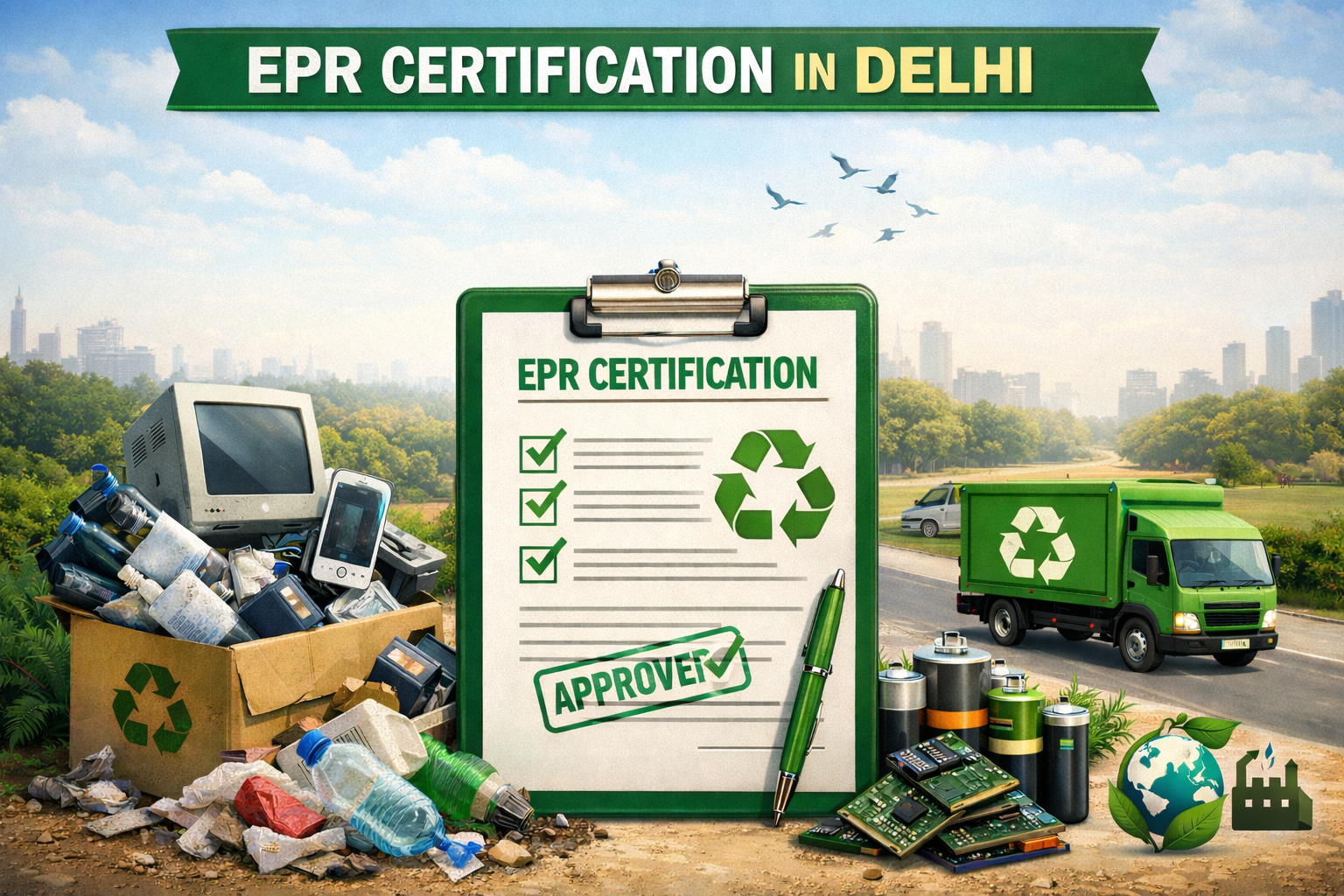
With the rise of electronic waste and plastic pollution, regulatory authorities in India have tightened regulations for businesses to ensure responsible waste management. EPR Certification in Delhi has become mandatory for producers, importers, and brand owners involved in the production, import, and distribution of electronics, plastics, batteries, and other notified products. Under the framework of extended producer responsibility, businesses are required to take accountability for the post-consumer waste generated from their products.
Delhi, being a major commercial and manufacturing hub, witnesses strict monitoring by pollution control authorities. Obtaining an EPR Certificate not only ensures legal compliance but also enhances brand credibility and environmental responsibility. Professional consultants like IndianNexus help businesses navigate the complex regulatory process smoothly.
What is EPR Certification?
Extended Producer Responsibility (EPR) is an environmental policy under which producers are responsible for managing the end-of-life disposal of their products. The Extended Producer Responsibility Certificate is issued by the Central Pollution Control Board (CPCB) after evaluating a company’s waste collection, recycling, and disposal plan.
EPR Certification in Delhi applies to manufacturers, importers, and brand owners operating within the National Capital Region and beyond, ensuring complete environmental compliance.
Why EPR Certification in Delhi is Mandatory
Delhi generates a significant amount of e-waste and plastic waste annually. To manage this efficiently, regulatory bodies have made EPR approval compulsory. Without a valid EPR Certification, businesses may face:
Heavy penalties and legal action
Cancellation of import/export licenses
Restrictions on product sales
Damage to brand reputation
Complying with extended producer responsibility norms helps companies reduce environmental impact and align with sustainable business practices.
Products Covered Under EPR Certification
EPR Certification applies to multiple categories, including:
Electrical and Electronic Equipment (EEE)
Plastic packaging materials
Lithium-ion and lead-acid batteries
Consumer electronics and IT equipment
Companies operating in these sectors must obtain EPR Certification in India before commencing or continuing operations.
EPR Certification Process in Delhi
The process of obtaining EPR Certification involves multiple steps and regulatory documentation:
Business Registration Analysis
Verification of company incorporation, GST, IEC, and product category.EPR Plan Preparation
A detailed plan outlining collection, channelization, recycling, and disposal mechanisms.Recycler & PRO Tie-ups
Authorized recyclers and Producer Responsibility Organizations must be engaged.Online Application Submission
Filing on the CPCB EPR portal with supporting documents.CPCB Evaluation & Approval
Authorities scrutinize the application before issuing the EPR Certificate.
Due to frequent regulatory updates, working with an experienced EPR Certificate Consultant is highly recommended.
Role of IndianNexus in EPR Certification
IndianNexus is a trusted compliance consultancy offering end-to-end support for EPR Certification in Delhi. With years of experience in environmental compliance, IndianNexus ensures:
Accurate documentation and filing
Faster EPR approval
Expert guidance on CPCB regulations
Ongoing compliance and reporting support
Their expertise helps businesses avoid delays, rejections, and penalties while achieving full regulatory compliance.
Benefits of EPR Certification for Businesses
Obtaining EPR Certification in Delhi offers several advantages:
Legal authorization to operate in India
Improved brand image and sustainability score
Contribution to circular economy initiatives
Smooth import and sales operations
Compliance with environmental compliance norms
It also positions businesses as socially responsible entities in the eyes of regulators and consumers.
Common Challenges in EPR Compliance
Many companies struggle with:
Understanding CPCB guidelines
Selecting authorized recyclers
Preparing accurate EPR plans
Meeting annual compliance targets
Engaging a professional EPR Certificate Consultant minimizes these challenges and ensures long-term compliance.
FAQs on EPR Certification in Delhi
1. What is EPR Certification in Delhi?
It is a mandatory authorization issued by CPCB for producers, importers, and brand owners to manage post-consumer waste responsibly.
2. Who needs an EPR Certificate?
Manufacturers, importers, and brand owners dealing in electronics, plastic packaging, or batteries require EPR Certification.
3. Is EPR Certification mandatory in India?
Yes, EPR Certification in India is mandatory under environmental protection laws.
4. How long does EPR approval take?
The timeline varies but usually takes 30–90 days, depending on documentation and CPCB review.
5. What happens if a company operates without EPR Certification?
Companies may face penalties, product bans, or legal action by pollution control authorities.
6. Can EPR Certification be renewed?
Yes, EPR Certification must be renewed periodically based on CPCB guidelines.
7. Why hire an EPR Certificate Consultant?
A consultant ensures correct documentation, faster approval, and ongoing environmental compliance.