





Used Oil Management and Recycling is one of the major environmental challenges in India. The organizations which are into manufacturing, import, recycle, collection or process of lubricants are bound to follow the environmental rules set by the Indian government. In addition to this, EPR Certification for Used oil is a crucial aspect required by every organization.
Indiannexus offer dedicated services for EPR Certification for Used oil where they assist businesses in every aspect, be it regulatory requirements, documentation or registration with appropriate authority.
What is EPR Certification for Used Oil?
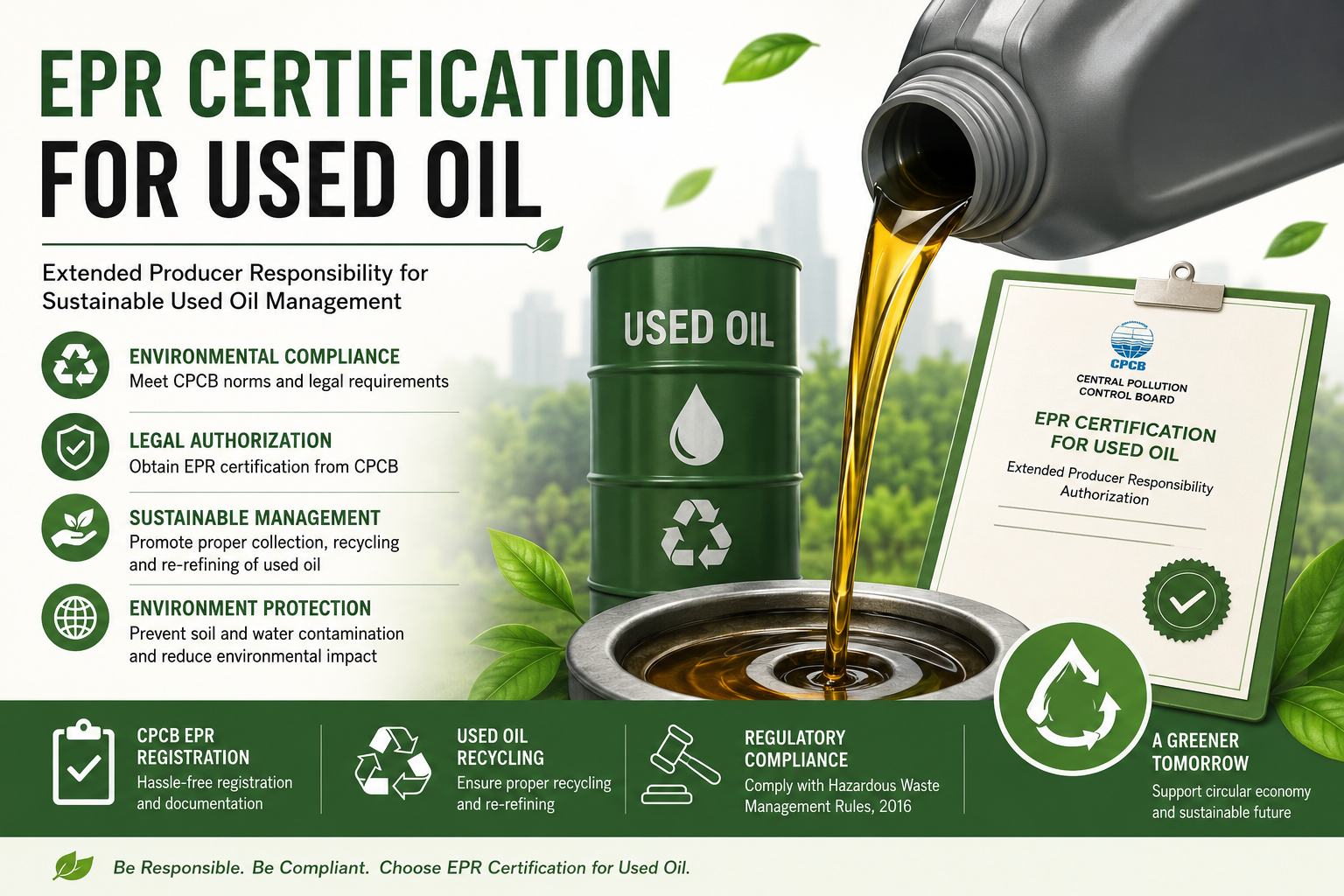
EPR Certification for Used Oil is an aspect of the Extended Producer Responsibility (EPR) system that covers the compliant and sound management of waste oils, waste used oils, and used lubricating oils, the producer, importer and brand owner who are accountable for its proper collection, recycling and disposal.
The objective of EPR for Used Oil is to prevent pollution, ensure reuse/recycling of used oils and conserve resources, through authorized recycling.
Importance of EPR Certification for Used Oil
Due to the rising concern over environment and the enhanced environmental regulations it has become a necessity to achieve EPR Certification for Used Oil for the concerned institutions. Any non-conformity may result in penalties, business hindrances, legal action.
Key benefits include:
The environmental regulations compliance
Enhancements in corporate sustainability
Enhanced brand reputation
Better waste management practices
Support for circular economy initiatives
The reduction of impact on the environment
Long-term environmental accountability should include EPR Certification for Used Oil as part of the compliance approach for companies.
Who Needs EPR Certification for Used Oil?
The requirement generally applies to:
Producers of lubricating oils
Importers of lubricating oils
Manufacturers of oil-based products
Waste oil collection agencies
Used oil recyclers
Re-refining facilities
Brand owners dealing with lubricants
These entities must fulfill their obligations under Used Oil Producer Responsibility regulations and maintain compliance with CPCB requirements.
EPR Registration Process for Used Oil
There is often a process involved when acquiring an EPR Certificate for Used Oil, and this normally consists of various steps:
1. Applicability determination:
Business falls under the specific EPR regulations, obligations defined.
2. Preparation of documents
Required documents may include:
Company registration certificates
PAN and GST details
Product information
Import or manufacturing details
Authorized signatory documents
3. EPR Portal Registration
The applicant must complete EPR Portal Registration and submit all required information through the designated compliance platform.
4. CPCB Review
The regulatory body evaluates the application and confirms the supplied information.
5. Approval and Authorization
After passing the validation, CPCB EPR Authorization shall be granted and it permits to legally function under the EPR scheme.
Key Compliance Requirements
Organizations obtaining EPR Certification for Used Oil must comply with various obligations, including:
Collection of used oil
Recycling through authorized recyclers
Record maintenance
Annual reporting
Target fulfillment
Environmental audits
These requirements support effective Used Oil Collection and Recycling while ensuring regulatory compliance.
Benefits of Professional EPR Consulting
Environmental laws can be difficult to follow. An experienced used oil EPR Consultant can simplify the registration process and prevent expensive mistakes.
Professional support provides:
Regulatory guidance
Documentation assistance
Application filing support
Compliance monitoring
CPCB communication assistance
Annual reporting support
At Indiannexus, we offer end-to-end EPR Compliance Services India to simplify the entire process.
Sustainable Used Oil Management
Proper Waste Oil Management is essential for protecting the environment and conserving natural resources. Through authorized recycling and recovery mechanisms, businesses can contribute to:
Reduced soil contamination
Lower water pollution
Resource conservation
Circular economy development
Environmental Industrial processes
Meeting Used Oil Recovery and Recycling regulations aids businesses in attaining their environmental goals without impeding their productivity.
Why Choose Indiannexus?
Indiannexus is a trusted compliance partner providing expert support for EPR Certification for Used Oil across India. The team keeps abreast with the changes in the regulatory requirements and guarantees that approvals are obtained in time and clients are compliant in all respects.
Our services include:
Used Oil EPR Registration
CPCB Used Oil Registration
Environmental Compliance for Used Oil
Waste Oil Recycling Certificate Assistance
Hazardous Waste Compliance Support
Regulatory Documentation Services
We are committed to helping businesses meet all legal obligations while promoting sustainable waste management practices.
Conclusion
The EPR certification for Used Oil is crucial for any organization dealing in the manufacturing, importing, collecting, processing, recycling, or handling of Used lubricating oils. This will not only comply with the regulations of the Indian Government but will also portray itself as an organization having ethical & sustainable business practices.
With a team of skilled professionals at Indiannexus, the companies are assured of the seamless and secure obtaining of the EPR certification for Used Oil.
Frequently Asked Questions (FAQs)
1. What is the used oil EPR certification?
It is a type of environmental regulatory requirement that mandates that producers and importers properly take care of the used oil and recycling of it.
2. Who is responsible for the used oil EPR registration?
Producers and importers of the lubricant oil, brand owners, recyclers, and other concerned persons engaged in lubricating oil handling may be required.
3. By which authority is EPR authorisation issued?
EPR authorization is granted by the Central Pollution Control Board (CPCB).
4. What are the requirements for the registration?
The required documents for registration are the registration documents of the company, GST number, product description, details of the authorized person to sign and seal documents, etc.
5. What is used oil EPR?
The main aim is to responsibly take care of used oil and its recycling and disposal.
6. Is the EPR compliance mandatory?
Yes, as and when the defined persons or organizations fulfill the requirement to apply for the registration under specific EPR guidelines of CPCB, they must have to do.
7. Can the consultant assist in the registration?
Yes, many professional consultants will make available their services to provide help in filing, Approvals, and all other relevant services for registration with CPCB.
8. What are the benefits of EPR compliance?
Legal compliance, Sustainability, Protection of the environment, image enhancement of the corporation