



The market for electronics is growing very quickly, which has led to a massive quantity of waste electronic products. Responding to this concern of environmental sustainability, a series of strict laws have been imposed by the Government of India in the form of E-Waste Management Rules. Those industries involved in the manufacturing, importing, selling, and/or distributing of electrical and electronic equipment are required to obtain the EPR Certificate for E-Waste.
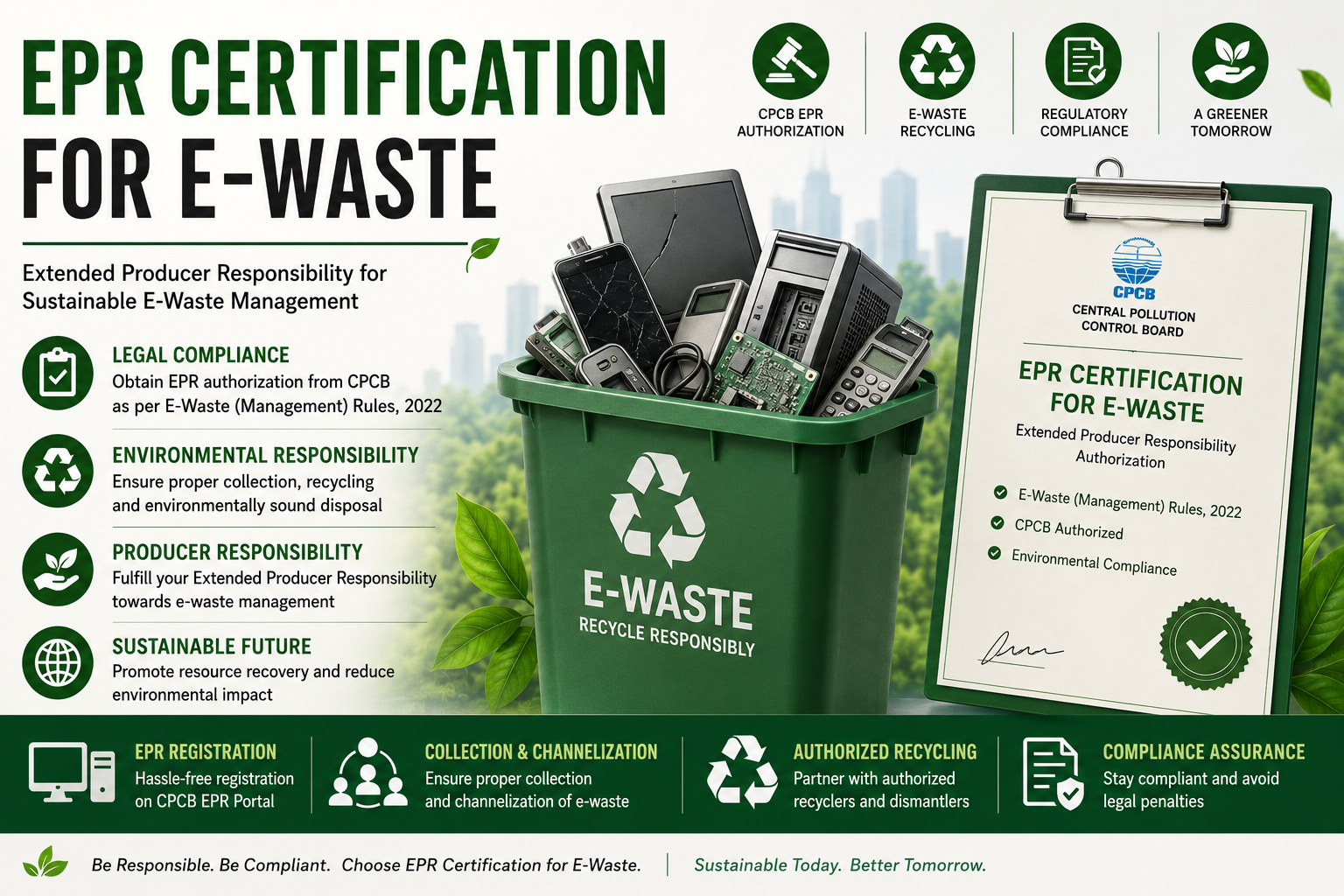
EPR Certification for E-Waste is a legal requirement that makes the manufacturers responsible for collecting, re-using and safely disposing the e-waste generated from their products. The effective application of the Extended Producer Responsibility for E-Waste helps businesses promote sustainable practices whilst remaining compliant with the regulations set out in India.
For EPR Certification for E-Waste, Indiannexus offers a complete package from applying to the issuing authority and getting the certification completed and the effective waste management processes established.
What is EPR Certification for E-Waste?
EPR Certification for E-Waste means an authorization given by CPCB to producers for their e-waste handling in order to take responsibilities towards collecting and recycling of e-waste.
Manufacturers, importers and brand owners will need to set up collection system for obsolete electronic products and ensure recycling is done by an Authorized E-Waste Recycler under Extended Producer Responsibility scheme for E-Waste.
The purpose is to minimize environmental pollution, improve resource recycling and promote sustainable development by implementing responsible recycling of Electronic Wastes.
Who Needs EPR Certification for E-Waste?
The following entities are generally required to obtain EPR Certification for E-Waste:
Electronic equipment manufacturers
Importers of electronic products
Brand owners selling electronic goods
Online electronic product sellers
Producers of electrical and electronic equipment
Companies entering the Indian electronics market
EPR Certification of e-waste guarantees compliance with national environmental laws and showcases corporate social responsibility.
The Advantages of EPR Certification in terms of E-Waste
Meeting Regulatory Requirements
Following E-Waste Management Rules India aids businesses in evading legal penalties and disruptions.
Enhancement of Brand Equity
More consumers are looking for businesses with good social and environmental practices. The EPR Certification for E-Waste indicates a sustainable business.
Taking care of our environment.
When e-waste is properly collected and discarded it also reduces the pollution with dangerous materials, and it is beneficial for natural resources saving.
Examples of good sustainable business.
Sustainable E-waste management enhances environmental long term policies.
Market Expansion
Many government tenders and corporate procurement programs require evidence of environmental compliance.
EPR Registration Process for E-Waste
The process for obtaining EPR Certification for E-Waste typically includes:
Step 1: Assessment of Product Category
Specify electronic product involved and the relevant legal requirement.
Step 2: Documentation Preparation
Compile required documents for CPCB E-Waste Registration and compliance verification.
Step 3: EPR Portal Registration
Proceed with the online registration via the official EPR Portal Registration system.
Step 4: Submission of EPR Plan
Prepare and submit collection and recycling targets under E-Waste Producer Responsibility requirements.
Step 5: CPCB Review
The authorities evaluate the application and supporting documents.
6. CPCB EPR Authorization
Once authorized, companies will obtain CPCB EPR Authorization and legally operate according to the EPR scheme.
Step 7: Continued Compliance
Electronic Waste Recycling - Records to be maintained and reporting frequency to the relevant authorities.
Documents Required
Businesses seeking EPR Certification for E-Waste generally need:
Company incorporation documents
PAN and GST registration
Import Export Code (if applicable)
Product details
Brand authorization documents
Collection mechanism details
Recycling agreements
Compliance declarations
Why Choose Indiannexus?
At Indiannexus, our specialists provide comprehensive EPR Compliance Services India tailored to electronic manufacturers and importers.
Our services include:
E-Waste EPR Registration
CPCB E-Waste Registration
EPR Portal Registration
Documentation support
Compliance audits
Annual reporting assistance
Liaison with authorities
End-to-end Electronic Waste Compliance Services
With our services, your business can efficiently obtain an EPR Certificate for E-Waste, with no risk of non-compliance.
Importance of handling e-waste responsibly
In a world where electronics are a dominant part of everyday lives, their disposal has become an area of concern. Through EPR Certification for E-Waste businesses are expected to:
Reduced landfill burden
Resource recovery and recycling
Lower environmental pollution
Circular economy development
Improved public health outcomes
Proper implementation of E-Waste Recycling Authorization and compliance mechanisms creates long-term environmental benefits.
Conclusion
Getting the EPR certification for E-Waste is vital for manufacturers, importers, and sellers of electronics in India. E-Waste EPR registration safeguards our environment as well as legalities, and in turn business for concerned organization. Businesses can easily get this certification with expert assistance from Indianexus and will never face any issues with CPCB compliance.
A common query :-
1. What is the E-Waste EPR certification?
It is a CPCB Authorization mandatory for producers to collect and recycle their electronics after disposal.
2. For whom is it mandatory to take the EPR Certification for E-Waste?
It is mandatory for manufacturers, importers, brand owners and producers of electric products.
3. What is CPCB EPR Authorization?
It is the approval from CPCB after successful verification of the EPR application.
4. For what is E-Waste EPR Registration used?
E-Waste EPR Registration-used to collect and dispose of e-waste.
5. How long do the procedures take for registration?
The time frame depends upon the documentation submission, and verification by CPCB procedures.
6. Do importers have to take EPR Certification for E-Waste?
Yes, importers of electronic goods do need to get EPR authorization.
7. Why is e-waste recycling a necessity?
It safeguards our environment against harmful pollutants, and conserves natural resources for the purpose of sustenance.
8. How can Indiannexus help?
Indiannexus provide all sorts of consultancy services for EPR Registration, documentation, Adherance to the regulations management and CPCB Authorization.