



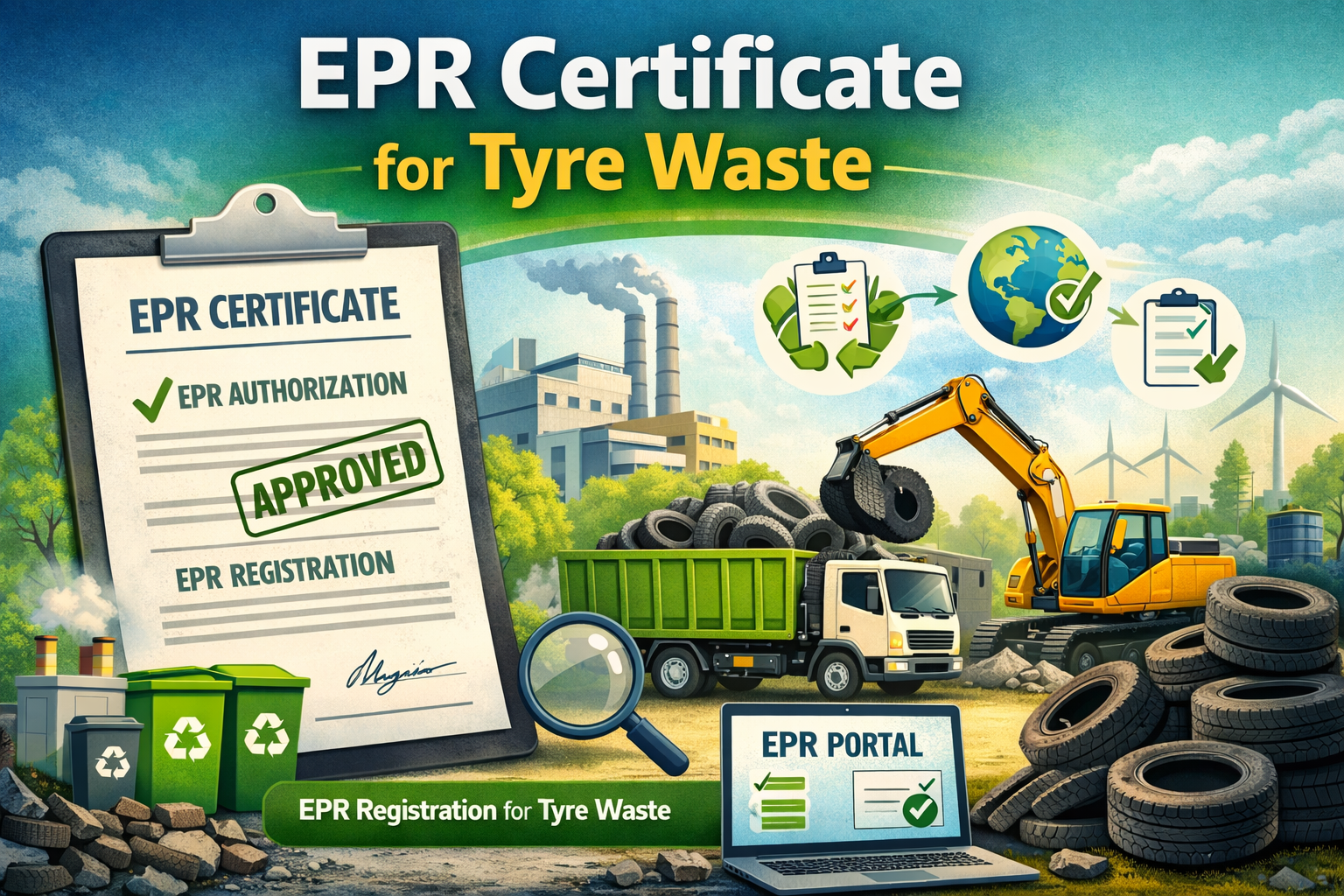
With increasing environmental concerns and stricter regulations, managing tyre waste has become a critical responsibility for manufacturers, importers, and recyclers. The Government of India has introduced Extended Producer Responsibility (EPR) to ensure proper disposal and recycling of tyre waste. Obtaining an EPR Certificate for tyre waste is now mandatory for businesses dealing with tyres.
This blog explains everything about the EPR Certificate for tyre waste, including registration, rules, benefits, and how expert consultants like Indiannexus can simplify the process.
What is EPR for Tyre Waste?
Extended Producer Responsibility (EPR) is a policy approach where producers are responsible for the lifecycle of their products, including post-consumer waste. Under EPR tyre waste businesses must ensure proper collection, recycling, and disposal of used tyres.
The government has introduced EPR for tyres rules under waste management frameworks to reduce environmental hazards caused by scrap tyres.
Why is the EPR Certificate for Tyre Waste Important?
Obtaining an EPR Certificate for tyre waste is essential for:
Legal compliance with environmental regulations
Avoiding penalties and legal action
Ensuring eco-friendly disposal of tyres
Building a responsible brand image
Supporting sustainable development
Without a proper EPR Authorization license, companies cannot legally operate in the tyre industry.
Who Needs EPR Registration for Tyre Waste?
The following entities must obtain EPR Registration for tyre waste:
Tyre manufacturers
Importers of tyres
Brand owners
Tyre recyclers
Retreaders
These entities must complete EPR tyre waste registration through the official EPR portal.
Process of EPR Registration for Tyre Waste
The process to obtain an EPR Certificate for tyre waste includes:
1. Documentation Preparation
Prepare documents such as:
Company PAN & GST
Import/export details
Business registration proof
Product details
2. Application on EPR Portal
Submit the application through the official EPR portal with accurate information.
3. Submission of EPR Plan
Provide details of waste management strategies, including recycling and disposal methods.
4. Verification by Authorities
Authorities review the application and may request additional documents.
5. Grant of EPR Authorization
After approval, the EPR Registration Certificate is issued.
Role of Indiannexus in EPR Certification
Indiannexus is a trusted EPR Consultant in India that helps businesses obtain the EPR Certificate for tyre waste efficiently.
Their services include:
Documentation support
End-to-end EPR Registration assistance
Compliance management
Liaison with authorities
Post-registration support
With expert guidance, businesses can avoid delays and ensure smooth EPR Authorization approval.
Key Compliance Requirements
To maintain your tyre waste EPR Certificate, businesses must:
Meet annual recycling targets
File regular compliance reports
Work with authorized recyclers
Maintain proper records of waste collection
Failure to comply can result in cancellation of the EPR Certificate.
Benefits of EPR Registration for Tyre Waste
Obtaining an EPR Certificate for tyre waste offers several benefits:
Legal market access
Improved brand credibility
Contribution to environmental sustainability
Better waste management systems
Avoidance of heavy penalties
Challenges in EPR Tyre Waste Registration
Many businesses face issues such as:
Complex documentation
Lack of awareness about EPR for tyre waste
Technical compliance requirements
Delays in approval
This is why hiring an expert EPR Consultant in India, like Indiannexus, is highly recommended.
Conclusion
The EPR Certificate for tyre waste is not just a regulatory requirement but a step towards environmental responsibility. Businesses dealing with tyres must comply with EPR registration for tyre waste to operate legally and sustainably.
With the support of Indiannexus, companies can navigate the complexities of EPR tyre waste registration and ensure full compliance with Indian regulations.
FAQs on EPR Certificate for Tyre Waste
1. What is an EPR Certificate for tyre waste?
It is an authorization issued by authorities allowing businesses to manage tyre waste responsibly under EPR guidelines.
2. Who needs EPR registration for tyre waste?
Manufacturers, importers, recyclers, and brand owners dealing with tyres must obtain it.
3. How can I apply for EPR tyre waste registration?
You can apply through the official EPR portal with the required documents and compliance plans.
4. What is the validity of the EPR Registration Certificate?
The validity depends on government regulations and must be renewed periodically.
5. What happens if I don’t obtain an EPR Certificate?
Non-compliance can lead to penalties, business restrictions, or legal action.
6. Can a consultant help with EPR Registration?
Yes, an EPR Consultant in India like Indiannexus can simplify the entire process.
7. What are EPR for tyres rules?
These are government regulations requiring producers to manage tyre waste responsibly through recycling and disposal.