






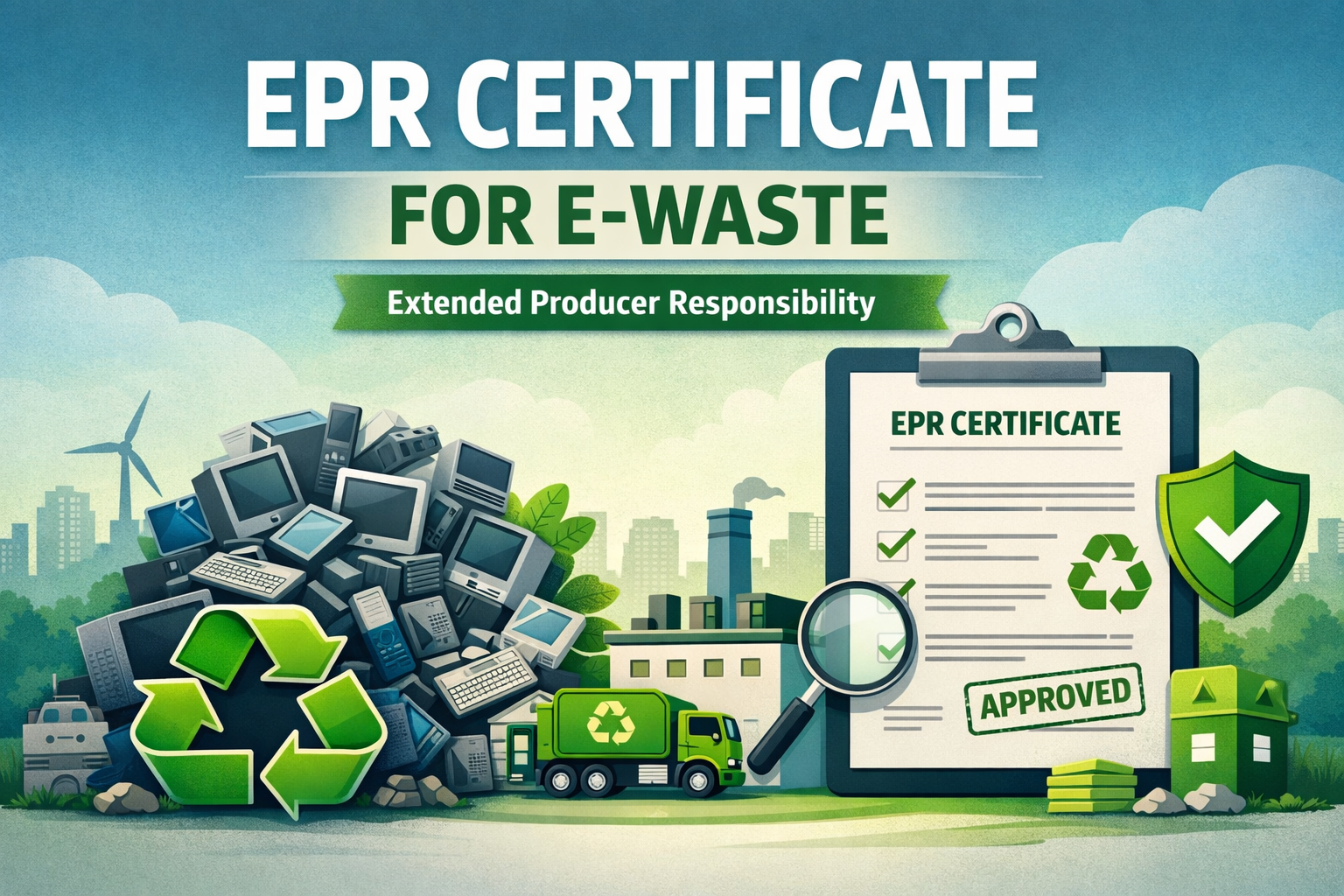
With the rapid growth of electronic consumption in India, managing electronic waste has become a critical environmental concern. Discarded electronics such as mobile phones, laptops, televisions, and batteries contribute significantly to pollution. To tackle this issue, the government has introduced Extended Producer Responsibility (EPR) regulations. Obtaining an EPR Certificate for E-waste is now mandatory for manufacturers, importers, and brand owners dealing in electronic products. This certification ensures that companies take responsibility for the lifecycle of their products, especially post-consumer disposal.
In this blog, we will explore everything you need to know about the EPR Certificate for E-waste, including its importance, process, and how expert consultants like Indiannexus can help.
What is EPR Certificate for E-Waste?
The EPR Certificate for E-waste is an authorization issued by the Central Pollution Control Board (CPCB) that allows businesses to legally manage electronic waste generated from their products.
It falls under EPR for E-waste management, which ensures proper collection, recycling, and disposal of electronic waste.
Companies must obtain an EPR Registration Certificate to demonstrate compliance with environmental laws.
Who Needs EPR Registration for E-Waste?
The following entities must apply for EPR Registration for Electronics Waste:
Manufacturers of electronic goods
Importers of electronic equipment
Brand owners selling electronics under their label
Online sellers and marketplaces
If your business falls into any of these categories, obtaining an EPR Certificate for E-waste is mandatory.
Importance of EPR for Electronic Waste
Implementing EPR for Electronic waste offers multiple benefits:
1. Environmental Protection
Proper disposal reduces harmful substances like lead and mercury from entering the environment.
2. Legal Compliance
Without an EPR Authorization license, companies may face penalties or bans.
3. Brand Reputation
Businesses that follow EPR for E-waste management are seen as environmentally responsible.
4. Circular Economy
Encourages recycling and reuse of materials.
Process to Obtain EPR Certificate for E-Waste
The process for obtaining an EPR Certificate for E-waste involves several steps:
Step 1: Documentation
Prepare necessary documents such as:
Company registration certificate
PAN and GST details
Product details
Import/export licenses
Step 2: Application Filing
Submit the application through the CPCB portal for EPR Registration for E-Waste.
Step 3: EPR Plan Submission
Provide a detailed plan for collection, recycling, and disposal.
Step 4: Approval
After verification, CPCB grants the EPR Authorization.
Step 5: Compliance Monitoring
Maintain records and submit annual reports.
Role of EPR Consultant in India
The process can be complex, and this is where an EPR Consultant in India becomes essential.
Consultants like Indiannexus help with:
Documentation and application filing
Drafting EPR plans
Liaising with CPCB authorities
Ensuring compliance and reporting
Working with experts ensures faster approval of your EPR Certificate for E-waste.
Difference Between EPR Certificate and Plastic Waste EPR Certificate
Many businesses confuse electronic and plastic compliance.
EPR Certificate for E-waste applies to electronic products
Plastic Waste EPR Certificate applies to plastic packaging
Both require separate registrations and compliance mechanisms.
Documents Required for EPR Registration
To obtain your EPR Registration Certificate, you need:
Company PAN and GST
IEC Code (for importers)
Product details
Authorization letter
Recycling agreements
Challenges in EPR Compliance
Some common challenges include:
Understanding CPCB guidelines
Managing recycling targets
Maintaining proper documentation
Finding authorized recyclers
This is why hiring an EPR Consultant in India is highly recommended.
Why Choose Indiannexus?
Indiannexus is a trusted name in compliance services. They offer:
End-to-end support for EPR Registration
Expertise in EPR Authorization license
Quick processing and approvals
Affordable consultancy services
They simplify the entire process of obtaining an EPR Certificate for E-waste.
Conclusion
The EPR Certificate for E-waste is not just a legal requirement but a step toward sustainable business practices. With increasing regulatory scrutiny, companies must ensure timely EPR Registration for E-Waste.
Partnering with a professional EPR Consultant in India like Indiannexus can make the process seamless and efficient.
FAQs on EPR Certificate for E-Waste
1. What is an EPR Certificate for E-waste?
It is a certification issued by CPCB to ensure proper management of electronic waste.
2. Who needs EPR Registration for E-Waste?
Manufacturers, importers, and brand owners of electronic goods.
3. What is the validity of EPR Authorization?
Typically valid for 1–5 years depending on approval.
4. Is EPR Registration mandatory in India?
Yes, it is legally required under e-waste management rules.
5. What is the cost of EPR Certificate for E-waste?
It varies based on business size and product category.
6. How long does it take to get EPR Registration Certificate?
Usually 15–45 days depending on documentation.
7. Can I apply without a consultant?
Yes, but hiring an EPR Consultant in India simplifies the process.