






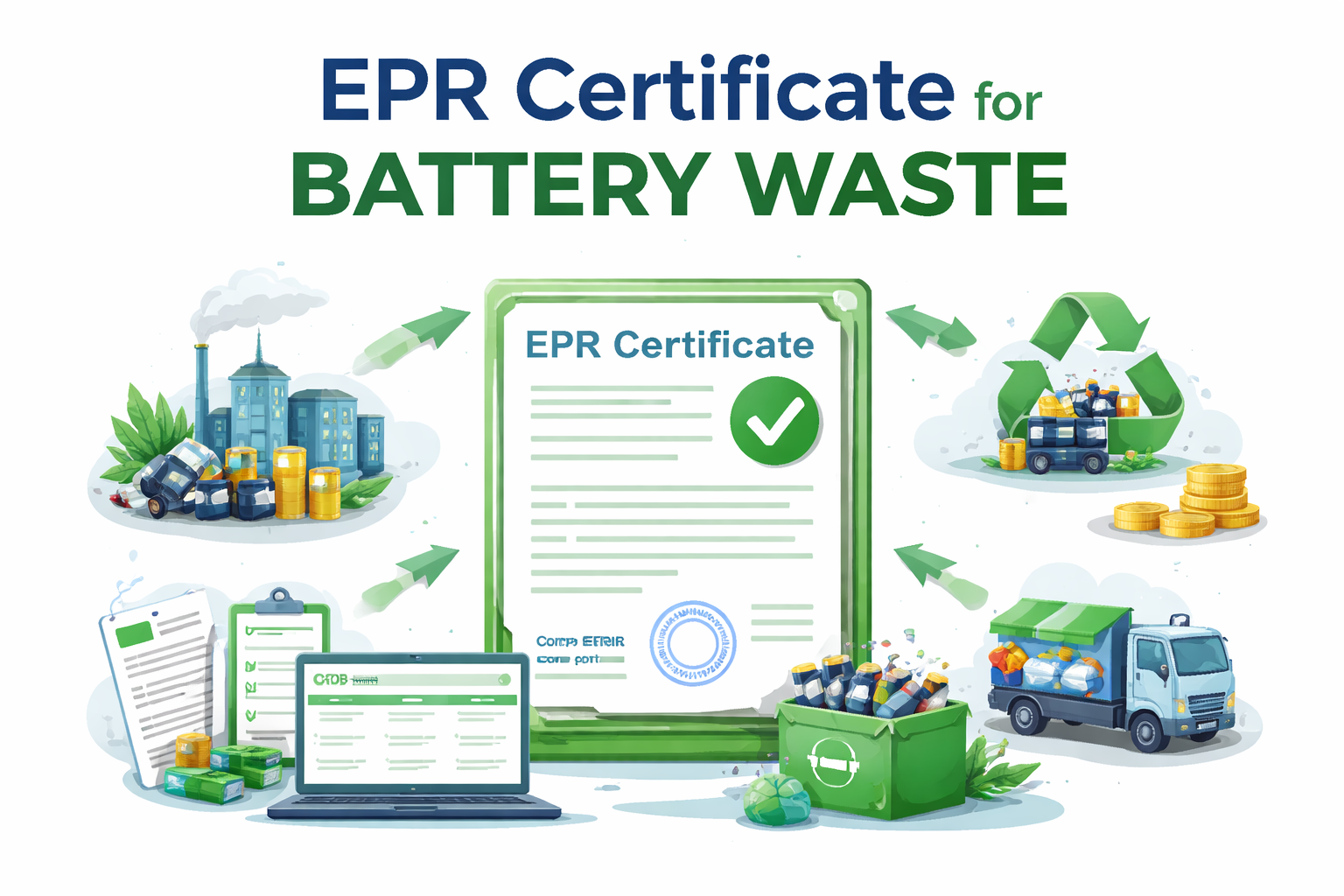
With the rapid growth of electric vehicles, portable electronics, and renewable energy storage, battery consumption in India has surged significantly. However, improper disposal of batteries leads to severe environmental hazards. To address this issue, the government has made it mandatory for producers, importers, and brand owners to obtain an EPR Certificate for Battery Waste.
Extended Producer Responsibility (EPR) ensures that businesses take responsibility for the collection, recycling, and safe disposal of battery waste. This blog will help you understand everything about EPR Certificate for Battery Waste, its importance, registration process, and compliance requirements.
What is an EPR Certificate for Battery Waste?
An EPR Certificate for Battery Waste is an official authorization issued by the Central Pollution Control Board (CPCB) that allows businesses to manage battery waste responsibly. It ensures that producers fulfill their obligation for environmentally sound disposal and recycling.
Under the Battery Waste Management Rules, obtaining an EPR Certificate for Battery is mandatory for manufacturers, importers, and sellers dealing with batteries.
Why is EPR for Battery Waste Important?
The implementation of EPR for Battery waste helps:
Reduce environmental pollution caused by hazardous battery chemicals
Promote recycling and reuse of valuable materials
Ensure safe disposal of used batteries
Encourage sustainable business practices
Meet government compliance requirements
Without a valid Battery Waste EPR Certificate, businesses may face penalties and legal actions.
Who Needs EPR Registration for Battery Waste?
The following entities must obtain EPR Registration for Battery Waste:
Battery manufacturers
Importers of batteries or battery-operated products
Brand owners selling batteries under their name
Dealers and recyclers
They must complete battery EPR registration through the official EPR portal managed by CPCB.
Step-by-Step Process for EPR Registration
Obtaining an EPR Registration Certificate involves the following steps:
1. Documentation Preparation
You need essential documents such as:
Company registration details
GST certificate
Import/export details (if applicable)
Product specifications
2. Application on EPR Portal
Submit your application for EPR Registration on the CPCB EPR portal with accurate details.
3. EPR Plan Submission
Provide a detailed plan for collection, recycling, and disposal under EPR for Battery waste.
4. Approval & Authorization
After verification, CPCB grants EPR Authorization license or EPR Certificate.
Role of CPCB in EPR Battery Compliance
The Central Pollution Control Board (CPCB) regulates and monitors CPCB EPR battery compliance. It ensures that businesses meet recycling targets and maintain transparency.
Companies must regularly update records on the EPR portal and maintain compliance to retain their EPR Certificate for Battery Waste.
Challenges in EPR Compliance
Businesses often face challenges such as:
Complex documentation process
Understanding regulatory requirements
Meeting recycling targets
Managing waste collection channels
This is where an experienced EPR Consultant in India becomes essential.
How Indiannexus Helps in EPR Registration
Professional consultancy firms like Indiannexus provide end-to-end support for obtaining an EPR Certificate for Battery Waste.
Their services include:
Documentation and application support
EPR plan preparation
Liaison with CPCB authorities
Compliance monitoring and reporting
With expert guidance, businesses can obtain their EPR Certificate quickly and ensure smooth compliance.
Difference Between Battery EPR and E-Waste EPR
Many businesses confuse EPR Registration for Battery Waste with EPR Registration for E-Waste. While both fall under environmental compliance, they differ in:
Waste category (battery vs electronic waste)
Recycling processes
Regulatory frameworks
Proper understanding ensures accurate compliance and avoids penalties.
Penalties for Non-Compliance
Failure to obtain an EPR Certificate for Battery Waste can lead to:
Heavy fines
Cancellation of business operations
Legal consequences
Environmental liability
Hence, timely EPR Registration Certificate acquisition is critical.
Future of EPR for Battery Waste in India
India is moving towards stricter environmental regulations and sustainability goals. The demand for EPR battery compliance is expected to increase due to:
Growth in electric vehicles
Expansion of renewable energy storage
Government sustainability initiatives
Businesses must adopt proactive strategies for management of battery waste.
Conclusion
Obtaining an EPR Certificate for Battery Waste is not just a regulatory requirement but a responsibility towards environmental protection. With proper planning, compliance, and expert guidance from firms like Indiannexus, businesses can streamline their battery EPR registration process and contribute to a cleaner future.
FAQs on EPR Certificate for Battery Waste
1. What is an EPR Certificate for Battery Waste?
It is a CPCB-issued authorization ensuring proper collection and recycling of battery waste.
2. Who requires EPR Registration for Battery Waste?
Manufacturers, importers, and brand owners dealing with batteries.
3. How to apply for battery EPR registration?
You can apply through the CPCB EPR portal with required documents and an EPR plan.
4. What is the validity of an EPR Certificate?
Typically, it is valid for a specific period and must be renewed periodically.
5. Is EPR Registration for E-Waste the same as battery EPR?
No, both have different regulations and compliance requirements.
6. What happens if a company fails to comply with EPR rules?
They may face penalties, fines, or legal action.
7. Can an EPR Consultant in India help in registration?
Yes, consultants simplify the process and ensure compliance.