





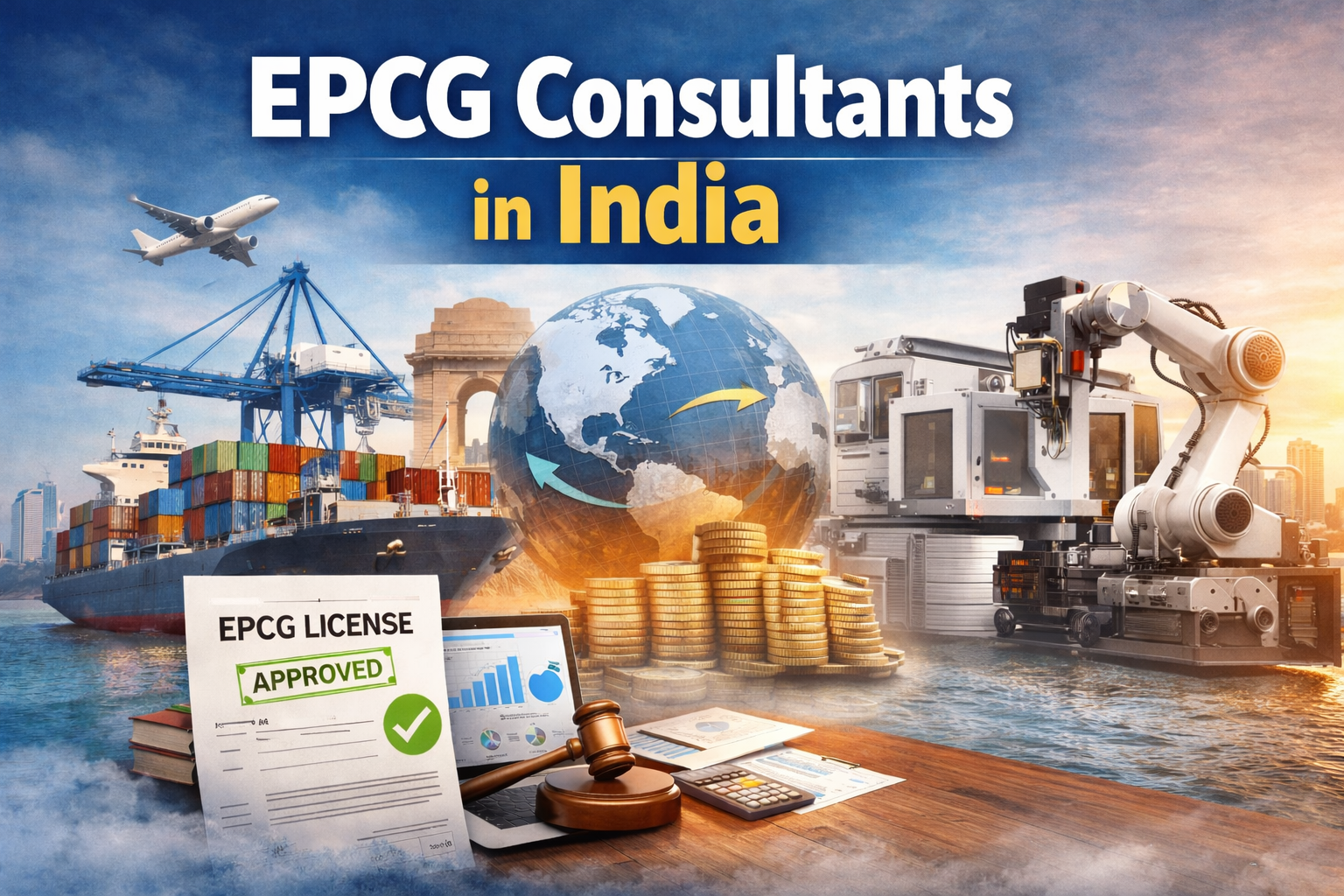
India’s foreign trade ecosystem offers several incentives to promote exports, and one of the most beneficial schemes is the EPCG license under the Export Promotion Capital Goods (EPCG) scheme. However, navigating the documentation, compliance, and procedural complexities requires expert guidance. This is where EPCG consultants in India play a crucial role.
Whether you are a manufacturer, exporter, or service provider, understanding how to leverage the EPCG scheme can significantly reduce your capital expenditure on Indian Machinery and imported equipment. Professional EPCG consultants ensure smooth processing and help businesses avoid delays or penalties.
What is EPCG Scheme?
The Export Promotion Capital Goods (EPCG) scheme is an initiative by the Directorate General of Foreign Trade (DGFT) that allows import of capital goods at zero or concessional customs duty. These goods are used for producing quality products for export.
With an EPCG license, businesses can import machinery and equipment required for manufacturing without paying heavy import duties, provided they meet export obligations.
Why Businesses Need EPCG Consultants in India
The process of obtaining an EPCG license involves multiple steps, including documentation, compliance checks, and DGFT approvals. This is where EPCG consultants in India become essential.
Here’s why hiring experts is beneficial:
Accurate Documentation: Ensures error-free filing of applications
Faster Approvals: Minimizes delays in DGFT processing
Compliance Management: Helps meet export obligations
Cost Optimization: Maximizes duty savings
Expert Guidance: Simplifies the process of import from other countries
Professional EPCG consultants understand policy updates and ensure your application aligns with current regulations.
Role of Indiannexus in EPCG Consultancy
When it comes to reliable EPCG consultants in India, Indiannexus stands out as a trusted partner for businesses across sectors. With years of expertise in DGFT compliance and import-export regulations, Indiannexus provides end-to-end support.
Services Offered by Indiannexus:
EPCG license application and approval
Assistance in import export licence documentation
Advisory on Indian Machinery and capital goods import
Export obligation planning and tracking
Compliance support and reporting
Their team ensures a seamless experience, helping businesses focus on growth while they handle the complexities.
Step-by-Step Process to Obtain EPCG License
Understanding the process of import from other countries under EPCG is essential for smooth execution. Here’s a simplified overview:
1. Eligibility Check
Businesses must be engaged in manufacturing or service exports.
2. Documentation Preparation
Key documents include:
Import export licence
Financial statements
Project report
Machinery details
3. Application Filing
Submit the EPCG license application through the DGFT portal.
4. Approval from DGFT
Authorities verify and approve the application.
5. Import of Capital Goods
Once approved, businesses can import machinery at concessional duty.
6. Export Obligation Fulfillment
Companies must meet export targets within the specified timeframe.
Experienced EPCG consultants in India simplify this process and ensure compliance at every stage.
Benefits of EPCG Scheme
Partnering with EPCG consultants in India helps businesses unlock the full potential of this scheme.
Key Benefits:
Reduced Import Cost: Save on customs duty
Access to Advanced Technology: Import high-quality machinery
Boost in Export Competitiveness
Improved Production Efficiency
Encouragement for Indian Manufacturing
Whether importing Indian Machinery or advanced equipment, EPCG enables growth with reduced financial burden.
Common Challenges in EPCG Licensing
While the scheme offers benefits, businesses often face challenges:
Complex DGFT documentation
Difficulty in understanding policy conditions
Errors in application submission
Delays in approval
Managing export obligations
This is why many companies rely on EPCG consultants in India to avoid costly mistakes.
How to Choose the Right EPCG Consultant
Selecting the right EPCG consultants in India is critical for success. Here are some tips:
Check experience in DGFT licensing
Look for end-to-end service offerings
Ensure knowledge of import export licence processes
Verify client reviews and success rate
Choose consultants with industry-specific expertise
Indiannexus has built a strong reputation by offering reliable and result-oriented EPCG consultancy services.
Future of EPCG in India
With India focusing on “Make in India” and export growth, the demand for EPCG licenses is expected to rise. Businesses importing machinery and expanding globally will increasingly depend on EPCG consultants in India.
Government initiatives and simplified digital processes will further enhance the accessibility of the scheme, making it a vital tool for exporters.
Conclusion
The EPCG scheme is a powerful incentive for businesses aiming to expand their export capabilities. However, its complexity requires professional handling. Partnering with experienced EPCG consultants in India ensures a smooth journey from application to compliance.
With expert support from firms like Indiannexus, businesses can focus on scaling operations while staying compliant with DGFT regulations.
FAQs on EPCG Consultants in India
1. What is an EPCG license?
An EPCG license allows duty-free import of capital goods under the Export Promotion Capital Goods scheme.
2. Who can apply for EPCG scheme?
Manufacturers, exporters, and service providers involved in export activities can apply.
3. Why should I hire EPCG consultants in India?
They simplify documentation, ensure compliance, and speed up approvals.
4. What is export obligation under EPCG?
It is the requirement to export goods worth a multiple of duty saved within a fixed period.
5. How long does it take to get EPCG approval?
It typically takes a few weeks, depending on documentation and DGFT processing.
6. Can EPCG be used for importing Indian Machinery?
Yes, both imported and domestic capital goods can be covered under the scheme.
7. What happens if export obligation is not met?
Penalty and duty repayment may be required.