






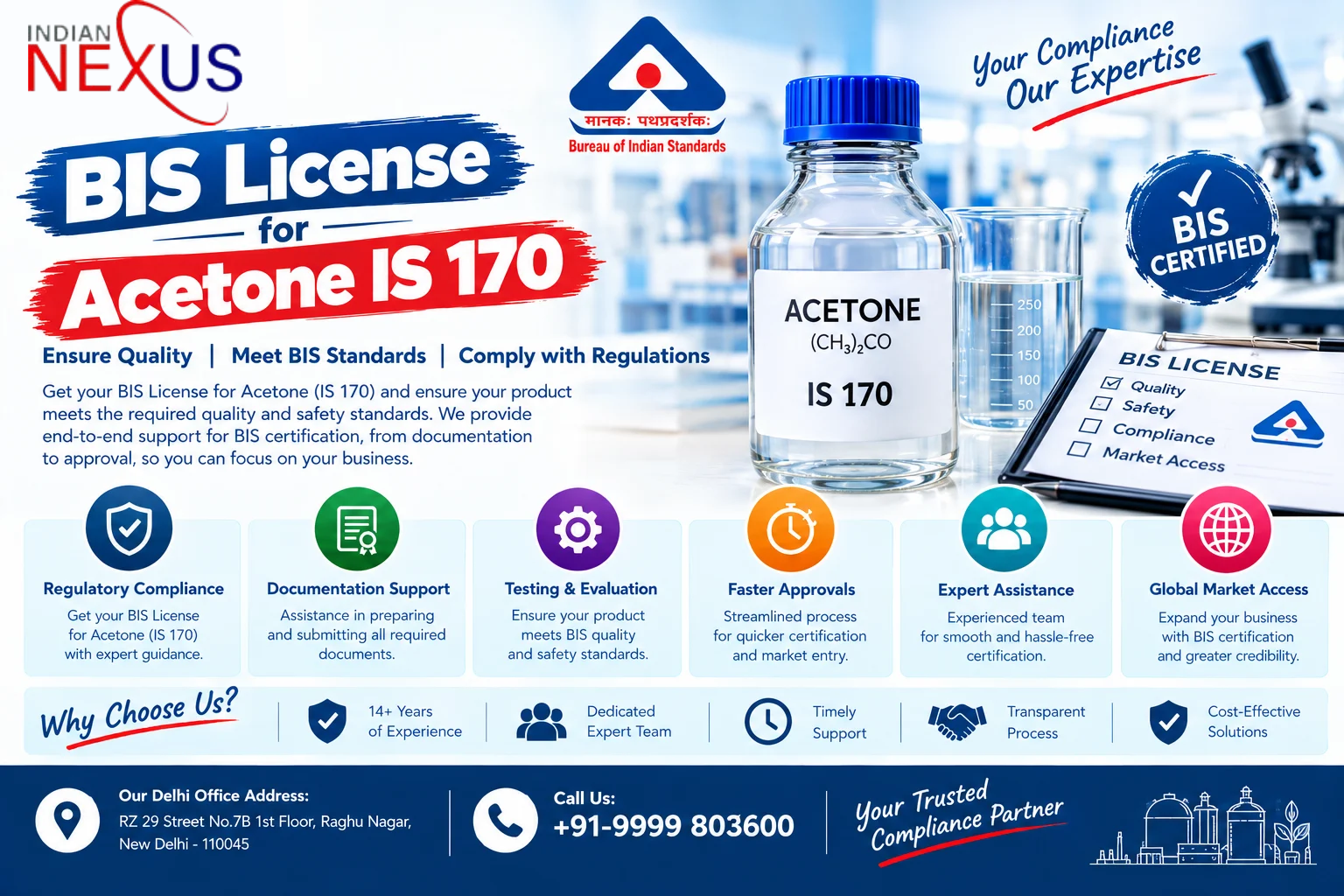


In a growing industrial economy like India, maintaining quality standards and consumer safety is essential. To achieve this, the Bureau of Indian Standards (BIS) plays a key role by introducing the BIS Certification in India, ensuring that products meet established quality and safety benchmarks. Whether you are a manufacturer, importer, or trader, obtaining BIS certification enhances your brand credibility and market acceptance.
What is BIS Certification?
BIS Certification is a quality assurance mark provided by the Bureau of Indian Standards, under the Ministry of Consumer Affairs, Government of India. It certifies that a product complies with specific Indian standards (IS) related to quality, performance, and safety. Products bearing the ISI mark symbolize trust and reliability among consumers.
Why is BIS Certification Important in India?
With rapid industrialization and market expansion, ensuring product safety has become a top priority. BIS Certification in India helps ensure that products are safe for public use and meet the required performance standards.
Here’s why it matters:
Ensures product quality and consumer safety.
Builds customer trust and enhances brand reputation.
Helps in easy market access within India.
Reduces the risk of product rejection and legal non-compliance.
Mandatory for many products under the BIS Compulsory Registration Scheme (CRS).
Types of BIS Certification and Registration
ISI Mark Certification – For domestic manufacturers producing goods under mandatory BIS standards.
BIS CRS Registration – For electronic and IT products that need compulsory registration before being sold in India.
FMCS (Foreign Manufacturer Certification Scheme) – For overseas manufacturers selling their products in the Indian market.
BIS Certification Process in India
The process of BIS Certification and Registration involves several stages:
Application Submission – The manufacturer submits the required documents and application form to BIS.
Product Testing – Samples are sent to BIS-recognized laboratories for testing as per Indian Standards.
Factory Audit – BIS officers inspect the manufacturing facility to verify production quality.
Grant of License – Once the product passes all tests and audits, BIS issues the certification.
Surveillance and Renewal – Regular inspections ensure continuous compliance.
Role of BIS Consultants in India
Navigating the BIS certification process can be complex, especially for manufacturers new to Indian regulations. This is where professional BIS Consultants like IndianNexus play a vital role. With years of experience, IndianNexus provides complete guidance — from documentation, application filing, product testing coordination, to final certification. Partnering with expert BIS Consultants in India ensures a smooth, error-free process and faster approval timelines.
BIS Certification in Delhi
For businesses in and around Delhi, IndianNexus offers professional BIS Consultancy Services that simplify every step of certification. Whether it’s ISI Mark certification or BIS registration for electronics, the Delhi-based consultants ensure accurate paperwork, compliance, and timely submission.
Conclusion
Obtaining BIS Certification in India is not just a legal formality but a symbol of commitment to quality and consumer trust. With expert guidance from trusted BIS Consultants like IndianNexus, your brand can achieve full compliance and gain a competitive edge in the Indian market.