



The Indian toy industry has witnessed remarkable growth in recent years, driven by rising awareness among parents, increasing demand for safe products, and strong government initiatives like “Make in India.” To regulate this fast-growing sector and ensure child safety, the government has made BIS Certification For Toys mandatory for manufacturers and importers. This certification plays a crucial role in maintaining quality, safety, and compliance with Indian standards.
Understanding BIS Certification For Toys
BIS Certification for Toys is issued by the Bureau of Indian Standards (BIS), the national standards body of India. It ensures that toys sold in the Indian market meet prescribed safety, quality, and performance requirements. The certification applies to both Electric Toys and Non-electric Toys, covering aspects such as mechanical safety, chemical composition, flammability, and electrical hazards.
Under the Toy Quality Control Order (QCO), toys must comply with Indian Standards for Toys and carry the ISI Mark for Toys before being sold in India.
Why BIS Certification Is Mandatory for Toys
Children are highly vulnerable to unsafe materials, sharp edges, choking hazards, and electrical risks. To address these concerns, BIS for Toys ensures:
Protection against physical and mechanical hazards
Control over toxic substances and harmful chemicals
Compliance with safety norms for electric components
Standardization of manufacturing practices
By enforcing Toys Standards, BIS helps build consumer trust and promotes responsible manufacturing.
Scope of BIS Certification for Toys
The certification applies to a wide range of toys, including:
Non-electric Toys such as dolls, puzzles, board games, soft toys, and building blocks
Electric Toys like battery-operated cars, remote-controlled toys, electronic learning devices, and musical toys
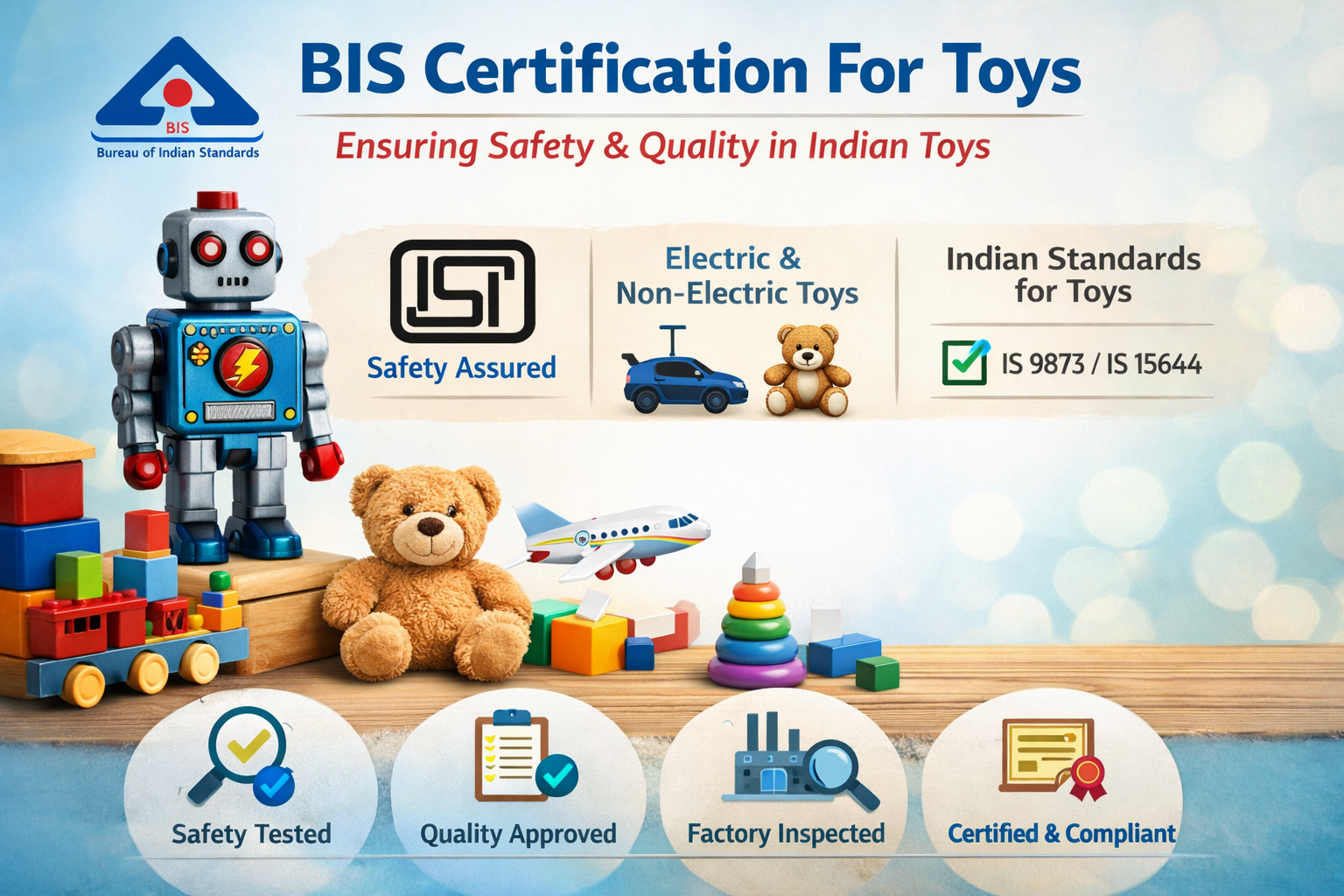
Both categories must meet applicable Indian Standards for Toys, such as IS 9873 (Parts 1 to 9) and IS 15644 for electric toys.
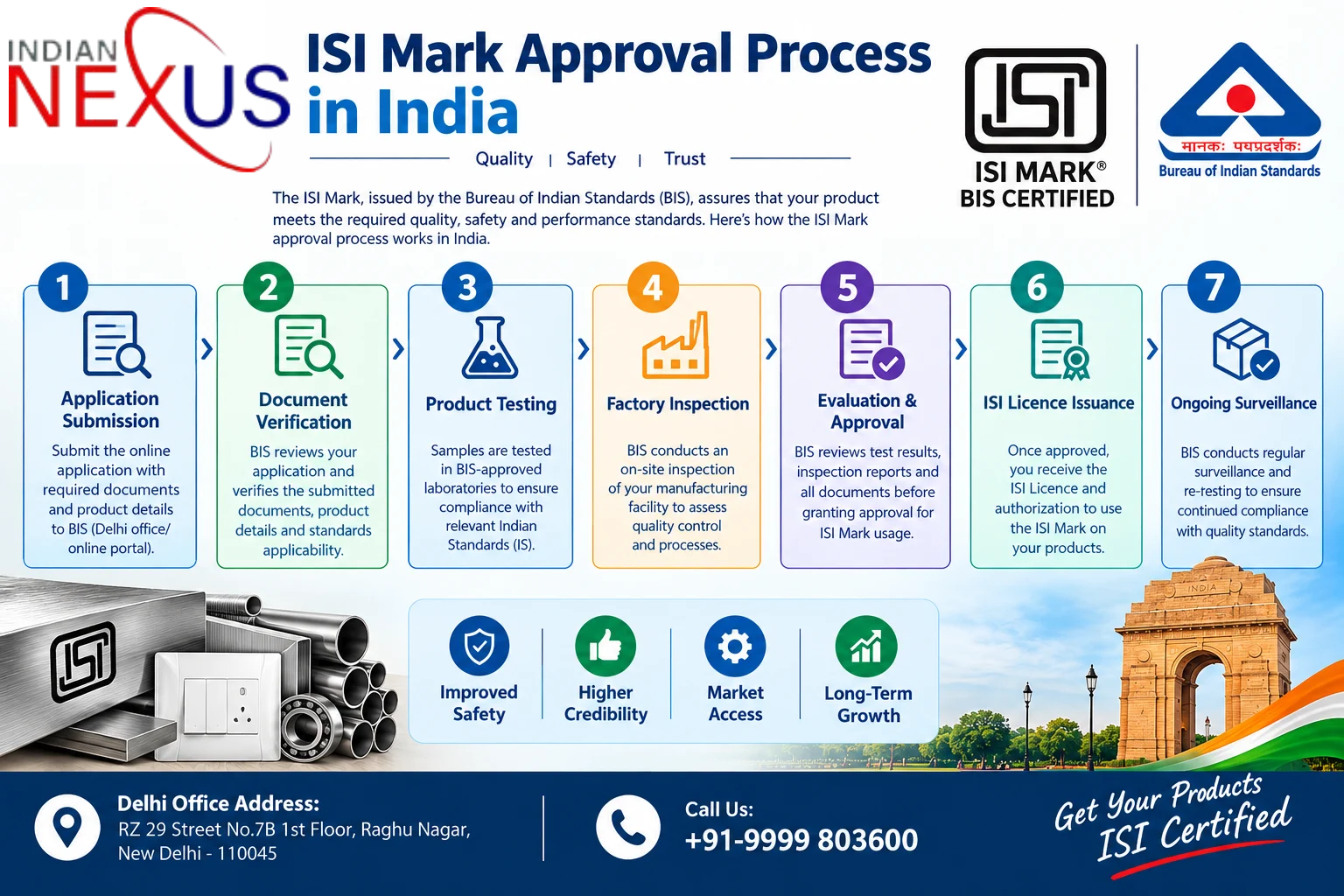
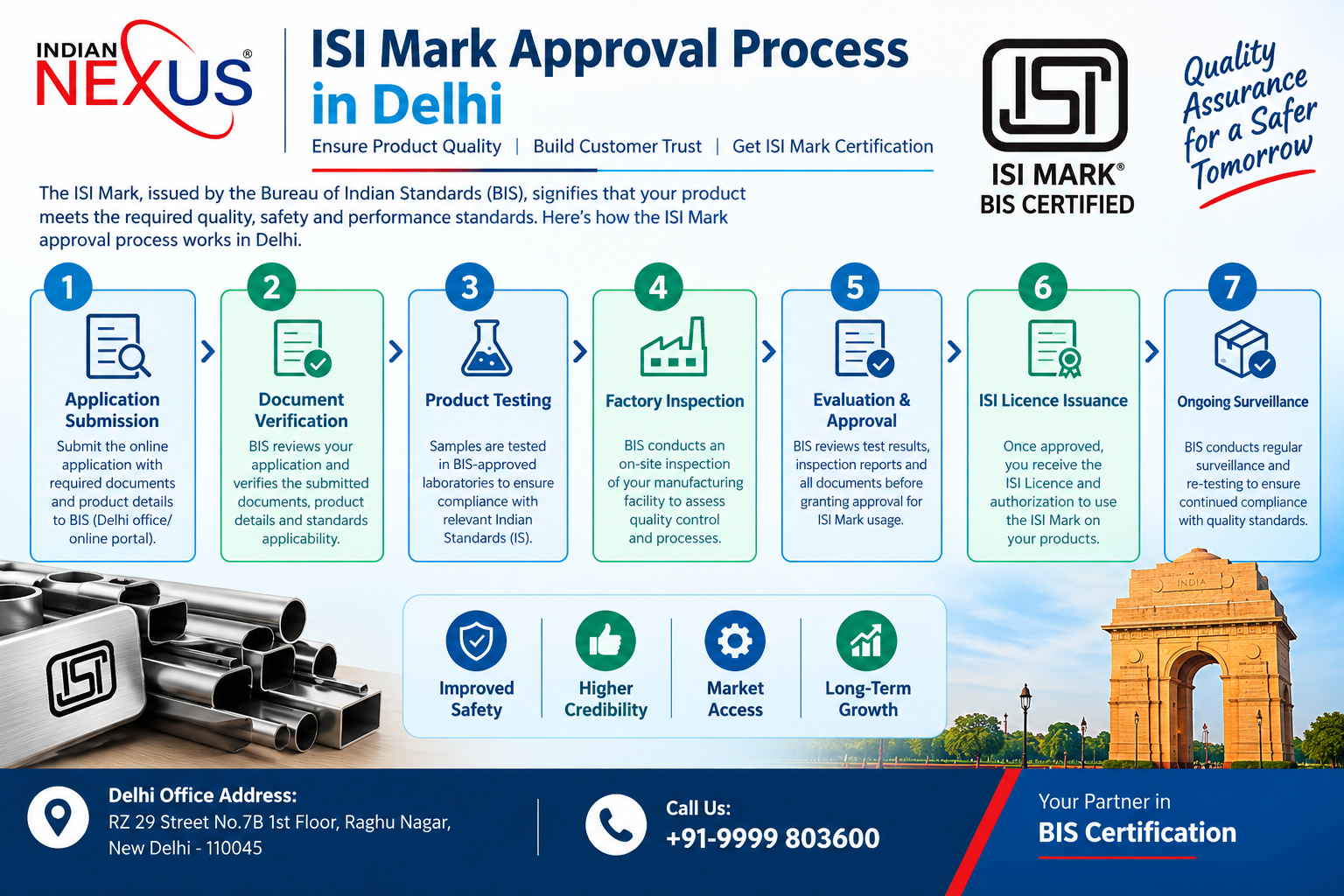
BIS Certification Process for Toys
Obtaining BIS Certification For Toys involves a structured process:
Product Identification – Determining applicable toy standards
Sample Testing – Testing toy samples in BIS-recognized laboratories
Factory Evaluation – Inspection of manufacturing facilities
Documentation Submission – Technical files, test reports, and compliance documents
Grant of License – Issuance of BIS license and permission to use the ISI Mark for Toys
This process ensures that toys comply with all relevant Toys Standards before entering the market.
Role of Indiannexus in BIS Certification for Toys
Navigating BIS regulations can be complex, especially for first-time manufacturers and importers. Indiannexus offers expert consulting services to simplify the certification journey. From identifying applicable standards to coordinating lab testing and documentation, Indiannexus provides end-to-end support for BIS Certification for Toys.
Their expertise helps businesses avoid delays, minimize compliance risks, and achieve certification efficiently.
Benefits of BIS Certification for Toy Manufacturers
Securing BIS Certification for Toys offers multiple advantages:
Legal approval to sell toys in India
Enhanced brand credibility and consumer confidence
Compliance with mandatory safety regulations
Reduced risk of penalties, recalls, or bans
Competitive advantage in domestic and international markets
Manufacturers that comply with BIS Certification for Toys demonstrate their commitment to child safety and quality assurance.
Common Challenges in BIS Certification
Despite its benefits, businesses may face challenges such as:
Understanding complex Indian Standards for Toys
Multiple rounds of product testing
Documentation errors
Delays in factory inspection
Professional consultants like Indiannexus help overcome these challenges through expert guidance and regulatory knowledge.
Conclusion
BIS Certification For Toys is not just a regulatory requirement—it is a commitment to safety, quality, and trust. With strict enforcement of Toys Standards, the Indian toy industry is moving toward safer and more reliable products. Partnering with experienced consultants like Indiannexus ensures a smooth certification process and long-term compliance.
FAQs – BIS Certification For Toys
1. Is BIS Certification mandatory for all toys in India?
Yes, BIS Certification is mandatory for both electric and non-electric toys sold in India.
2. What is the ISI Mark for Toys?
The ISI Mark indicates that the toy complies with BIS-approved Indian safety standards.
3. Which standards apply to BIS Certification for Toys?
IS 9873 series applies to non-electric toys, and IS 15644 applies to electric toys.
4. Can imported toys be sold without BIS Certification?
No, imported toys must also have BIS Certification and ISI marking.
5. How long does it take to get BIS Certification for Toys?
The process usually takes 4–6 months, depending on testing and documentation.
6. Who can help with BIS Certification for Toys?
Professional consultants like Indiannexus provide complete assistance for BIS certification.