





India’s solar energy sector has been growing rapidly, with the government pushing for clean and renewable energy solutions under the National Solar Mission. As solar technology becomes the backbone of sustainable energy, ensuring the quality and safety of solar equipment is crucial. This is where BIS Certification for Solar Panels comes into play.
The Bureau of Indian Standards (BIS) certification ensures that all solar photovoltaic modules (solar panels) meet the prescribed quality and safety standards before being sold or installed in India. For manufacturers, BIS registration for solar panels is not just a legal requirement but also a mark of trust and reliability in the renewable energy market.
What Is BIS Certification for Solar Panels?
BIS Certification for Solar Panels is a mandatory quality compliance issued by the Bureau of Indian Standards (BIS) under the Compulsory Registration Scheme (CRS). The certification ensures that all solar PV modules conform to Indian Standard IS 14286:2019, which specifies requirements for the design, construction, and performance of solar modules.
This certification aims to protect consumers from substandard or unsafe products while promoting the use of high-quality solar energy systems across India.
Who Needs BIS Registration for Solar Panels?
Every manufacturer or importer of solar photovoltaic modules—whether operating domestically or internationally—must obtain BIS registration for solar panels before selling or distributing them in India.
The requirement applies to:
Domestic solar panel manufacturers
Foreign manufacturers exporting to India
Importers and traders dealing in solar PV modules
Without this certification, the products cannot be legally marketed or installed in India.
Applicable Indian Standards for Solar Panels
The BIS has defined specific IS standards that apply to different types of solar PV modules. These include:
IS 14286:2019 — Terrestrial Photovoltaic (PV) Modules – Design qualification and type approval
IS/IEC 61730 (Part 1 & 2) — Safety qualification for PV modules
IS 16077:2013 — Thin-film terrestrial PV modules – Design qualification and type approval
Manufacturers must test their products as per these standards in BIS-recognized laboratories before applying for certification.
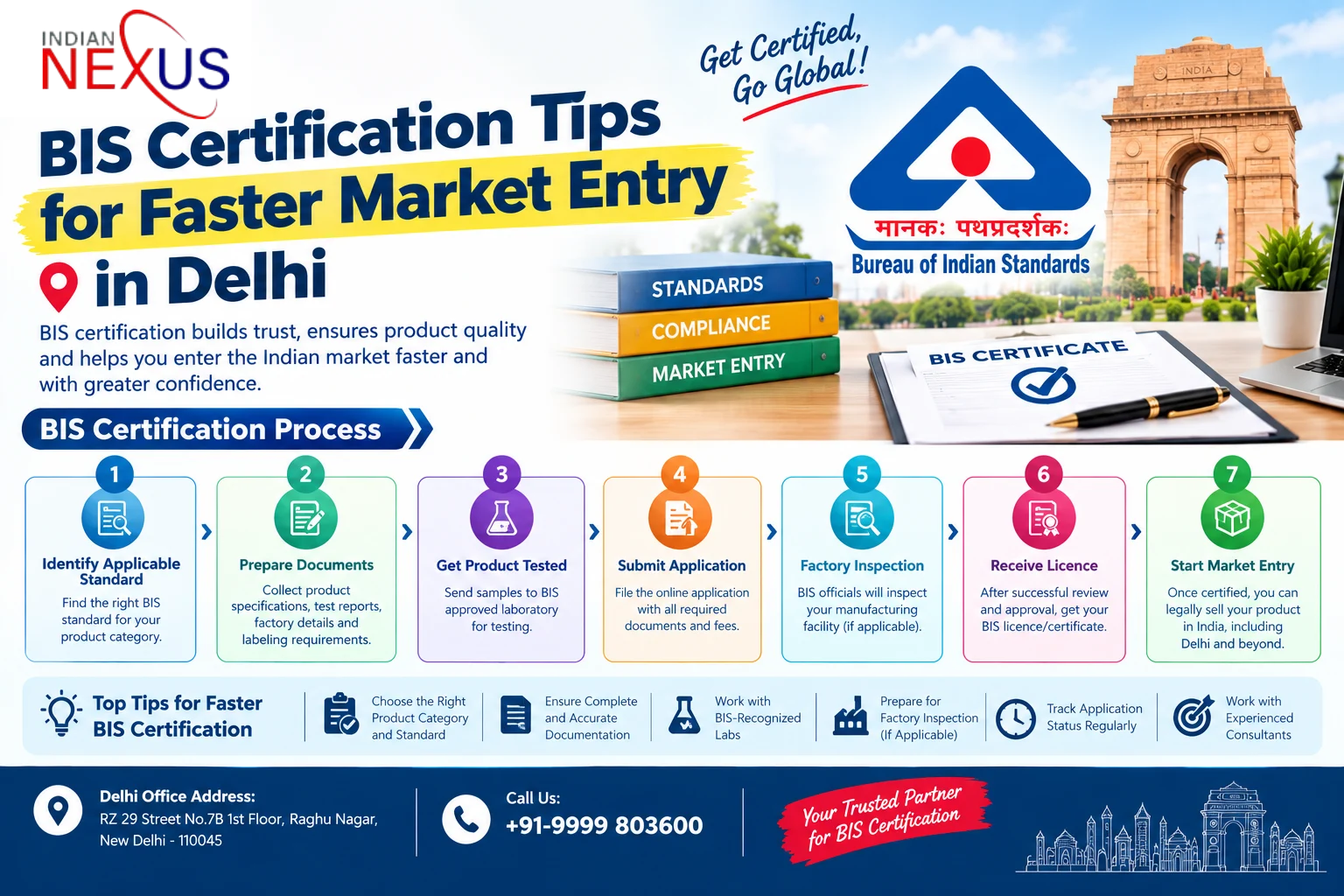
Step-by-Step BIS Certification Process for Solar Panels
The BIS certification process for solar panels involves several stages. Here’s a breakdown:
Product Testing:
The manufacturer sends samples of solar panels to a BIS-approved laboratory for testing as per the applicable IS standards.Application Submission:
Once the test reports are received, the applicant submits a formal application along with required documents, including test reports, factory details, and product specifications.Factory Inspection (if applicable):
In certain cases, BIS may conduct a factory audit to verify production capabilities and quality management systems.Grant of BIS Certificate:
Upon successful evaluation, BIS issues a Registration Number (R-number) under the CRS scheme.Use of BIS Standard Mark:
The manufacturer can then affix the BIS Standard Mark on their certified solar panels, showcasing compliance and quality assurance.
Documents Required for BIS Certification
To obtain BIS approval for solar panels, the following documents are typically required:
Business License or Company Registration
Product test report from a BIS-recognized lab
Factory layout and process flowchart
Details of manufacturing equipment and raw materials
Authorized representative details (for foreign manufacturers)
These documents help BIS verify the authenticity and capability of the manufacturer before issuing the certification.
Benefits of BIS Certification for Solar Panels
Obtaining BIS certification for solar panels comes with multiple advantages:
? Legal Compliance: Ensures that your products meet Indian regulatory standards.
? Market Acceptance: BIS-marked products gain higher consumer trust and demand.
? Export/Import Facilitation: Simplifies the process for global manufacturers entering the Indian market.
? Enhanced Quality Assurance: Reflects the manufacturer’s commitment to performance and safety.
? Brand Reputation: Strengthens credibility in the competitive renewable energy market.
Why Choose BIS Consultants for Solar Panel Registration
While the BIS certification process may seem complex, professional BIS consultants in India can make the process seamless and straightforward. Experienced consultants assist with documentation, testing coordination, and direct liaison with BIS authorities to ensure timely certification.
If you’re a solar panel manufacturer or importer, working with a trusted BIS registration consultant can help you avoid unnecessary delays and rejections.
Conclusion
With India’s ambitious goal of becoming a global leader in solar power, compliance with BIS standards is crucial for every manufacturer. BIS certification for solar panels not only ensures quality and safety but also builds trust among customers and stakeholders.
Whether you are a domestic producer or an international supplier, obtaining BIS registration for solar panels is your key to entering India’s thriving solar energy market legally and confidently. Partnering with expert BIS consultants in India ensures that your products meet all regulatory requirements smoothly — empowering you to contribute to a sustainable and energy-efficient future.