



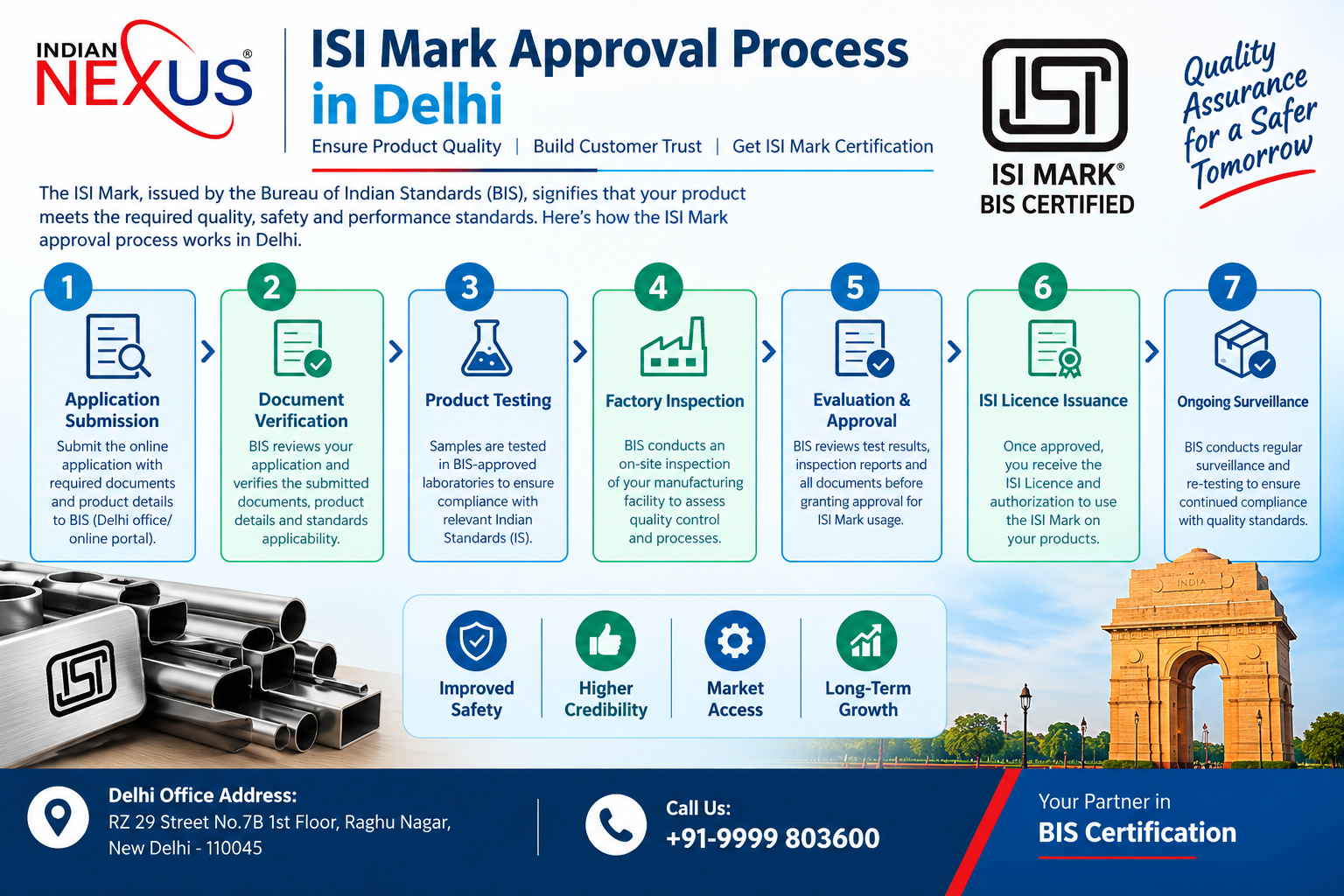

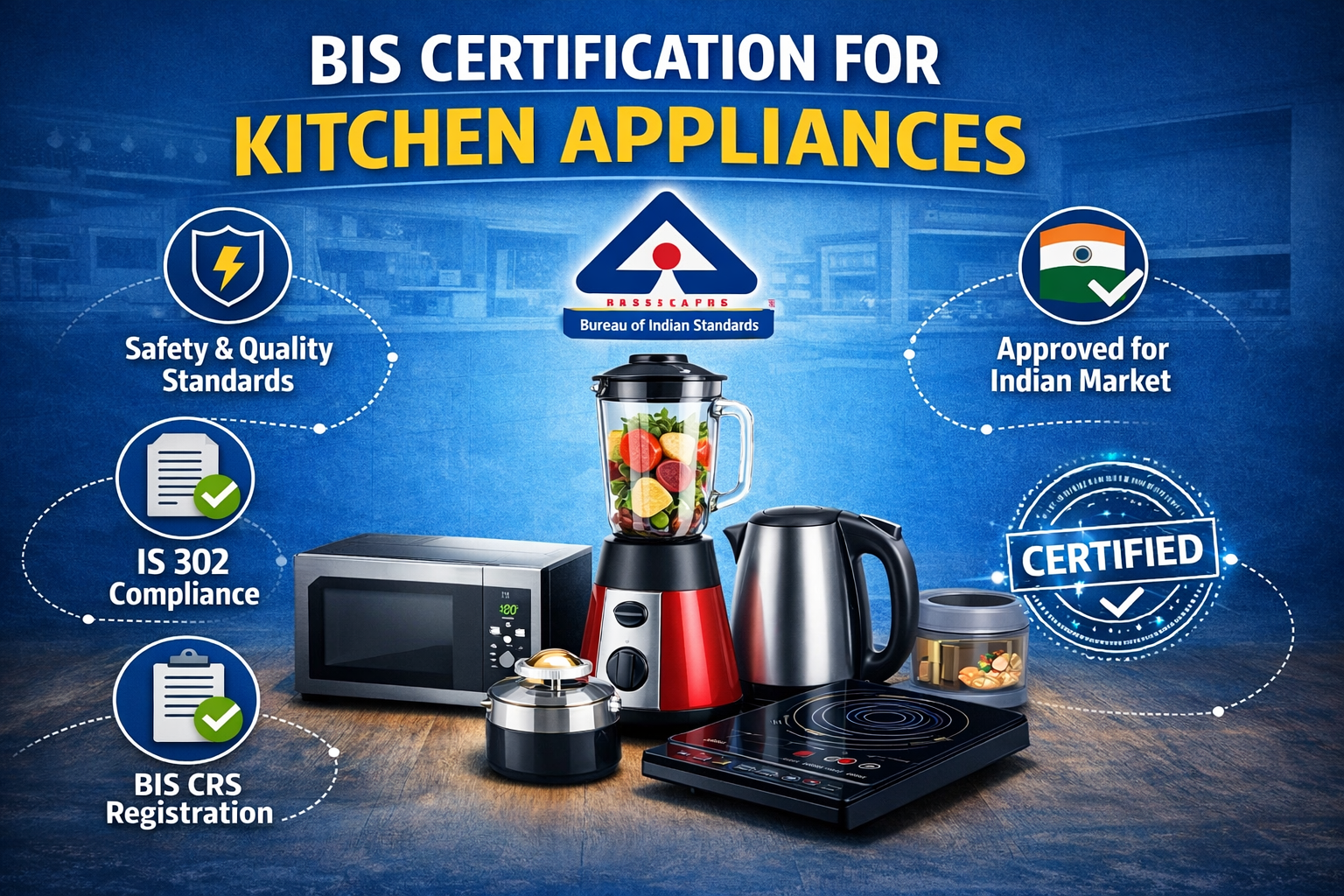
The Indian kitchen appliance market is growing rapidly due to increasing urbanization, rising disposable income, and demand for smart and energy-efficient products. However, before any kitchen appliance can be legally sold in India, it must comply with mandatory quality and safety regulations. One of the most critical requirements is BIS certification for kitchen appliances, which ensures that products meet Indian safety standards and protect consumers from electrical and fire hazards.
Organizations like Indiannexus play a crucial role in helping manufacturers and importers understand and complete the certification process smoothly.
What Is BIS Certification for Kitchen Appliances?
BIS certification for kitchen appliances is issued by the Bureau of Indian Standards (BIS), India’s national standards body. This certification confirms that appliances such as mixers, grinders, induction cooktops, electric kettles, microwave ovens, toasters, and food processors comply with applicable Indian Standards.
Most electrical kitchen appliances fall under the Compulsory Registration Scheme (CRS), which requires manufacturers to register their products with BIS before entering the Indian market. Without BIS approval, products can be seized, penalized, or banned from sale.
Why BIS Certification Is Mandatory in India
The government has made BIS compliance mandatory to ensure public safety and product reliability. Kitchen appliances operate on electricity and generate heat, making them potentially hazardous if poorly designed or manufactured.
Key reasons why BIS compliance for kitchen appliances in India is essential include:
Protection against electrical shocks and fire risks
Assurance of product durability and performance
Legal authorization to sell in Indian markets
Increased consumer trust and brand credibility
Avoidance of penalties, recalls, and business disruptions
Manufacturers working with expert consultants like Indiannexus can avoid common mistakes and delays during certification.
Applicable BIS Standards for Kitchen Appliances
Most electric kitchen appliances are tested under IS 302 kitchen appliance standard, which is aligned with international IEC safety norms. IS 302 covers general safety requirements and specific product-based standards depending on the appliance type.
The standard focuses on:
Electrical insulation and wiring safety
Temperature rise limits
Mechanical strength
Protection against moisture
Safe operation under normal and abnormal conditions
Compliance with IS 302 kitchen appliance standard is mandatory to obtain BIS approval.
BIS CRS Certification for Kitchen Appliances
Under the Compulsory Registration Scheme, BIS CRS certification for kitchen appliances requires manufacturers to:
Get product samples tested in a BIS-recognized laboratory
Submit test reports and technical documents
Apply for online registration on the BIS portal
Obtain a unique BIS registration number
Mark the product with the Standard Mark and registration number
Both Indian and foreign manufacturers must follow this process. Foreign manufacturers also need an Authorized Indian Representative (AIR).
BIS Registration for Kitchen Appliances: Who Needs It?
BIS registration for kitchen appliances is required for:
Indian manufacturers producing appliances locally
Foreign manufacturers exporting kitchen appliances to India
Importers and brand owners selling under private labels
Each model and variant must be registered separately, making expert guidance essential to avoid rejections.
Documents Required for BIS Approval
To obtain BIS approval for kitchen appliances, manufacturers typically need:
Product test report from a BIS-recognized lab
Factory license or incorporation documents
Technical specifications and user manuals
Trademark registration (if applicable)
Authorization letter and undertaking
Details of manufacturing location
Consultants like Indiannexus help ensure documentation accuracy and compliance with BIS guidelines.
Role of Indiannexus in BIS Certification
Indiannexus is a trusted compliance partner that assists manufacturers at every stage of the certification process. Their services include:
Product applicability analysis
Coordination with BIS-recognized labs
Documentation preparation and verification
BIS portal application filing
Post-registration compliance support
By working with Indiannexus, businesses can reduce approval timelines and ensure error-free submissions.
Consequences of Non-Compliance
Selling kitchen appliances without BIS certification for kitchen appliances can lead to:
Heavy monetary penalties
Seizure of non-compliant goods
Cancellation of import licenses
Damage to brand reputation
Legal action by authorities
Compliance is not just a regulatory formality but a business necessity.
Benefits of BIS Certified Kitchen Appliances
Obtaining BIS certification offers multiple advantages:
Legal access to Indian markets
Improved consumer confidence
Competitive edge over uncertified brands
Enhanced product safety and reliability
Long-term business sustainability
Conclusion
With increasing regulatory enforcement, BIS certification for kitchen appliances has become unavoidable for manufacturers and importers. Compliance with IS 302 kitchen appliance standard and CRS requirements ensures product safety, legal security, and market acceptance. Partnering with experienced consultants like Indiannexus simplifies the process and helps businesses achieve hassle-free certification while focusing on growth.
FAQs – BIS Certification for Kitchen Appliances
Q1. Is BIS certification mandatory for all kitchen appliances in India?
Yes, most electrical kitchen appliances require BIS CRS certification before sale or import.
Q2. Which standard applies to kitchen appliances?
Most appliances are tested under IS 302 kitchen appliance standard.
Q3. Can foreign manufacturers apply for BIS registration?
Yes, foreign manufacturers can apply with an Authorized Indian Representative.
Typically 3–6 weeks if documents and test reports are complete.