







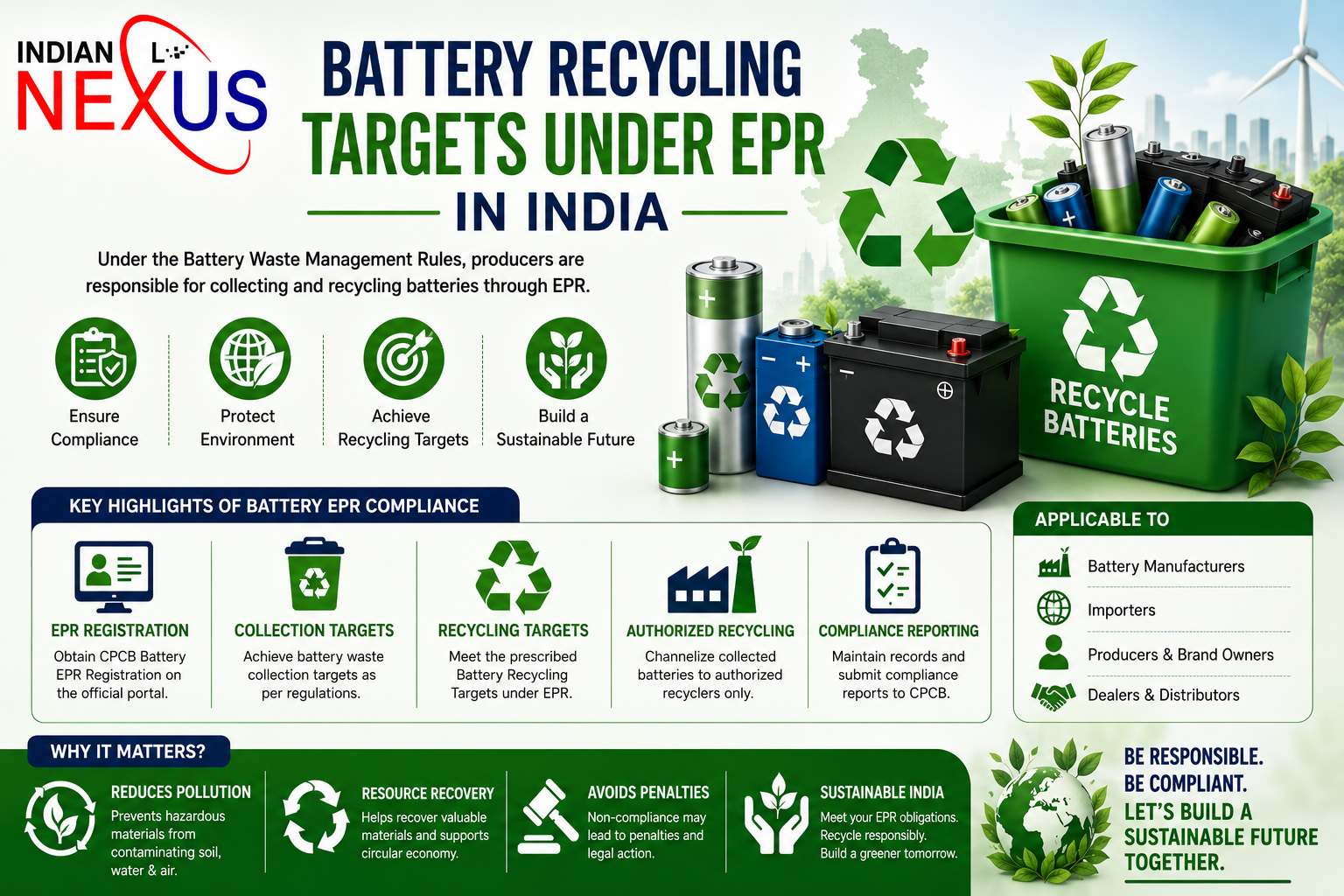
The Battery Recycling Targets Under EPR in India have given a new direction in battery recycling with the way in which battery importers, battery manufacturers, and battery brand owners deal with the batteries that they discard. These regulations come from the government of India as part of the Battery Waste Management Rules and this mandate puts an obligation on the brand owners to take full responsibility for their spent batteries.
Extended Producer Responsibility (EPR) is about assigning responsibility to producers to manage and ensure a proper and safe collection, recycling of batteries sold with their products. When it comes to Battery Recycling Targets Under EPR in India, it's one such legislation that producers need to be aware of.
What Are Battery Recycling Targets Under EPR in India?
For example, battery producers will need to meet the 'Battery Recycling Targets Under EPR in India,' which are mandatory recycling requirements mandated under the Battery Waste Management Rules India.
The goal here is to minimise environmental pollution and recuperate useful material so that there is a circular economy. Indian legislation like Battery Recycling Targets Under EPR in India are regulated by the CPCB Battery EPR Registration in India system.
For the purpose of proving their EPR for Battery Waste compliance, Companies need to retain battery sales, battery collection, and battery recycling certificate records.
Importance of EPR for Battery Waste
India churns out millions of tons of battery waste every year from all its electric vehicles (EVs), gadgets, devices, and industrial machines. Disposed incorrectly, these contain a wealth of toxins.
The implementation of Battery Recycling Targets Under EPR in India helps:
Minimize environmental contamination
Improve resource recovery
Promote sustainable battery recycling
Reduce landfill dependency
Support circular economy initiatives
Businesses must comply with EPR Authorization for Batteries to avoid regulatory actions and penalties.
Who Must Comply?
The following entities are generally required to comply with Battery Recycling Targets Under EPR in India:
Battery manufacturers
Importers of batteries
Producers and brand owners
Electric vehicle battery suppliers
Industrial battery producers
Portable battery manufacturers
These entities must obtain CPCB Battery EPR Registration and fulfill Battery Producer Responsibility obligations.
CPCB Battery EPR Registration Process
Compliance begins with registration on the CPCB EPR Battery Portal. The process typically involves:
1. Documentation Preparation
Applicants submit business registration certificates, GST details, product information, and battery sales data.
2. Online Registration
Producers register through the CPCB Battery EPR Registration portal.
3. EPR Plan Submission
The EPR scheme provides details about collection, transport, storage, and recycling methods
4. Target Fulfillment
Businesses achieve Battery Waste Collection Targets through authorized collection and recycling channels.
5. Compliance Reporting
Regular reports are submitted to demonstrate fulfillment of Battery Recycling Targets Under EPR in India.
Battery Recycling Obligations India
The regulatory framework establishes specific Battery Recycling Obligations India for producers. These include:
Collection of end-of-life batteries
Channelization to authorized recyclers
Maintenance of records
Annual compliance reporting
Procurement of recycling certificates
Meeting Battery Recycling Targets Under EPR in India is a crucial part of these obligations.
Benefits of Compliance
Businesses complying with Battery Recycling Targets Under EPR in India gain several advantages:
Regulatory Compliance
Ensures adherence to Battery Recycling Regulations India and CPCB requirements.
Improved Brand Reputation
People's buying habits are changing.
Resource Conservation
So, these reconditioned products are able to be reused for manufacturing any other objects.
Sustainable Growth
That gives you both increased ESG compliance and a future oriented enterprise.
Reduced Legal Risk
Avoids penalties associated with non-compliance.
How Indiannexus Can Help
It's not easy to comply with EPR regulations. Indiannexus provides end-to-end support for Battery EPR compliance, such as registration, preparation of documents, setting targets, and handling regulatory reporting.
They enable manufacturers to comply with Battery Waste Management Compliance, adhere to CPCB regulations, and understand the Battery Recycling Targets Under EPR in India.
Conclusion
With constantly changing environmental regulations, compliance with Battery Recycling Targets Under EPR in India has been critical for battery producers and importers alike. The effective enforcement of the EPR for Battery Waste benefits environmental sustainability, resource preservation, and regulatory standards..
Businesses ought to proactively handle the battery recycling targets set for them. They need to get CPCB registration and set up a collection system to comply with the regulations under battery waste management rules India.
Frequently Asked Questions (FAQs)
1. Battery Recycling Targets as part of EPR in India – What all is required?
Battery manufacturers have to recycle some amount of battery waste produced by them in the form of compulsory recycling targets.
2. To whom will CPCB Battery EPR Registration be applicable?
Battery manufacturers, importers, producers, brand owners will be accountable for registering themselves.
3. What do you mean by Extended Producer Responsibility for Batteries?
It is a policy under which a producer is responsible for the management of battery waste that arises from its products.
4. What would be the consequences of not meeting EPR targets?
N0on-compliance would result in disciplinary measures, penalties and other restrictions by competent authorities.
5. How will the Battery Waste Collection targets be fulfilled?
Targets will be fulfilled through permitted collection centers, recyclers and authorized waste management channels.
6. Is EPR compliance mandatory for imported batteries?
Battery importers that make their way into India will be obligated to adhere to the EPR regulations.
7. What is the role of a consultant for Battery EPR Compliance?
A Battery EPR Compliance Consultant can help you take care of your registration, documentation, reporting, targets fulfillment and CPCB compliance.